Why Houseplant Leaves Curl: Moisture, Light, Heat, and Other Clues
The goal is not to memorize another rule; it is to build a repeatable way to judge the situation before you act. A useful way to think about why houseplant leaves curl: moisture, light, heat, and other clues is to make the next decision clearer rather than add another rigid schedule. The central principle is that leaf curl is a protective or stress response with many possible causes, so the pattern, location, and timing of curling are more useful than the shape alone. That matters here because leaves can curl inward to reduce exposed surface area or become distorted when new tissue develops under stress. Seasonal sun angle matters because a location that is gentle in one part of the year can become much brighter or dimmer later. The best comparison is usually the plant against its own recent healthy pattern rather than against a perfect specimen in a photograph. instead of simply treating every possible cause at once, the steps below narrow the situation into observations, context, one useful response, and a follow-up check.
The Clues That Deserve the Most Weight
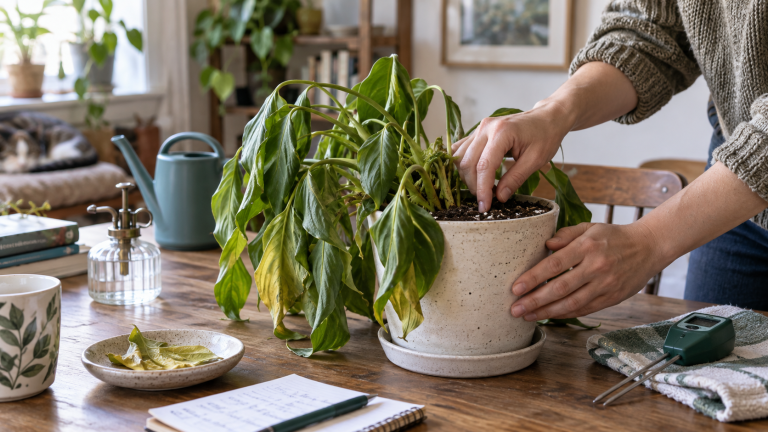
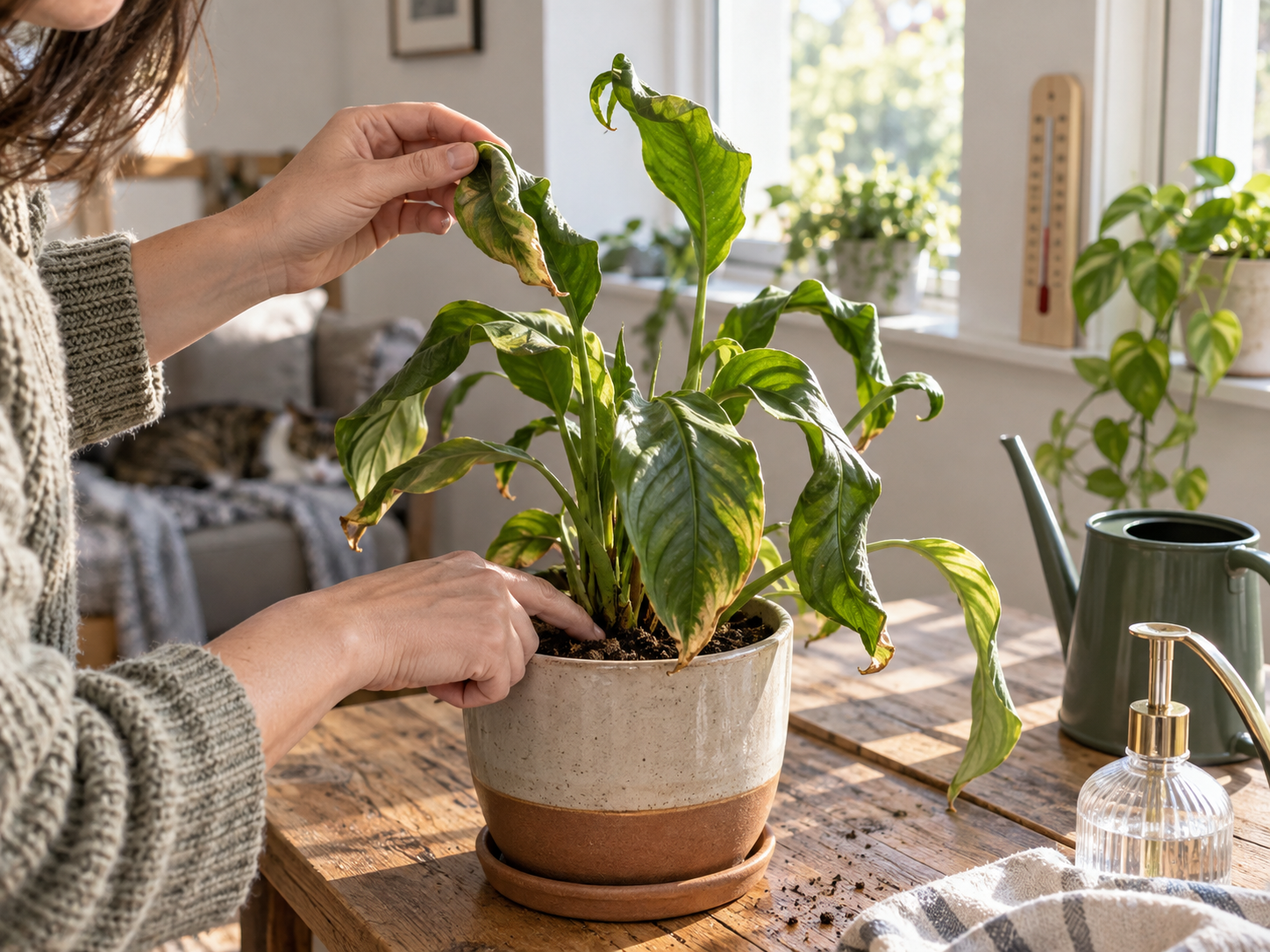
Start with a short inspection rather than a treatment. The most useful clues here are which leaves curl first, whether edges are crisp or soft, nearby heat sources, soil moisture, light intensity, and signs of pests on new growth. None of them needs to be perfect on its own; the goal is to see whether several indicators point in the same direction. For the setup described here, checking neighboring plants can also be useful because a shared pattern may point to an environmental condition rather than an individual plant problem. The goal is not to collect every possible measurement; it is to gather enough consistent evidence to choose a reasonable next step. If the pattern is still mixed after this inspection, waiting for another check can be is usually clearer than forcing a diagnosis.
The Reason This Detail Matters
At the center of this topic is one practical principle: Leaf curl is a protective or stress response with many possible causes, so the pattern, location, and timing of curling are more useful than the shape alone. Once that is clear, the visible signs become easier to interpret because they can be connected to a plausible cause instead of treated as isolated defects. That foundation is especially useful for beginners because it replaces memorized rules with a small number of relationships that can be checked. Once the process is understood, individual observations become more straightforward to rank instead of being treated as equal evidence. The best comparison is usually the plant against its own recent healthy pattern rather than against a perfect specimen in a photograph. Once this relationship is clear, the rest of the care decision becomes easier to keep proportionate.
Why Location Changes the Outcome
Location is part of the answer, not an afterthought. In this case, leaves can curl inward to reduce exposed surface area or become distorted when new tissue develops under stress. That is why advice copied from another room, home, or climate should be adjusted to the exact place where the plant is growing. Nearby plants can shade one another, reduce airflow, or change how easy it is to water and inspect each pot. The exact conditions can also change as foliage grows and begins to shade neighboring leaves or containers. You can compare this step with Why Houseplant Leaves Turn Yellow when the same plant is showing more than one clue. In this particular care decision, rechecking those local conditions is especially worthwhile when the season, heating, cooling, or sun angle changes.
Recent Changes Can Explain More Than One Symptom
Timing can narrow the list of possible causes quickly. Think back to recent watering, feeding, repotting, cleaning, moving, weather changes, heating or cooling, and any other event that changed the plant’s environment. A delayed response is common, so today’s symptom may reflect conditions from several days earlier. The point is not to reconstruct every detail perfectly, but to make the sequence clear enough to rule out weak assumptions. If several changes happened together, start with the one most directly connected to the plant’s water, light, roots, or temperature. Because indoor plants grow at different rates through the year, that same action can be helpful in active growth and unnecessary during a slower period. Treat the timeline as supporting evidence, then compare it with what the plant is showing now.
Make One Change and Watch the Response
Turn the diagnosis into one clear move: Start with the recent environmental change that best matches the timing, then make one measured correction and observe new leaves. The purpose is not to force instant improvement but to create conditions in which the plant can show whether the reasoning was sound. If roots or soil are involved, make sure the container can drain before adding water intended to correct another problem. For the setup described here, if the step involves moving the plant, change the exposure gradually when a sudden jump in light, heat, or airflow could add stress. Humidity, temperature, and airflow interact, so changing one factor can alter drying time and leaf comfort at a similar time. The next useful information comes from what the plant does next, not from adding another intervention immediately.
Common Habits That Make Care Harder
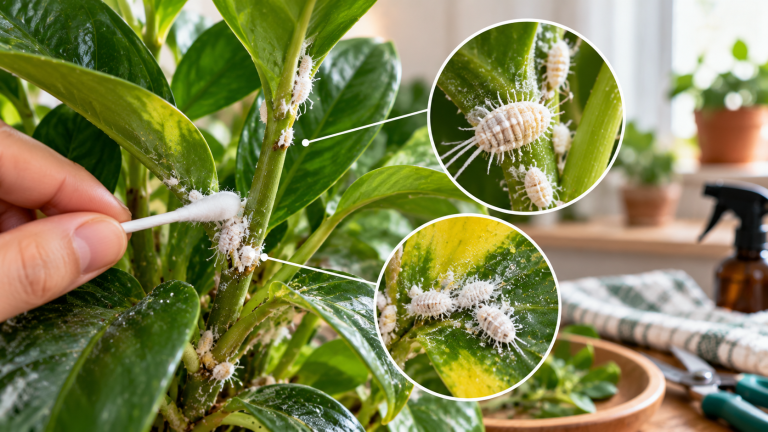
Several well-intentioned responses can backfire: mistaking naturally rolled leaves for damage, spraying leaves without identifying a pest, and moving a plant abruptly from shade to intense sun. A better approach is to correct the clearest problem and leave unrelated factors stable long enough to evaluate the result. More water, more light, more fertilizer, or more humidity are not automatically improvements; each can become a stress when the plant does not need it. Another mistake is solving for appearance first, such as removing all damaged tissue before understanding whether the stress is still active. Pot size, substrate texture, temperature, airflow, and root density all change how quickly a container dries. For more context on the underlying care factor, read How to Check Soil Moisture Before Watering Houseplants before adding another adjustment. Keeping the basics stable gives you a much better chance of understanding what actually changed.
How to Judge Whether the Change Helped
The next two or three checks usually tell you more than an immediate visual inspection. Stability, predictable care needs, and healthy new development are stronger evidence than the disappearance of damage that has already occurred. New growth is particularly useful because it reflects conditions after the adjustment in place of before it. For this plant care topic, for root-zone issues, a return to more predictable drying and stable posture can be an encouraging sign even before new leaves appear. New growth is usually a better indicator of current conditions than cosmetic improvement on tissue that is already damaged. If that part of the diagnosis is still unclear, our article How Much Light Do Indoor Plants Really Need? A Room-by-Room Guide provides a practical reference without requiring you to change everything at once. Progress becomes easier to judge when the same indicators are checked at similar intervals.
Use Consistency Without Becoming Rigid
Long-term confidence comes from a routine you will actually use. photograph the newest affected leaf, note its position, and compare the next flush of growth after conditions stabilize. Add notes or photos only when they help you recognize patterns; the goal is clarity, not a complicated tracking system. A repeatable sequence of checks is more useful than a long checklist that is followed only when something looks wrong. In this particular care decision, seasonal review is useful because daylight, indoor heating, balcony exposure, and growth rate can change gradually. Pot size, substrate texture, temperature, airflow, and root density all change how quickly a container dries. A houseplant often shows stress after the triggering condition has been present for days, so a symptom is best treated as evidence instead of simply an instant diagnosis. That is how general advice turns into a baseline that is specific to your own home.
The Most Useful Habit to Keep
A practical routine should reduce uncertainty rather than create more rules. The key point remains that leaf curl is a protective or stress response with many possible causes, so the pattern, location, and timing of curling are more useful than the shape alone. When care is matched to the real room, container, season, and plant condition, small problems are easier to notice before they turn into repeated cycles of correction. The result is a care system that can adapt without becoming complicated every time the season or plant size changes. The long-term goal is confidence built from observation instead of dependence on rigid rules. The best comparison is usually the plant against its own recent healthy pattern rather than against a perfect specimen in a photograph. The result is a more resilient routine that can adjust as plants, seasons, and spaces change.