How to Check Soil Moisture Before Watering Houseplants
Successful care in real homes depends on translating general advice into observations you can make in the exact space you have. A practical approach to how to check soil moisture before watering houseplants should make the next decision clearer, not add another rigid schedule to remember. The central principle is that soil moisture is best judged as a pattern through the root zone, not as a single reading from the surface. That matters here because indoor pots dry from the top downward, while roots may still be surrounded by moisture deeper in the mix. Changing several care factors at once makes it difficult to know which adjustment helped or caused new stress. Stable basics—appropriate light, sensible watering, drainage, and time—make it less difficult to tell whether a more specific intervention is actually needed. Rather than treating every possible cause at once, the steps below narrow the situation into observations, context, one useful response, and a follow-up check.
Why the Same Advice Does Not Fit Every Home
Before choosing a tool, product, or schedule, remember that Soil moisture is best judged as a pattern through the root zone, not as a single reading from the surface. This changes the question from “What should I always do?” to “What do these conditions suggest today?” A clear mechanism also makes later troubleshooting faster because you know which variables are capable of producing the pattern you are seeing. The point is not to turn everyday care into a science experiment, but to use enough cause-and-effect reasoning to avoid random changes. A useful watering decision combines soil condition with pot weight and the plant’s recent behavior rather than relying on a fixed weekday. Once this relationship is clear, the rest of the care decision becomes simpler to keep proportionate.
The First Five Minutes of Inspection
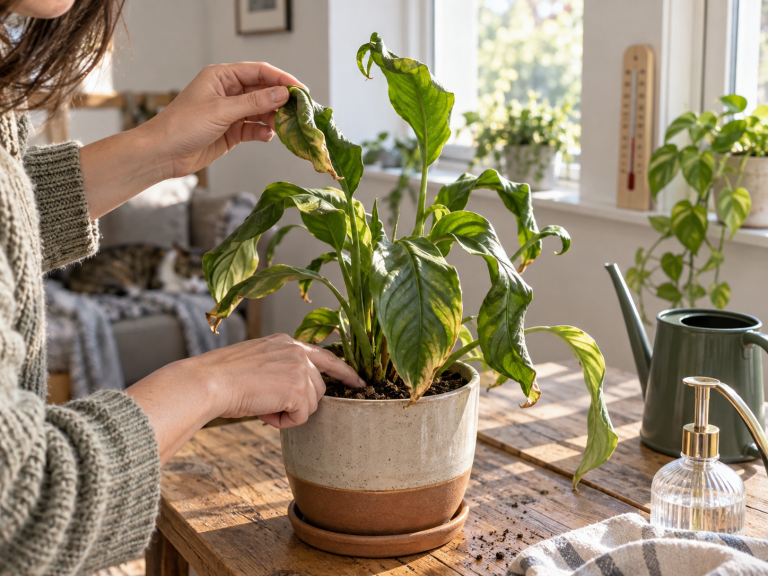
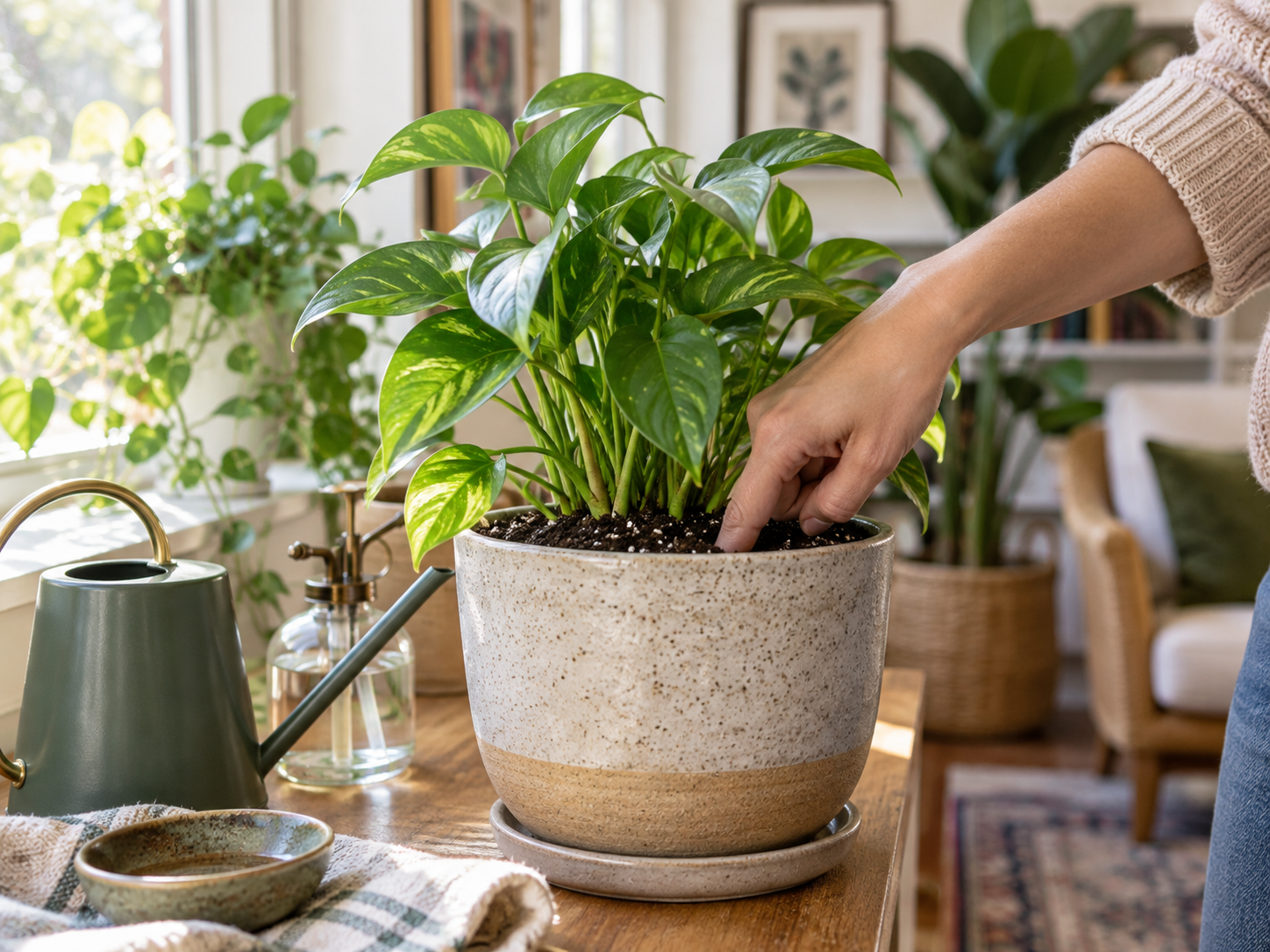
Before changing care, collect a small set of observations: surface color, finger depth, pot weight, drainage speed, leaf firmness, and the time since the previous watering. These are valuable because they can be checked again later, making the next decision less dependent on memory or guesswork. When the issue involves the root zone, combine what you see above the soil with information about moisture, drainage, and pot weight. A short, deliberate inspection keeps small variations from being mistaken for emergencies. Because indoor plants grow at different rates through the year, that same action can be helpful in active growth and unnecessary during a slower period. For a useful baseline on a related factor, see our guide to Brown Leaf Tips on Houseplants. A consistent inspection gives you a baseline that becomes more valuable each time it is repeated.
Correct the Strongest Issue First
When you are ready to act, keep the intervention proportionate: Water when several observations point in the same direction rather than because one calendar day has arrived. Small, evidence-based changes are easier to reverse, repeat, or refine than a complete care overhaul. The best next step is often the one that improves a limiting condition while leaving the rest of the system easy to monitor. If roots or soil are involved, make sure the container can drain before adding water intended to correct another problem. Because indoor plants grow at different rates through the year, the identical action can be helpful in active growth and unnecessary during a slower period. Changing several care factors at once makes it difficult to know which adjustment helped or caused new stress. The next useful information comes from the plant’s response, not from adding another intervention immediately.
How Nearby Conditions Shift the Result
Environmental context helps explain why two similar plants can respond differently. Here, indoor pots dry from the top downward, while roots may still be surrounded by moisture deeper in the mix. Check the actual position of the leaves and root zone rather than relying on broad labels such as bright room, warm corner, or sheltered balcony. Nearby plants can shade one another, reduce airflow, or change how easy it is to water and inspect each pot. Environmental context is why copying another person’s schedule can fail even when the species is that same. For plant-care questions, the condition of the root zone and the quality of new growth usually deserve more attention than one damaged older leaf. Changing several care factors at once makes it difficult to know which adjustment helped or caused new stress. The exact location should therefore be part of every follow-up check.
Trace the Change Back to Its Context
Use a short care history as part of the diagnosis. A quick note about the previous week—water, light, temperature, products used, movement, and repotting—can reveal whether the timing supports one explanation more strongly than another. Repeated problems at that same time of year often suggest that the care rhythm has not yet adjusted to changing light or temperature. History becomes more useful when you record actions rather than impressions: note what changed, when it changed, and what the plant did afterward. If that part of the diagnosis is still unclear, our article How to Tell When a Houseplant Needs Water provides a practical reference without requiring you to change everything at once. The clearer the sequence, the less likely you are to mistake the effect of a recent change for a separate new problem.
Keep Cosmetic Urgency From Driving the Decision
Avoid judging only the top crust, using a meter without checking its placement, and adding small splashes that never wet the root zone evenly. Those habits can make the symptoms harder to interpret and may turn a manageable issue into a more complicated one. More water, more light, more fertilizer, or more humidity are not automatically improvements; each can become a stress when the plant does not need it. A decorative container or stand should never prevent you from seeing drainage, checking roots, or reaching the plant safely. Changing several care factors at once makes it difficult to know which adjustment helped or caused new stress. Stable basics—appropriate light, sensible watering, drainage, and time—make it less difficult to tell whether a more specific intervention is actually needed. For the setup described here, the more uncertain the diagnosis, the more valuable it is to avoid unnecessary variables.
What Improvement Usually Looks Like
The plant’s next response is part of the diagnosis. Over the following checks, look for a slower rate of decline, normal drying or growth patterns, and fewer new symptoms rather than judging success by one old leaf. A photo taken from the same position once a week can make slow improvement much easier to recognize. In this particular care decision, for root-zone issues, a return to more predictable drying and stable posture can be an encouraging sign even before new leaves appear. Changing several care factors at once makes it difficult to know which adjustment helped or caused new stress. For a second checkpoint, use Why Houseplant Leaves Turn Yellow to compare the plant’s response with a care factor that has already been discussed on RootLuma. Progress becomes easier to judge when a consistent set of indicators are checked at similar intervals.
Simplify the Routine Before Adding More Plants
Long-term confidence comes from a routine you will actually use. check the same few indicators in the same order, then record what the plant actually did after watering. Add notes or photos only when they help you recognize patterns; the goal is clarity, not a complicated tracking system. For this plant care topic, as the collection grows, protect the simplicity of the system by adding plants only when light, access, and care capacity are still adequate. Keep tools where they are easy to use so inspection does not become a chore that gets postponed until symptoms are obvious. The most reliable baseline is the plant’s own recent pattern: how quickly it dries, how firm the leaves feel, and what healthy new growth looks like. The system should become easier to maintain over time, not more complicated with every new lesson.
Use the Same Logic Next Time
The most reliable long-term approach is not a perfect schedule but a dependable way to decide. Remember that soil moisture is best judged as a pattern through the root zone, not as a single reading from the surface. Combine that principle with the clues you can actually observe, then let the plant’s next response confirm whether the adjustment was useful. The long-term goal is confidence built from observation rather than dependence on rigid rules. That balance—steady basics, specific observations, and measured adjustments—is what turns general advice into useful everyday care. For plant-care questions, the condition of the root zone and the quality of new growth usually deserve more attention than one damaged older leaf. Pot size, substrate texture, temperature, airflow, and root density all change how quickly a container dries. That process keeps everyday care practical, adaptable, and easier to trust.