Holiday Cactus Not Blooming? Short Days, Cool Nights, and Bud Drop
A holiday cactus can look healthy for months and still produce no flowers. Its segmented stems stay green, new growth appears, and watering seems reasonable—yet there are no buds when the familiar flowering season arrives. Another plant may form dozens of tiny buds only to drop most of them after being moved to a warm living room. These are related problems, but they are not necessarily caused by the same mistake.
Holiday cacti belong to a group of tropical forest cacti, chiefly Schlumbergera species and hybrids, rather than the desert cacti pictured in many care guides. Their bloom cycle depends strongly on seasonal cues, especially night length and temperature, while the stability of growing conditions matters once buds begin forming. Correcting the problem means identifying which part of that sequence broke down.
Identify the plant before troubleshooting bloom timing
The common names Thanksgiving cactus, Christmas cactus, and Easter cactus are used loosely in shops. Thanksgiving cactus generally refers to Schlumbergera truncata and hybrids, often with more pointed projections along the edges of stem segments. Plants sold as Christmas cactus may involve Schlumbergera × buckleyi and related hybrids, typically with rounder segment edges. Easter cactus is usually classified differently from these Schlumbergera holiday plants and often has a different flowering period and induction requirements.
The University of Minnesota Extension guide to holiday cacti explains that Thanksgiving and Christmas types respond to shorter days and cool nights, while Easter cactus often needs a longer induction period. Treat that as a reason to observe your own plant’s seasonal behavior rather than applying the same calendar to all three groups.
The difference between growing stems and forming buds
During active growth, a holiday cactus uses light, water, and nutrients to build segments. That vegetative growth is not the same developmental process as flowering. As seasonal signals change, the plant may shift toward initiating flower buds at segment tips. A healthy plant can grow vigorously without receiving strong enough cues to start that shift.
Short days—and particularly long, uninterrupted nights—can serve as a flowering signal. Cooler night temperatures also influence bud formation. The interaction is important: sufficiently cool conditions can sometimes promote buds even when photoperiod conditions are imperfect, while warm nights may prevent blooming despite reasonably short days.
Indoor life can erase natural seasonal cues. A plant may stand beside a window that receives less daylight in autumn, but a bright lamp on a timer or an overhead light left on late at night can interrupt the long dark period it would otherwise experience. The room may also stay consistently warm because of central heating. From the plant’s perspective, the seasonal transition is less pronounced than it seems to the person looking at the calendar.
This is not a call to create a freezing, pitch-black cabinet. It is a reminder that the plant needs a suitable combination of day light, cooler nighttime conditions, and a reliable daily rhythm while it prepares to bloom.
Use night length, not a universal flowering month
Advice that says “put your cactus in darkness in October” assumes a particular hemisphere, season, and often a particular species. A better strategy is to consider when natural days shorten where you live and when your plant has historically flowered. In the Southern Hemisphere that season occurs at a different time. Near the equator day length changes much less, so controlled conditions and temperature cues can become relatively more important.
For Thanksgiving and Christmas-type holiday cacti, the Minnesota Extension guide describes around six weeks of favorable short-day conditions. It notes that cooler nights around 55°F (about 13°C) may stimulate flowering relatively quickly, whereas warmer nights around 60–65°F (about 16–18°C) require a long uninterrupted dark interval, roughly 12 hours or more, for several weeks. These are approximate cultivation guidelines from one extension source, not a universal biological switch.
Keep the plant in bright, indirect light during the day and give it a consistent dark interval at night when needed. A guest room that is naturally cooler and not illuminated late into the evening may be more practical than moving a pot in and out of a closet every night. If you use a light-proof cover, ensure it does not press against stems or trap heat, and remove it predictably each morning.
Do not leave the cactus in total darkness all day. It still needs light to maintain energy reserves. Conversely, placing the plant in strong, hot direct sun simply because it needs “more light” can bleach or scorch segments. The goal is a day-night pattern appropriate for a forest cactus, not the harsh conditions suitable for some desert species.
Give temperature its own place in the diagnosis
Check what the plant experiences at night, not only the temperature displayed by a thermostat across the room. A position above a radiator, beside a heating vent, or near a bright grow light can remain warmer than expected after sunset. Rooms heated steadily to a comfortable evening temperature may not provide the cooler nights associated with budding.
Cooler does not mean freezing. Avoid frost and abrupt exposure to cold glass or cold outdoor air. The plant’s roots should not be left in saturated medium during chilly weather. A sheltered outdoor position may supply useful seasonal conditions in suitable climates, but the pot must be moved indoors before temperatures become unsafe for the plant.
A thermometer with a minimum-temperature reading can help reveal whether nights are actually cooling. You do not need a sophisticated environmental controller. A week of observations in the intended bud-setting location often provides more useful information than adjusting the room at random.
Prepare the plant before bud initiation
A flowering attempt goes better when the plant is healthy and established. Inspect stems for pests, root problems, and soft or translucent segments. Confirm the container drains freely. Holiday cacti prefer an airy, moisture-retentive but well-drained medium; permanently waterlogged roots can compromise plant health and reduce flowering potential.
During the active growing season, water when the medium has dried appropriately for that pot and plant. Do not follow a rigid daily routine. A cactus in a small porous pot near good light dries differently from one planted into an oversized plastic pot. Avoid extremes: prolonged drought can cause stress, while repeatedly soaking a still-wet root ball can contribute to root problems.
A balanced feeding routine during active growth may help a plant with inadequate nutrients, but fertilizer is not a substitute for missing photoperiod or temperature cues. A very lush, nonflowering plant does not necessarily need more fertilizer. Overfeeding can create salt stress or encourage growth at the expense of a reliable seasonal pattern.
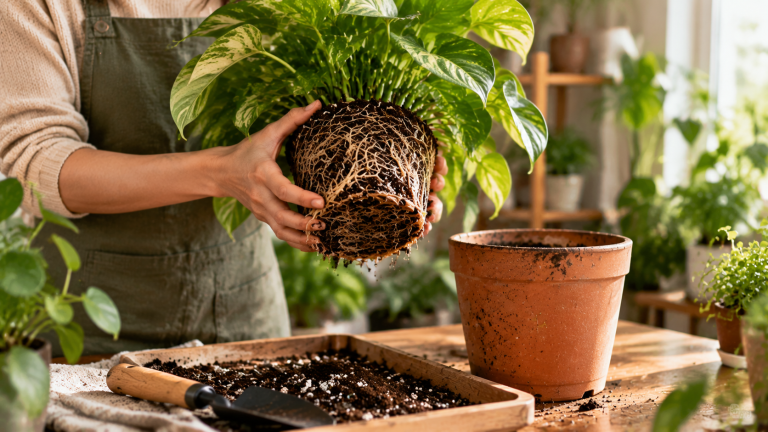
Repotting just as buds are expected can introduce another variable. If the plant is healthy and the pot remains functional, postpone major root disturbance until a more suitable time. If root rot is present, plant survival takes priority over seasonal flowering, but handle that as a separate problem.
Recognize the first buds and protect them
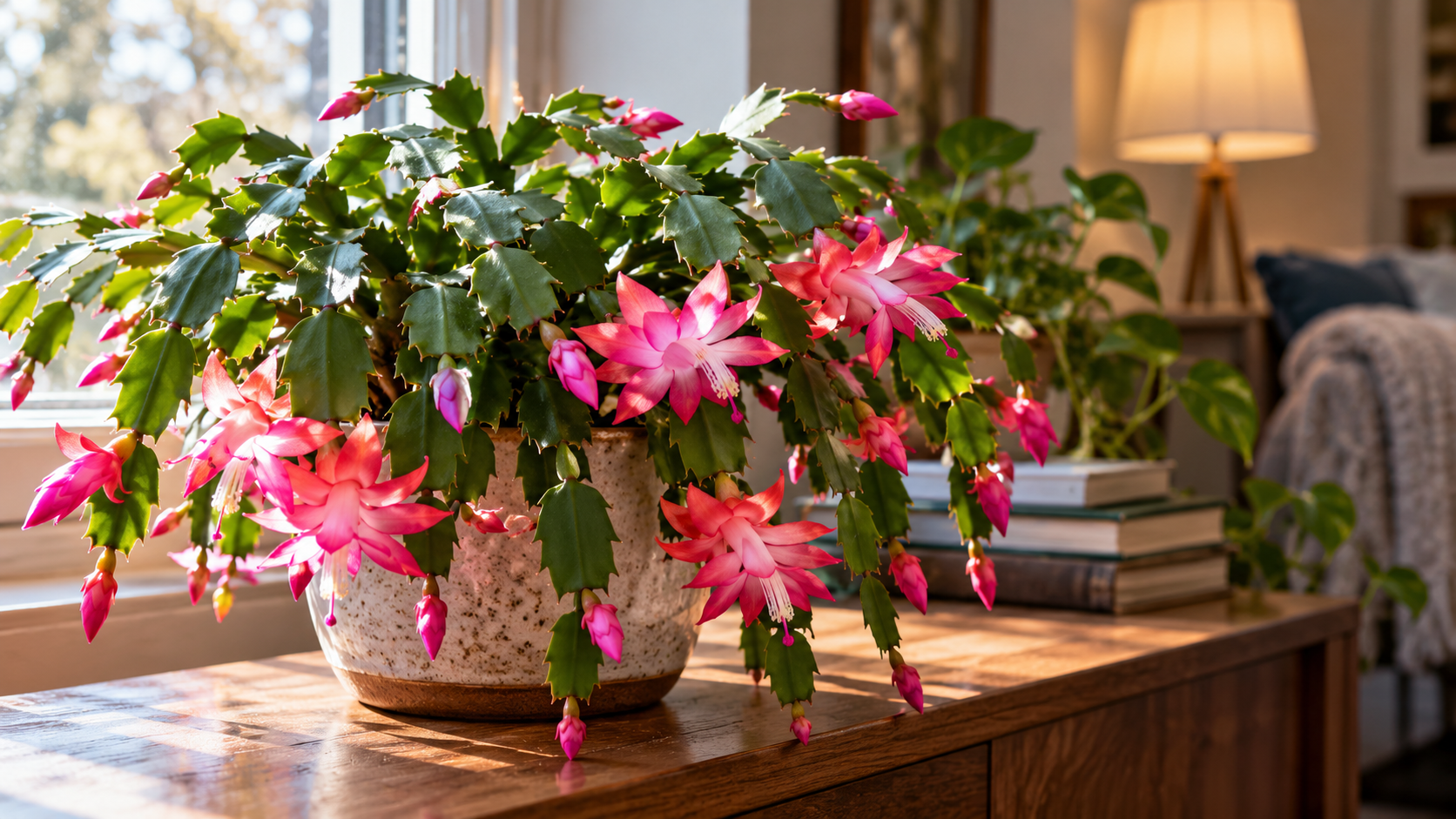
Tiny buds usually form near the tips of mature segments. At first they may resemble small pointed structures that are easy to overlook. As they enlarge, their color and shape become clearer. Once you see developing buds, the plant has already responded to some combination of cues; the immediate goal shifts from induction to retention.
Bud drop can happen after sudden changes in temperature, light, humidity, orientation, or watering. A plant kept in a cool room during bud formation may shed buds when brought abruptly into a very warm location beside a heater. Another may drop buds after repeated drying or after sitting in wet soil. In some cases an exceptionally heavy bud load can be thinned naturally by the plant.
The safest response is to maintain as much stability as practical. Keep the plant away from heating vents and cold drafts. Avoid repeatedly rotating or relocating it to create a more attractive display. If it must be moved for visitors or decoration, make the change carefully and as early as possible, ideally when buds are still small, with attention to similar light and temperatures.
Match watering to stage and conditions
During active growth, a holiday cactus usually appreciates a fairly consistent root-zone moisture pattern without becoming waterlogged. During cooler, darker periods before bud formation, water use may decrease. This calls for checking the pot more carefully, not withholding water for a fixed number of weeks regardless of the plant’s condition.
Once buds form, severe drying can stress the plant, but saturation remains risky. Water the medium thoroughly when the root zone genuinely needs it, then allow excess water to drain. Empty outer pots and saucers. If a plant looks limp while the medium is wet, investigate roots rather than automatically watering again.
Think about the medium as a whole. The top may look dry while the lower section stays damp. In a large pot, an observation stick or gentle check deeper in the medium can help. In a small pot, a change in weight may be informative. The correct interval depends on pot material, medium, root volume, temperature, and light.
Avoid water splashing onto delicate flowers as a substitute for humidity control. If the air is very dry, make gentle room adjustments rather than spraying cold water directly over buds. Sudden care changes during bloom are often more disruptive than modest deviations from a theoretical ideal.
Diagnose a nonflowering plant in sequence
Start with the easiest question: is the plant vigorous enough to flower? If stems are shriveled, roots are failing, or pests are present, restore health before attempting to manipulate seasonal cues. Next ask whether the plant receives adequate suitable daylight; a very dim location may leave it with little energy for sustained growth or flowering.
Then review its nighttime environment for the previous six to eight weeks or longer, depending on its type. Are the nights relatively cool? Is an overhead light on late into the evening? Does the plant stand beside a lamp used every night? Has it been moved repeatedly between rooms? One of these factors may explain why it grew stems but did not produce buds.
Finally, consider plant maturity and cultivar. A tiny new cutting is not equivalent to a well-established plant with many mature segments. Some varieties flower more freely than others, and the timing of production-house treatments can change the flowering behavior of a recently purchased plant. Do not compare a freshly purchased blooming specimen with a small cutting on the assumption that identical care will produce identical results that year.
Example: a household autumn lighting plan
Imagine a mature Thanksgiving-type cactus in a Northern Hemisphere apartment. During summer it stands in bright filtered light, making new segments. In early autumn the owner moves it to a moderately cool spare room that receives good natural light but little artificial light after evening. For several weeks, they leave its daytime position consistent and avoid heating that room unnecessarily at night.
They check the medium before watering rather than soaking it every weekend. Small tip buds eventually appear. Instead of moving the plant immediately onto a heated mantel, they leave it where the buds started for a while and choose a display position with similar conditions if a move becomes necessary.
Contrast this with a cactus in a bright living room where ceiling lights remain on past midnight and night temperatures stay high. That plant may remain healthy and continue growing stems but fail to set buds. The difference is not that one owner used a secret fertilizer; it is that the plants experienced different seasonal signals.
These examples illustrate principles rather than prescribing a timetable for every climate. In a tropical apartment, a deliberately cooler position or other controlled cues might matter more than a naturally shortening day. In a Southern Hemisphere location, the relevant season occurs at different months. Observe your plant and adjust the reasoning accordingly.
What bud drop tells you—and what it cannot tell you
Bud drop after the first visible buds may reflect environmental instability, but it does not always reveal which factor mattered. Review recent changes one at a time. Did you move the plant? Did a heating system start running? Did the pot dry far more than usual, or was water trapped in an outer container? Did sunlight exposure change dramatically after moving a curtain or changing the window position?
If buds drop but stems stay firm and healthy, resist emergency repotting or heavy fertilization. Stabilize the conditions and continue appropriate care. The plant may still open remaining buds, or you may learn enough to improve the following season. If bud drop accompanies collapsed stems, blackened roots, or obvious pests, address that more serious problem first.
After flowering: build next year’s plant
When the flowers finish, return attention to steady vegetative growth. Provide appropriate light, a suitable watering routine, and modest feeding during active growth. If shaping is needed, prune at the junction between segments rather than making ragged cuts across a segment. That can encourage branching, producing more potential flowering tips over time.
Short pieces can be propagated from healthy segments in an airy medium, but do not confuse propagating new stems with stimulating buds on the parent plant. One process generates new plants; the other requires a mature plant responding to seasonal cues. A cutting may take time to establish before it can offer an abundant display of its own.
Record when the plant last formed buds, where it was located, and the rough night conditions. A short note in a calendar can make the next flowering season less mysterious. Repeating a successful environmental pattern is usually more reliable than collecting a new fertilizer product for every missed bloom.
A holiday cactus that does not flower is not necessarily unhealthy. To solve the problem, separate three questions: whether it can grow, whether it receives the cues to initiate buds, and whether conditions remain stable enough to retain them. Solve those in order, and you will learn far more than by changing every care habit when the expected holiday date passes.
References
University of Minnesota Extension — Holiday cacti