Temperature Swings Indoors: How Heat, Cold Windows, and Vents Affect Houseplants
A well-kept plant collection depends on decisions that can be checked later, not on quick fixes that change several variables at once. A practical approach to the topic of temperature swings indoors should make the next decision clearer, not add another rigid schedule to remember. The central principle is that plants respond not only to average temperature but also to rapid changes and localized hot or cold zones around windows, doors, and vents. That matters here because a thermometer across the room may miss the conditions touching leaves on a cold windowsill or directly above a radiator. Seasonal sun angle matters because a location that is gentle in one part of the year can become much brighter or dimmer later. Seasonal daylight, heating, cooling, and furniture changes can alter a plant’s microclimate even when the pot never moves. The goal is a calmer method: understand the likely process, check the strongest clues, make one change, and let the next trend provide feedback.
Why This Pattern Develops
The most important point is that Plants respond not only to average temperature but also to rapid changes and localized hot or cold zones around windows, doors, and vents. That statement is useful because it describes a process, not a calendar rule, and it gives you something concrete to compare with the plant’s response. Understanding the mechanism gives you a reason to pause when a popular shortcut does not match the conditions you can observe. A clear mechanism also makes later troubleshooting faster because you know which variables are capable of producing the pattern you are seeing. A practical indoor setup should support the plant without making watering, cleaning, inspection, or normal use of the room unnecessarily difficult. With that foundation in place, the next inspection can focus on evidence rather than on every possible explanation.
Think in Microclimates, Not Room Labels
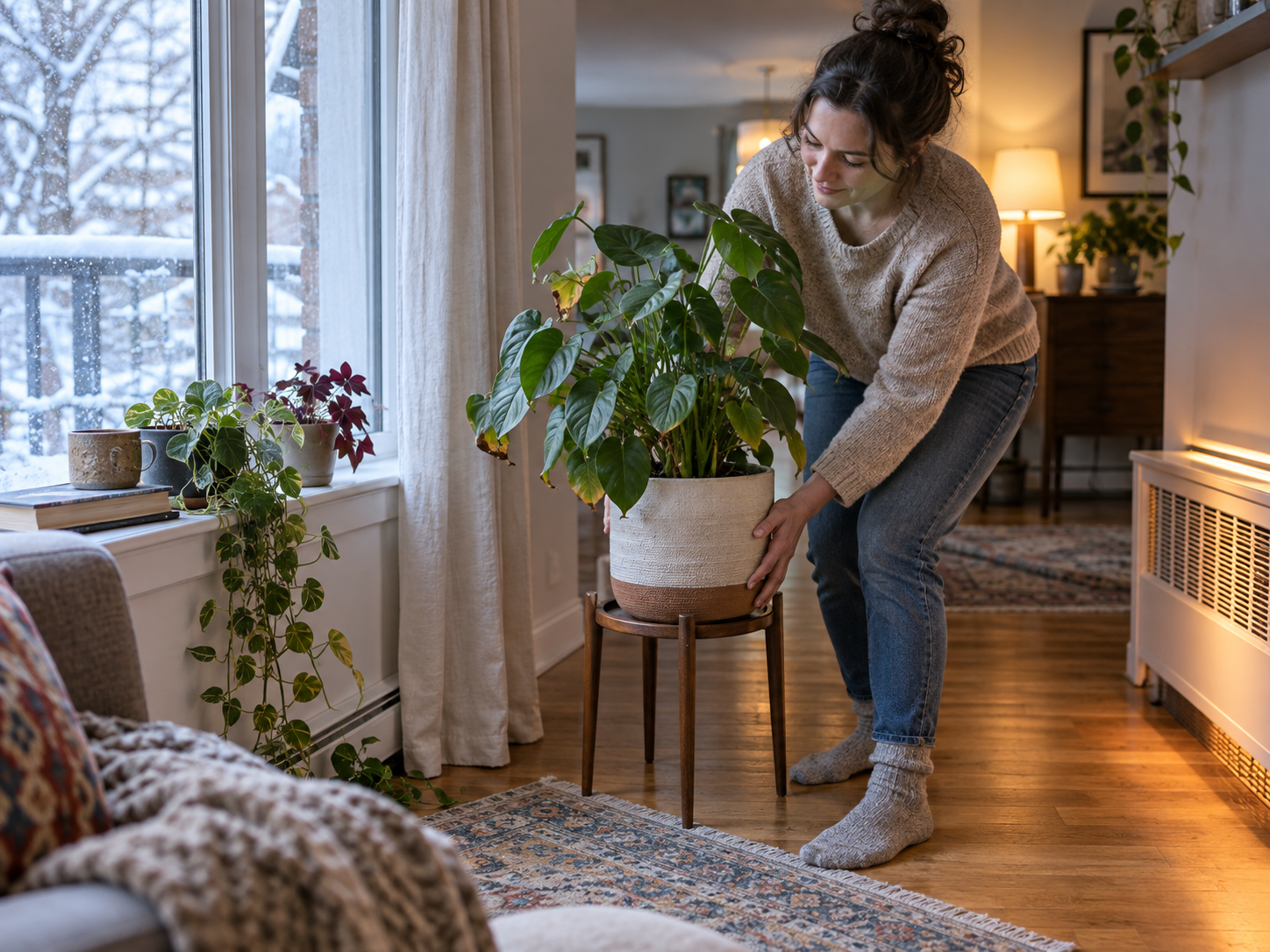
Environmental context helps explain why two similar plants can respond differently. Here, a thermometer across the room may miss the conditions touching leaves on a cold windowsill or directly above a radiator. Check the actual position of the leaves and root zone rather than relying on broad labels such as bright room, warm corner, or sheltered balcony. Container material and size can change how quickly moisture and temperature move through the root zone. If you use a meter, thermometer, or light reading, treat it as one piece of evidence and compare it with the plant’s later response. Room labels such as bright, warm, or humid are only rough descriptions; the exact plant position often matters more. Seasonal daylight, heating, cooling, and furniture changes can alter a plant’s microclimate even when the pot never moves. Rechecking those local conditions is especially worthwhile when the season, heating, cooling, or sun angle changes.
What to Check First
A better first check focuses on leaf edge damage near glass, sudden drooping after drafts, dry patches facing vents, nighttime temperature drops, and seasonal changes in window exposure. Compare those observations with the plant’s recent normal condition and give repeated patterns more weight than a single unusual leaf or one reading taken out of context. In this particular care decision, if one clue conflicts with the others, note the disagreement instead of forcing it to fit the first diagnosis that came to mind. Photos taken several days apart are often more useful than constant checking because gradual changes become more straightforward to see. This is also where Why Houseplant Leaves Curl can help, because it addresses a related decision that is easy to misread in isolation. The purpose of the check is to build enough agreement between clues that your next move is defensible and easy to evaluate.
Turn the Evidence Into One Clear Decision
Action is useful when it is specific and measurable. In this situation, Move plants a modest distance from the source of extremes while preserving appropriate light rather than relocating them to a much darker area. Treat that as a testable step, not as permission to overhaul the entire setup. The best next step is often the one that improves a limiting condition while leaving the rest of the system easy to monitor. If the step involves moving the plant, change the exposure gradually when a sudden jump in light, heat, or airflow could add stress. Another helpful reference is How to Rotate Indoor Plants for More Even Growth and Better Light, especially when the symptoms overlap and one visible sign could have several causes. After that step, return to observation and resist the urge to improve several other things in one round of changes.
A Short Care History Can Save Unnecessary Work
Recent history matters because plants do not always respond instantly. A change in the root zone or environment can happen first, while leaves show the consequence later. Reconstructing the order of events helps prevent a second intervention from being added before the first one has even had time to show its effect. Changes that occurred after the symptom began are less likely to be the original cause, even if they affect what happens next. This step is particularly useful when a symptom has several common explanations that look similar at first glance. A practical indoor setup should support the plant without making watering, cleaning, inspection, or normal use of the room unnecessarily difficult. Humidity, temperature, and airflow interact, so changing one factor can alter drying time and leaf comfort at the same time. This makes timing a practical filter instead of simply a guess about cause.
Three Ways People Accidentally Complicate the Problem
Good troubleshooting includes knowing what not to do. In this case, assuming every spot in one room has the same temperature, placing foliage against cold glass, and compensating for heat stress with constant extra watering. Resist the urge to stack treatments simply because the first improvement is not immediate. Do not confuse frequency with quality: repeating a weak or inappropriate action more often rarely turns it into the right solution. When the plant is already stressed, unnecessary repotting or moving can make it harder to separate the original issue from transplant or acclimation stress. Human eyes adapt quickly to indoor brightness, which is one reason direct observation of plant growth and leaf orientation is often more useful than room impressions. The more uncertain the diagnosis, the more valuable it is to avoid unnecessary variables.
Watch What Happens Next
A useful result is often stability before it is obvious recovery. Do not expect damaged tissue to become perfect again; instead, watch whether new damage slows and whether fresh growth develops under the improved conditions. For compact gardens, easier access and more consistent watering can be signs that the layout itself is working better. For this indoor gardening topic, if several plants improve or decline together, the shared environment deserves another look. Usable light at leaf level can change sharply over a short distance, especially beside windows with curtains, overhangs, or nearby buildings. Indoor conditions are highly local: a plant beside a window, under a vent, or behind a curtain can experience a different environment from one only a short distance away. Use the direction of the trend to decide whether to continue, refine, or reconsider the original approach.
Use Consistency Without Becoming Rigid
The simplest sustainable habit is this: check likely hot and cold zones during seasonal transitions, especially overnight and when heating or cooling systems begin running regularly. Repeating that process gives you a personal baseline that becomes more useful than generic timing recommendations. When a maintenance pattern starts creating unnecessary actions, simplify it back to observation, prioritization, and one measured response at a time. If one plant repeatedly needs special handling, consider whether its location or container is creating unnecessary maintenance. In this particular care decision, this is also where How to Arrange Houseplants Indoors Without Crowding Them can help, because it addresses a related decision that is easy to misread in isolation. a care rhythm built this way stays useful even when the plant’s growth rate or the room conditions change.
Bring the Pieces Together
The main lesson is to keep the decision connected to evidence. plants respond not only to average temperature but also to rapid changes and localized hot or cold zones around windows, doors, and vents. Use the most relevant observations, consider the environment, and make one change that can be evaluated later. That approach is slower than reacting to every symptom, but it produces a clearer baseline and usually prevents unnecessary stress. A reliable baseline is more valuable than a perfect-looking week because it helps you notice meaningful change early. A plant that is watched consistently gives you more useful information than one that is repeatedly adjusted without a stable baseline. A small digital thermometer-hygrometer can be useful for spotting patterns, but plant response still matters more than chasing one perfect number. Used consistently, it reduces guesswork without requiring perfect control over the growing environment.