Hanging Houseplants in Small Spaces: Light, Safety, and Watering Access
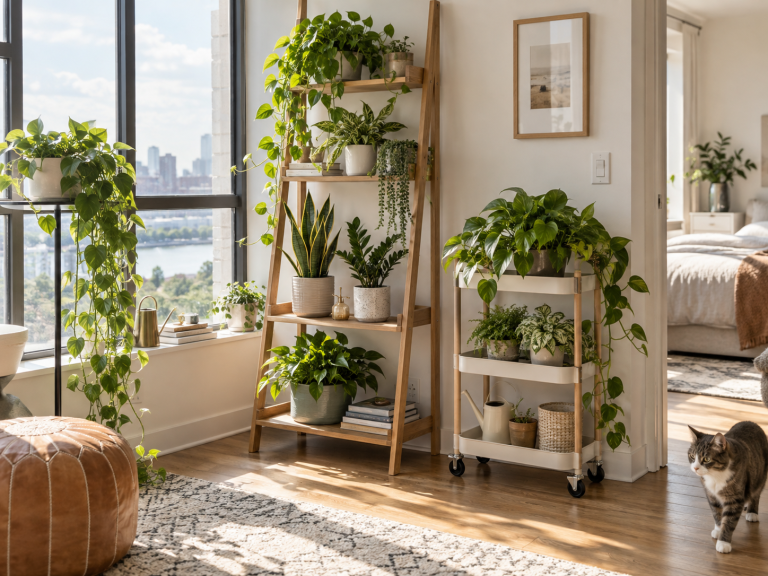
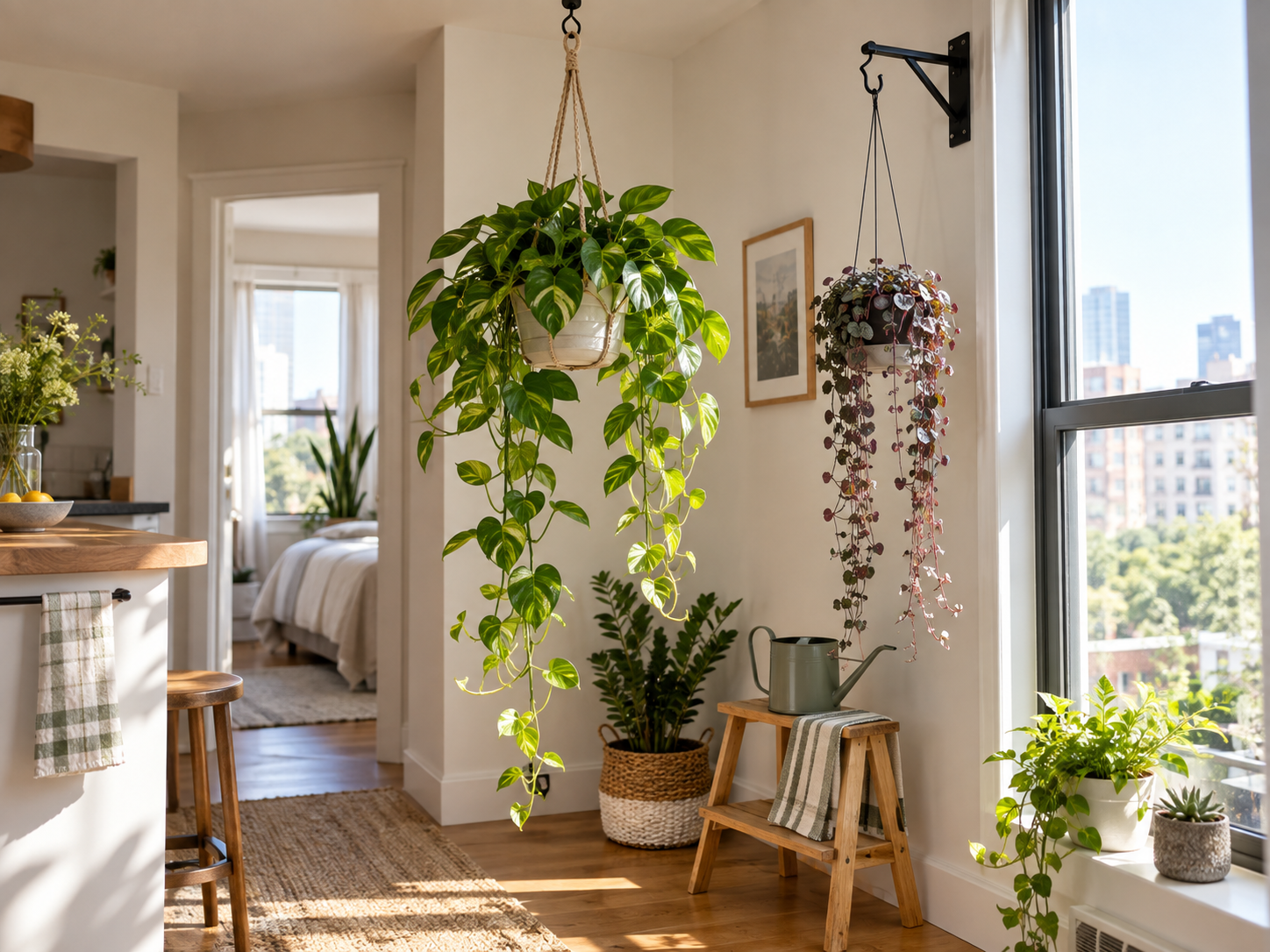
This topic is easiest to manage when you begin with the plant’s recent normal pattern and then look for meaningful changes. For everyday care, the topic of hanging houseplants in small spaces is best approached through factors that can actually be checked at home. The central principle is that a hanging plant saves horizontal surface area only if it remains safe to support and practical to water, inspect, and prune. That matters here because a light nursery pot can become much heavier after watering, and trailing growth can eventually reach furniture, walkways, or windows. Container and display choices affect care because they change stability, drainage access, weight, and how easily a plant can be inspected. The mature size of a plant is a more useful planning number than the size it occupies on the day you buy it. instead of treating every possible cause at once, the steps below narrow the situation into observations, context, one useful response, and a follow-up check.
What Is Actually Happening
The underlying process can be summarized this way: A hanging plant saves horizontal surface area only if it remains safe to support and practical to water, inspect, and prune. Understanding that mechanism keeps the rest of the advice from turning into a list of disconnected instructions. A clear mechanism also makes later troubleshooting faster because you know which variables are capable of producing the pattern you are seeing. It also explains why two plants with similar symptoms may need different responses when their root zones or environments are not alike. The mature size of a plant is a more useful planning number than the size it occupies on the day you buy it. Decorative systems work best when the inner growing pot, saucer, or cachepot can be handled without moving several other plants. Once this relationship is clear, the rest of the care decision becomes less difficult to keep proportionate.
Look for Agreement Between the Clues
Inspection works best when it is consistent. Use anchor rating, ceiling or wall material, wet pot weight, reach height, drainage method, sun exposure, and mature trailing length as your main checkpoints, and compare them with previous photos or notes if you have them. For this small-space gardening topic, if one clue conflicts with the others, note the disagreement instead of forcing it to fit the first diagnosis that came to mind. The goal is not to collect every possible measurement; it is to gather enough consistent evidence to choose a reasonable next step. Vertical space can increase capacity, but height also changes light, wind, heat, stability, and the difficulty of watering each container. A consistent inspection gives you a baseline that becomes more valuable each time it is repeated.
Why Timing Matters
If two causes look similar, timing can help separate them. Ask what changed first, how long the plant was exposed to that condition, and whether the symptoms are continuing or merely showing old damage. A major clue is whether the timing lines up with the beginning of the visible change. Repeated problems all at once of year often suggest that the routine has not yet adjusted to changing light or temperature. The mature size of a plant is a more useful planning number than the size it occupies on the day you buy it. Small-space gardening becomes easier when plants with similar needs are grouped into a few manageable care zones. Treat the timeline as supporting evidence, then compare it with what the plant is showing now.
Make the Smallest Useful Change
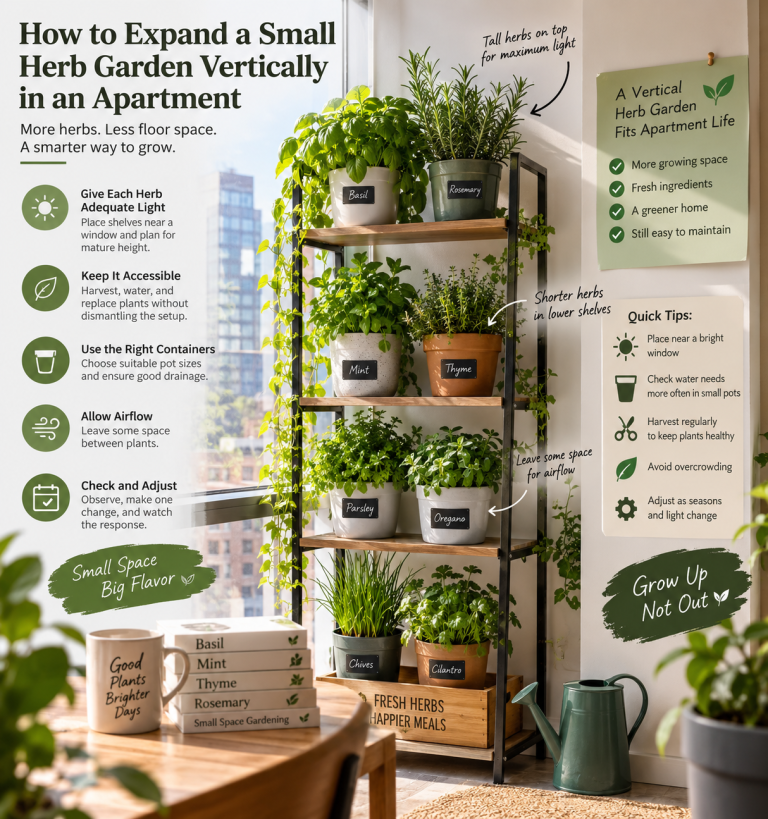
Turn the diagnosis into one clear move: Choose a position that can support the full wet weight and allows the plant to be lowered or reached without unsafe stretching. The purpose is not to force instant improvement but to create conditions in which the plant can show whether the reasoning was sound. If roots or soil are involved, make sure the container can drain before adding water intended to correct another problem. Avoid repeating the same intervention too quickly because plants often need time before a useful response becomes visible. Weight, runoff, wind exposure, and the path people use through the space are practical constraints, not decorative details. Good small-space design leaves some open room for airflow, drainage, growth, and maintenance instead of treating every empty surface as a place for another pot. A focused change is less difficult to evaluate and usually easier on a plant that is already adapting.
Why Location Changes the Outcome
The surrounding space can amplify or soften the issue because a light nursery pot can become much heavier after watering, and trailing growth can eventually reach furniture, walkways, or windows. A decision that ignores those local conditions may solve one problem while creating another. For this small-space gardening topic, check what the plant experiences at leaf level and in the pot, not what the room feels like from the doorway. A location that works during mild weather may behave very differently during the brightest or coolest part of the year. For this small-space gardening topic, for a second checkpoint, use How to Rotate Indoor Plants for More Even Growth and Better Light to compare the plant’s response with a care factor that has already been discussed on RootLuma. The exact location should therefore be part of every follow-up check.
Common Habits That Make Care Harder
Watch especially for using decorative hooks without load information, hanging directly over electronics or furniture, and placing plants too high to inspect for pests. Each shortcut removes useful information from the next check, which is why slower, more deliberate care often produces a clearer result. The safest response to uncertain evidence is usually to preserve suitable basics while you collect a clearer pattern. When the plant is already stressed, unnecessary repotting or moving can make it harder to separate the original issue from transplant or acclimation stress. Leaving some empty space is functional because it preserves airflow, light distribution, and room for future growth. If you are building a more complete routine, pair this advice with Balcony Gardening for Beginners so the two care decisions support rather than contradict each other. Good troubleshooting protects the clarity of your next inspection as much as it protects the plant.
Signs That the Situation Is Stabilizing
The plant’s next response is part of the diagnosis. Over the following checks, look for a slower rate of decline, normal drying or growth patterns, and fewer new symptoms rather than judging success by one old leaf. If the identical symptom continues on new growth, revisit the diagnosis instead of repeating the original correction automatically. For compact gardens, easier access and more consistent watering can be signs that the layout itself is working better. For the setup described here, compact gardens are easier to maintain when containers share a few predictable care zones instead of every pot requiring a completely different routine. Weight, runoff, wind exposure, and the path people use through the space are practical constraints, not decorative details. Progress becomes easier to judge when the same indicators are checked at similar intervals.
Turn the Lesson Into a Repeatable Habit
Long-term confidence comes from a routine you will actually use. check hardware periodically, manage trailing stems before they obstruct movement, and water in a location where runoff can be controlled. Add notes or photos only when they help you recognize patterns; the goal is clarity, not a complicated tracking system. Grouping similar tasks can save time, but grouping every plant under the same watering or feeding schedule usually creates problems. When a routine starts creating unnecessary actions, simplify it back to observation, prioritization, and one measured response at a time. This is also where How Far Should Houseplants Be From a Window? A Practical Light-Distance can help, because it addresses a related decision that is easy to misread in isolation. A routine built this way stays useful even when the plant’s growth rate or the room conditions change.
A Simple Way to Remember the Approach
The most reliable long-term approach is not a perfect schedule but a dependable way to decide. Remember that a hanging plant saves horizontal surface area only if it remains safe to support and practical to water, inspect, and prune. Combine that principle with the clues you can actually observe, then let the plant’s next response confirm whether the adjustment was useful. The long-term goal is confidence built from observation in place of dependence on rigid rules. When the space and routine are easy to understand, small problems can be addressed before they trigger a chain of unnecessary corrections. Leaving some empty space is functional because it preserves airflow, light distribution, and room for future growth. The mature size of a plant is a more useful planning number than the size it occupies on the day you buy it. Used consistently, it reduces guesswork without requiring perfect control over the growing environment.