Root Rot in Houseplants: Early Signs, Causes, and a Calm Response
The most useful way to approach this topic is to separate visible evidence from assumptions and then work from the strongest clues. For everyday care, the topic of root rot in houseplants is best approached through factors that can actually be checked at home. The central principle is that root rot is associated with roots remaining in poorly aerated, persistently wet conditions long enough for healthy root function to break down. That matters here because the visible leaves often show stress only after problems have already developed below the soil line. Changing several care factors at once makes it difficult to know which adjustment helped or caused new stress. Because indoor plants grow at different rates through the year, the identical action can be helpful in active growth and unnecessary during a slower period. By the end, you should have a simple decision process that can be used again when the same specimen or growing area changes with the season.
What the Plant Is Responding To
The most important point is that Root rot is associated with roots remaining in poorly aerated, persistently wet conditions long enough for healthy root function to break down. That statement is useful because it describes a process, not a calendar rule, and it gives you something concrete to compare with the plant’s response. Understanding the mechanism gives you a reason to pause when a popular shortcut does not match the conditions you can observe. A clear mechanism also makes later troubleshooting faster because you know which variables are capable of producing the pattern you are seeing. Because indoor plants grow at different rates through the year, that same action can be helpful in active growth and unnecessary during a slower period. With that foundation in place, the next inspection can focus on evidence rather than on every possible explanation.
Separate a Real Trend From a One-Off Change
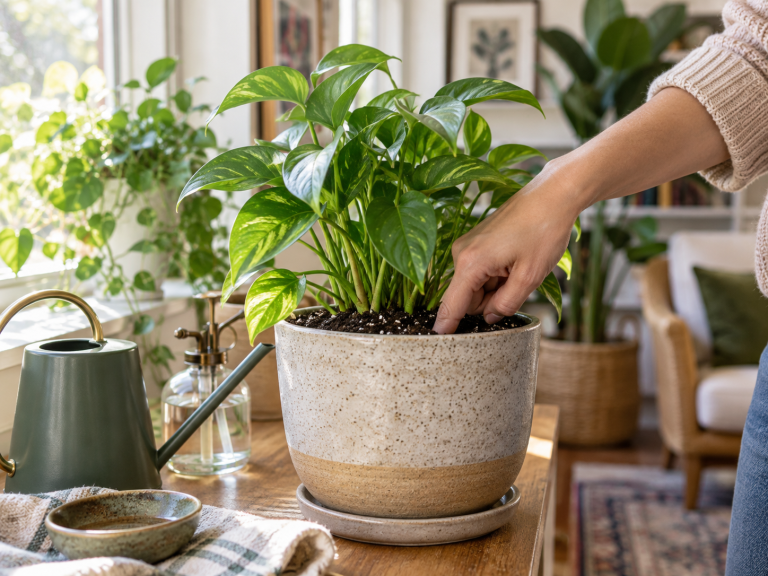
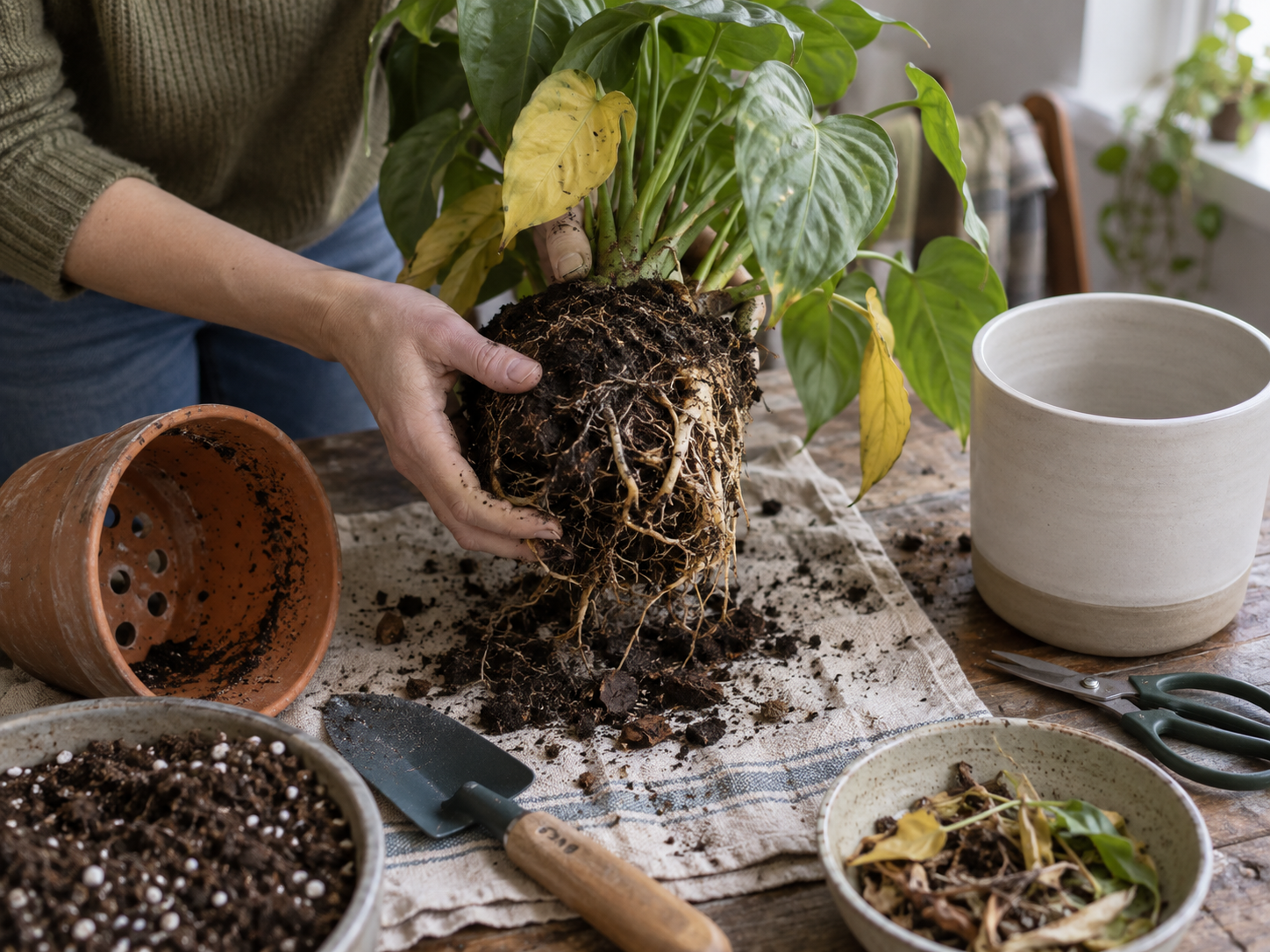
Start with a short inspection rather than a treatment. The most useful clues here are persistent wetness, sour or stagnant odor, soft dark roots, sudden yellowing, weak stems, and decline that does not improve after ordinary watering. None of them needs to be perfect on its own; the goal is to see whether several indicators point in the same direction. The best clues are usually the ones you can observe again after the adjustment, because they give you a built-in way to judge the later result. To keep the following step grounded, cross-check this with How to Repot a Houseplant Without Stressing It before assuming the most dramatic explanation is the correct one. For the setup described here, if the pattern is still mixed after this inspection, waiting for another check can be more useful than forcing a diagnosis.
Why Season and Position Belong in the Decision
Microclimates matter here: the visible leaves often show stress only after problems have already developed below the soil line. Recheck the situation after seasonal changes, furniture moves, heating or cooling changes, or anything else that alters the plant’s immediate environment. Environmental context is why copying another person’s schedule can fail even when the species is that same. Do not assume that changing the plant means moving it far; sometimes a few inches, a sheer curtain, or a small spacing adjustment is enough. If that part of the diagnosis is still unclear, our article How to Check Soil Moisture Before Watering Houseplants provides a practical reference without requiring you to change everything at once. That context helps explain why care needs can shift even when the plant itself has not moved.
Make the Smallest Useful Change
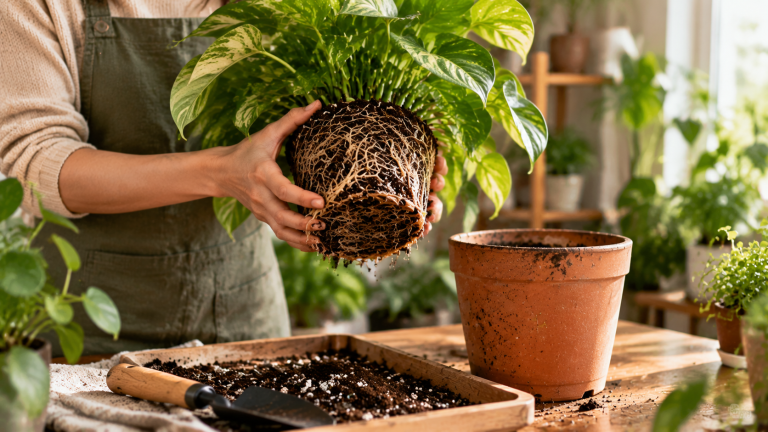
When you are ready to act, keep the intervention proportionate: Confirm the root-zone problem before cutting roots or repotting, then remove only clearly damaged material and correct the conditions that kept the mix wet. Small, evidence-based changes are easier to reverse, repeat, or refine than a complete care overhaul. Use the response to refine the plan rather than assuming the first adjustment must be permanent. Avoid repeating the same intervention too quickly because plants often need time before a useful response becomes visible. Because indoor plants grow at different rates through the year, the same action can be helpful in active growth and unnecessary during a slower period. Roots need both moisture and oxygen; a mix that stays saturated for too long can be as limiting as one that dries excessively fast. The next useful information comes from the plant’s follow-up response, not from adding another intervention immediately.
Use the Previous Week as Evidence
The sequence of events is often more informative than the severity of one symptom. Review what changed before the pattern appeared, including care routines, placement, room climate, and any recent disturbance. This does not prove a cause, but it helps you rank explanations instead of treating every possibility as equally likely. This step is particularly useful when a symptom has several common explanations that look similar at first glance. This prevents the common cycle of forgetting a recent adjustment and then treating its delayed effect as a brand-new problem. The best comparison is usually the plant against its own recent healthy pattern in place of against a perfect specimen in a photograph. Roots need both moisture and oxygen; a mix that stays saturated for too long can be as limiting as one that dries excessively fast. This makes timing a practical filter rather than a guess about cause.
Three Ways People Accidentally Complicate the Problem
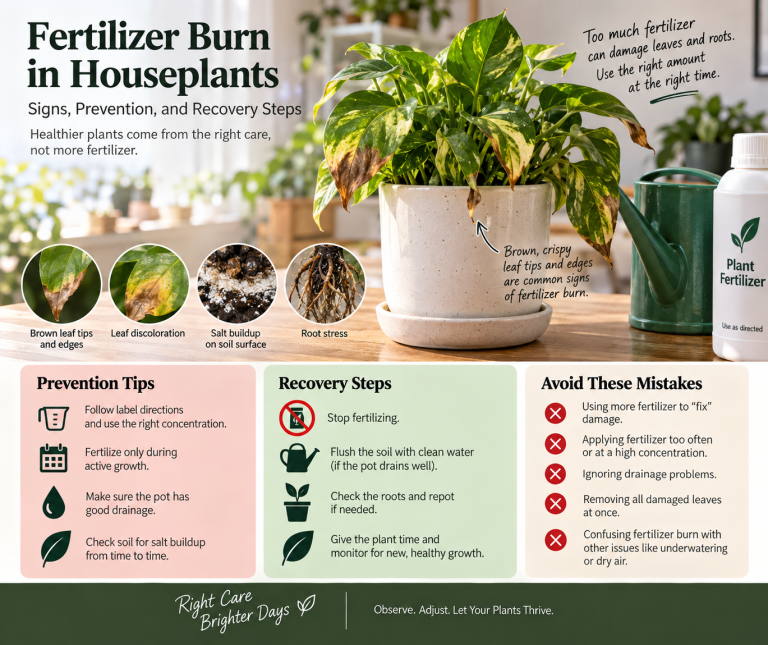
The most common mistakes are treating every yellow leaf as root rot, cutting healthy firm roots, reusing waterlogged mix, and placing a recovering plant in harsh sun. These responses usually come from trying to make the plant look better immediately, but they can hide the original cause or create a second problem before the first one is understood. Switching between remedies too quickly can produce a confusing mix of responses that is harder to interpret than the original problem. Do not confuse frequency with quality: repeating a weak or inappropriate action more often rarely turns it into the right solution. For plant-care questions, the condition of the root zone and the quality of new growth usually deserve more attention than one damaged older leaf. Good troubleshooting protects the clarity of the follow-up check as much as it protects the plant.
Give the Plant Time to Answer
Measure improvement with repeatable observations. Compare photos, pot condition, new growth, leaf firmness, or other relevant signs at similar times rather than checking constantly and reacting to small day-to-day fluctuations. The goal of monitoring is to answer whether the underlying pattern is improving, not to inspect the plant so often that normal daily movement becomes alarming. For light or placement issues, more balanced growth and healthier spacing between leaves may take several weeks to become obvious. Because indoor plants grow at different rates through the year, the same action can be helpful in active growth and unnecessary during a slower period. Repotting is most useful when it solves a specific problem such as crowding, degraded mix, or poor drainage rather than being done by calendar alone. Progress becomes easier to judge when the same indicators are checked at similar intervals.
Turn the Lesson Into a Repeatable Habit
A flexible routine works better than a rigid schedule. watch drying time, drainage, and new growth for several weeks instead of expecting an immediate cosmetic recovery. Let the observation tell you whether an action is necessary rather than treating inspection day as treatment day. If one plant repeatedly needs special handling, consider whether its location or container is creating unnecessary maintenance. A repeatable sequence of checks is usually clearer than a long checklist that is followed only when something looks wrong. Root-zone problems are often hidden until the leaves respond, which makes drainage behavior and soil condition useful clues. If you are building a more complete routine, pair this advice with Why Houseplant Leaves Turn Yellow so the two care decisions support instead of contradict each other. That is how general advice turns into a baseline that is specific to your own home.
Use the Same Logic Next Time
Bring the process back to one idea: root rot is associated with roots remaining in poorly aerated, persistently wet conditions long enough for healthy root function to break down. Observe first, rank the likely causes, make a proportionate change, and watch the trend. That sequence keeps everyday plant care understandable even when the exact answer differs from one home to another. With that approach, each new season or care challenge becomes an opportunity to refine the system instead of starting over. across repeated checks, the plant’s own history becomes the most useful reference for what normal looks like in your home. The best comparison is usually the plant against its own recent healthy pattern rather than against a perfect specimen in a photograph. Used consistently, it reduces guesswork without requiring perfect control over the growing environment.