Peace Lily Not Blooming? Check Light, Growth, and Expectations
A peace lily can produce attractive leaves for years while offering few of the white structures that make it so popular. If yours looks green and healthy but never blooms, the problem is not necessarily an unseen disease or a missing miracle fertilizer. Flower production depends on maturity, light, genetics, growing conditions, and sometimes the way a commercial plant was brought into bloom before sale.
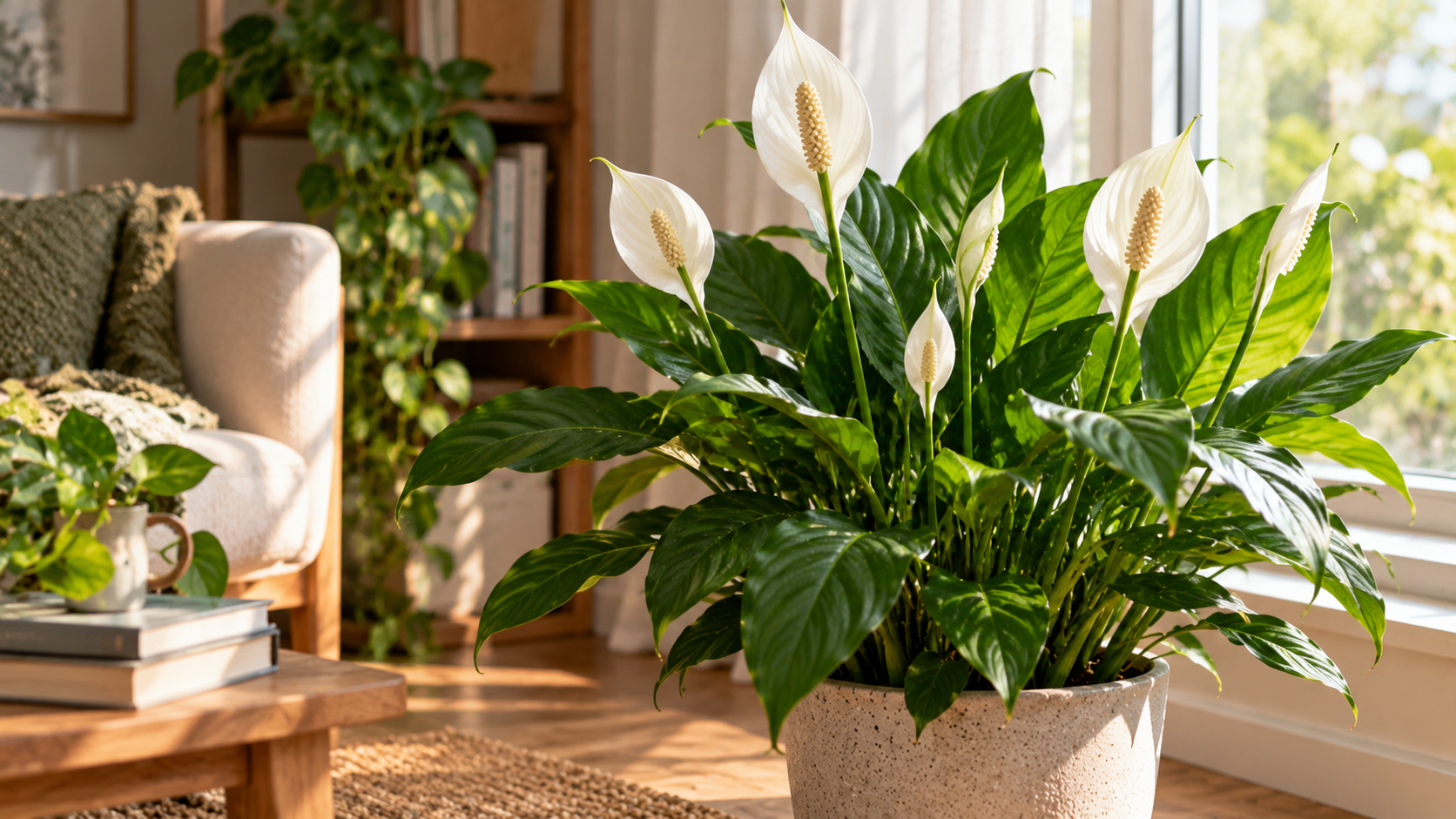
It helps to know what you are actually waiting for. The familiar white “flower” is a spathe, a modified leaf surrounding the central spadix, where the tiny true flowers occur. As the display ages, the spathe may turn green and later brown. Not every change in color indicates poor care. A blooming question is therefore different from diagnosing yellow leaves, root rot, or general poor growth.
First distinguish a healthy non-bloomer from a stressed plant
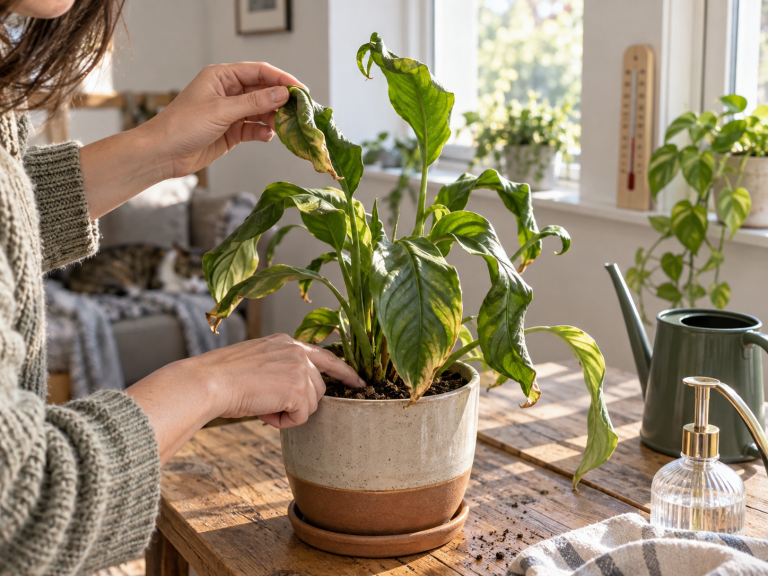
Look at the whole plant before buying a bloom booster. Is it making new leaves? Are existing leaves firm, appropriately colored, and proportional to its cultivar? Does the pot dry at a predictable pace? A plant that continues growing without new spathes is in a different situation from one that is shrinking, wilting, or developing black roots.
A vigorous non-bloomer often points toward insufficient light for flowering, an immature or low-blooming selection, or ordinary seasonal variation. A declining plant needs its fundamental conditions corrected before flower production becomes a sensible goal. Fertilizer will not compensate for roots sitting in a saturated pot or foliage being burned by harsh direct sun.
Take a photograph of the plant in its usual location, including the nearest window. Record how much natural light it receives during the day, whether curtains obstruct it, and whether tall neighboring plants cast shade. These simple details make the next decision more grounded than comparing your plant with a nursery photograph taken under commercial production conditions.
Light is often the limiting factor
Peace lilies tolerate lower light than many popular flowering houseplants, but tolerance is not the same as abundant flowering. In a dim corner, a plant may maintain older green leaves while producing fewer new flowers. Brighter indirect light often improves its potential to grow and bloom, provided exposure is increased gradually and direct sun does not scorch leaves. The Royal Horticultural Society advises bright, indirect light for stronger growth and flowering, while noting that peace lilies may survive in deeper shade yet rarely bloom there. This is a reason to test a better position, not a promise that every healthy plant will produce spathes on a fixed schedule.
Move the pot toward a bright window filtered by a sheer curtain or away from the deepest part of the room. Do not shift a long-shaded plant straight into intense afternoon sunlight. Observe how leaves respond: bleaching, papery patches, or rapid drooping during direct exposure can indicate excessive heat or sun. A change to a brighter but gentler location is usually more useful than placing the plant in the harshest available beam.
Room orientation, nearby buildings, window glass, and seasonal day length all affect usable light. The amount of light a human perceives is a poor measurement of what a plant receives. For a deeper explanation of placement and supplemental lighting, see RootLuma’s guide to grow-light brightness, distance, and duration. A small suitable grow light can help where windows are genuinely insufficient, but the goal is consistent appropriate illumination rather than running a lamp around the clock.
Does a peace lily need direct sun to flower?
Not necessarily. Gentle morning light may suit a particular home and cultivar, but strong direct sun can damage foliage. An appropriately bright, indirect environment is a more reliable general starting point. Judge the result by new growth over time, not whether the pot looks brighter for a few minutes at noon.
If you relocate the plant, change one major factor at a time. A simultaneous repot, heavy feeding, hard pruning, and light increase makes any subsequent improvement or decline difficult to interpret. Keep watering and temperature reasonably consistent while watching how the plant responds to a more useful position.
Maturity, cultivar, and commercial production matter
Young plants may take time before blooming regularly. Different cultivars also have different growth habits and flowering tendencies. A compact peace lily purchased with several spathes may have been grown under controlled greenhouse conditions designed to produce a marketable display. Those conditions cannot always be duplicated on a shaded bookshelf.
Some commercial peace lily production uses plant growth regulators to induce or coordinate flowering. That does not mean a household grower should attempt similar treatments. It is a reason to adjust expectations when a plant blooms heavily at purchase and then becomes a foliage plant at home. The disappearance of its original spathes is a normal life-cycle event, not evidence that something has been permanently damaged.
Ask whether your plant has ever produced a new spathe since purchase. If not, and the foliage remains vigorous, focus on maturation and the light environment. If it bloomed every year before you moved it to a darker room, the timing of that change is a more useful clue than switching fertilizer brands.
Review roots and potting mix without disturbing them unnecessarily
Peace lilies prefer adequate moisture, but constantly waterlogged medium can restrict oxygen around roots. A pot that remains heavy and wet for a long time may be too large, lack effective drainage, contain dense old medium, or receive too much water for current growth. These conditions can reduce vigor and indirectly affect flowering.
On the other hand, letting the plant repeatedly wilt hard between waterings is not an effective way to induce blooms. Severe drought stress costs the plant resources. Learn the pot’s normal water use and irrigate when appropriate for the medium and conditions, allowing excess to drain. Check the whole root zone rather than relying only on the appearance of the top centimeter.
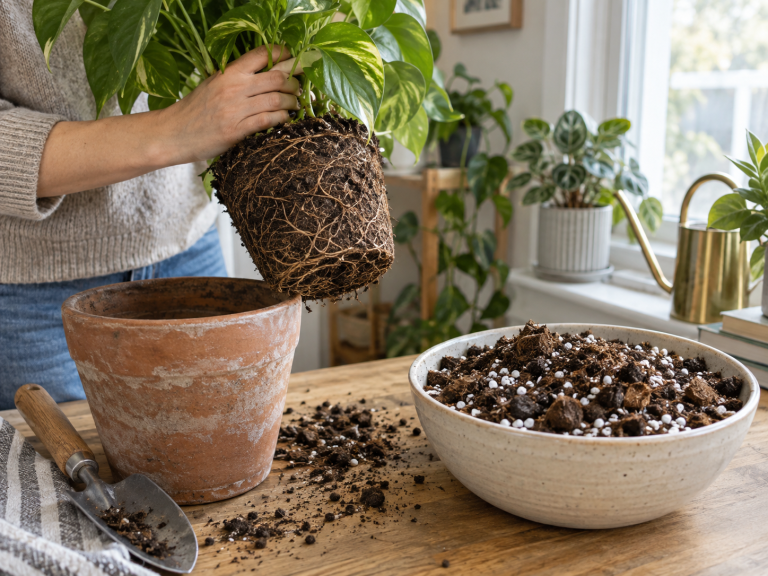
If roots have genuinely filled the container or the medium has degraded, a modest repot may be appropriate. Do not move the plant into an enormous pot simply to “give it room to bloom.” Excess unused media can remain wet for too long. RootLuma’s repotting guide explains how to select a container according to root condition rather than leaf size alone.
Fertilizer can support growth, not command flowers
A healthy peace lily needs nutrients, but abundant fertilizer is not a substitute for suitable light and viable roots. Excess soluble salts may damage roots and leaf tips. Before adding more product, check whether the potting mix already contains a controlled-release fertilizer and whether you have been feeding on a schedule that ignores actual plant growth.
If the plant is actively growing in appropriate light and its medium lacks sufficient nutrients, use a balanced houseplant fertilizer at a rate supported by the label. There is no need to assume that a high-phosphorus “bloom booster” will solve every non-blooming case. Nutrient imbalance is just one potential factor, and an apparently healthy plant without flowers may not be deficient at all.
Wash hands after handling fertilizer, store it away from children and pets, and avoid applying concentrates directly to dry, stressed roots unless the label instructs you to do so. Root health is the foundation of flowering; forcing feeding under poor conditions can make a weak plant worse.
A practical troubleshooting sequence
What you observe Most useful question First reasonable response
Lush leaves but no new spathes Is usable light too low for flowering? Trial a brighter indirect position
Slow growth and a pot that stays wet Are roots receiving enough oxygen? Reassess pot size, drainage, and watering
Brown scorched patches after relocation Was the light increase too abrupt? Protect from harsh direct sun
Frequent dramatic wilting Is the medium drying beyond the plant’s needs? Improve watering consistency
Plant recently purchased in bloom Were original greenhouse spathes simply aging? Allow acclimation and reassess expectations
Distinct decline in many leaves Is this a broader health problem? Examine roots, pests, and environment before chasing blooms
Use this table to choose the first investigation, not as a diagnosis by itself. Several causes can coexist, but correcting the most obvious limiting factor first makes it easier to see whether your decision helped.
A realistic apartment example
A peace lily has sat two meters from a north-facing window for eighteen months. Its leaves remain green, and it produces occasional small new leaves but no spathes. The owner considers weekly bloom fertilizer. A more informative first experiment is moving the pot closer to bright but gentle window light, maintaining consistent watering, and photographing growth monthly. If new leaves become sturdier and the plant gradually gains vigor, the environmental change may be valuable even before a flower appears.
Contrast that with a peace lily whose leaves yellow rapidly while the pot smells sour and stays saturated. Giving that plant more light alone may not resolve a failing root system. Treat the root problem first, and do not measure success by flower count while the plant is struggling to survive.
How long should you wait?
There is no credible universal promise that a peace lily will bloom thirty days after a change. Root recovery, leaf growth, and floral initiation take time, and cultivar differences are substantial. Observe over an appropriate growing period rather than moving the pot weekly in frustration. If the plant is healthy but still does not flower, it may simply be better suited to your home as a foliage plant.
Write a brief baseline: current location, watering pattern, last repot, fertilizer use, and the date of any new spathes. This helps identify whether a seasonal increase in light corresponds with flowering. It is also a practical antidote to claims that one ingredient or secret schedule guarantees blooms.
How to compare flowering without guessing
A simple seasonal record is especially useful with peace lilies because their response to changes may be delayed. Choose a baseline month and note where the pot sits, the window orientation, whether a curtain is normally closed, and how often the medium reaches an appropriate watering point. Count newly opened leaves and new spathes separately. A plant producing larger, healthy leaves but no flowers is giving you different information from one whose new leaves are increasingly small.
After improving light, avoid relocating the plant again for every cloudy day. Observe a reasonable period of new growth, keeping other major factors stable. If blooming eventually resumes, you have evidence that the new conditions are supportive, but you cannot infer that the light move was the sole cause; plant maturity and season may also have changed.
If flowers remain absent, consider cultivar and production history before purchasing elaborate equipment. A leafy peace lily can still be a successful indoor plant. If its environment cannot safely support bright enough light for frequent blooms, accepting occasional or absent flowers is often preferable to damaging the foliage in harsh sun.
What about temperature changes?
Consistent, species-appropriate indoor temperatures support normal growth. Extreme cold near glass, repeated drafts, or hot air from a heater can stress a peace lily even when a thermostat reads comfortably. There is no reason to deliberately expose a household plant to damaging cold as a homemade flowering trigger. Keep the environment steady and use reliable horticultural advice for any temperature-related flowering recommendations.
A note on old flower stalks
Remove truly spent stalks near their base with clean tools when they have finished aging. Distinguish them from narrow new growth emerging from the crown; cutting an unopened spathe by mistake defeats the purpose. Compost or discard old plant material appropriately, and avoid leaving wet dead stalks sitting in the leaf bases.
Frequently asked questions
Are the green spathes a problem? Not automatically. Spathes commonly change color as they develop or age; evaluate the full plant before diagnosing a deficiency.
Should I cut off old blooms? Once a spathe and its stalk have aged, removing the spent stalk carefully can tidy the plant. Avoid cutting healthy leaves or emerging buds accidentally.
Will a larger pot produce more flowers? Not necessarily. Pot size should match the roots. An oversized pot may hold excess moisture.
Can a peace lily bloom under a grow light? With adequate light intensity, duration, and suitable overall care, supplemental lighting can support growth and flowering potential. Results vary; equipment alone guarantees nothing.
Is the plant safe for pets? Peace lilies are not pet-safe. Their calcium oxalate crystals can cause irritation if chewed; keep them inaccessible and consult a veterinarian or animal poison service after suspected ingestion.
Set a realistic flowering goal
A peace lily should not have to bloom continuously to count as healthy. Start by judging its new leaves and roots, improve usable light without sunscald, and maintain an appropriate watering and feeding routine. Give maturity and cultivar characteristics their proper place in the explanation. If flowers follow, they are a welcome result of a supportive environment—not a prize unlocked by applying the strongest bottle on the shelf.
References
Royal Horticultural Society — Peace lilies (genus guide)
University of Maryland Extension — Growing media potting soil containers
Royal Horticultural Society — How to grow peace lilies