How to Use a Humidifier Around Houseplants Without Making the Room Too Damp
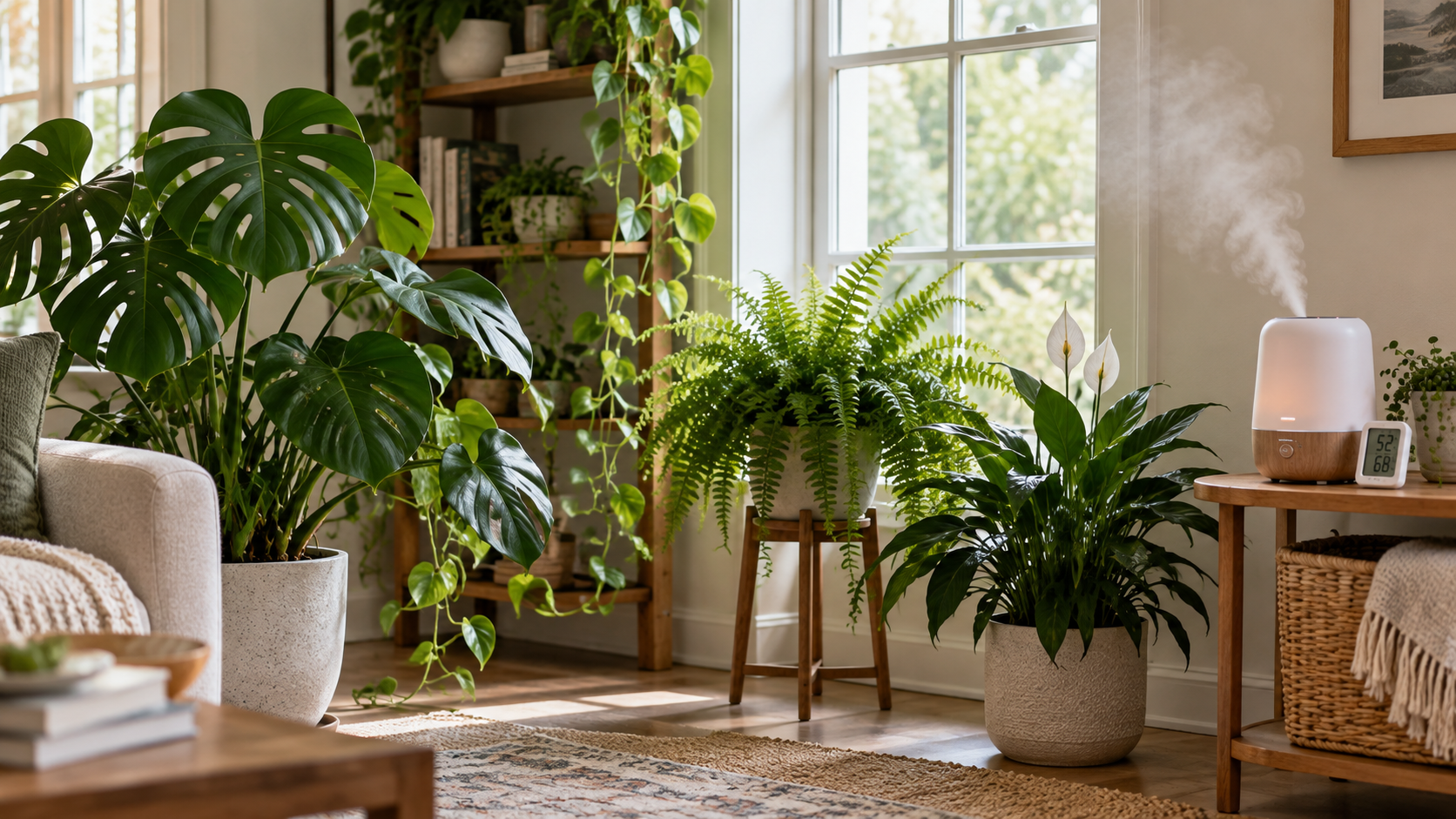
A well-kept plant collection depends on decisions that can be checked later, not on quick fixes that change several variables at once. This guide focuses on how to use a humidifier around houseplants without making the room too damp, with an emphasis on observations that can be made in an ordinary home rather than an ideal greenhouse setup. The central principle is that a humidifier changes room moisture, so the goal is a stable, reasonable environment rather than creating visibly wet air around leaves. That matters here because small closed rooms respond differently from large open spaces, and humidity near the device can be higher than across the room. A small digital thermometer-hygrometer can be useful for spotting patterns, but plant response still matters more than chasing one perfect number. Room aesthetics matter, but the arrangement stays easier to maintain when access and environmental needs are built into the layout from the beginning. Rather than treating every possible cause at once, the steps below narrow the situation into observations, context, one useful response, and a follow-up check.
What Is Actually Happening
A sound decision begins with the fact that A humidifier changes room moisture, so the goal is a stable, reasonable environment rather than creating visibly wet air around leaves. That is the part to keep constant while you evaluate the smaller variables around it. This is why a single number, date, or visual symptom rarely deserves to control the entire care decision. The practical advantage is that you can test the idea against what happens next instead of relying on a one-time impression. Indoor climate is uneven: glass, vents, exterior walls, appliances, and sun patches can create different conditions within the same room. Seasonal daylight, heating, cooling, and furniture changes can alter a plant’s microclimate even when the pot never moves. Once this relationship is clear, the rest of the care decision becomes easier to keep proportionate.
The Same Plant Can Behave Differently a Few Feet Away
Microclimates matter here: small closed rooms respond differently from large open spaces, and humidity near the device can be higher than across the room. Recheck the situation after seasonal changes, furniture moves, heating or cooling changes, or anything else that alters the plant’s immediate environment. For this indoor gardening topic, the more stable the surrounding conditions are, the easier it becomes to tell whether the specific care change was helpful. Nearby plants can shade one another, reduce airflow, or change how easy it is to water and inspect each pot. In this particular care decision, for more context on the underlying care factor, read How to Use Tiered Plant Stands in a Small Room Without Creating Crowding before adding another adjustment. For this indoor gardening topic, rechecking those local conditions is especially worthwhile when the season, heating, cooling, or sun angle changes.
Build a Baseline From Several Clues
Inspection works best when it is consistent. Use humidity readings, window condensation, leaf response, wet surfaces, room ventilation, device output, and whether plants actually show sensitivity to dry air as your main checkpoints, and compare them with previous photos or notes if you have them. The best clues are usually the ones you can observe again after the adjustment, because they give you a built-in way to judge the result. Photos taken several days apart are often more useful than constant checking because gradual changes become easier to see. Humidity, temperature, and airflow interact, so changing one factor can alter drying time and leaf comfort all at once. Seasonal daylight, heating, cooling, and furniture changes can alter a plant’s microclimate even when the pot never moves. A consistent inspection gives you a baseline that becomes more valuable each time it is repeated.
Choose a Response You Can Evaluate
A measured response is usually safer than a dramatic reset. Use this approach: Use moderate settings, measure conditions, and place the device where mist does not settle directly on foliage, walls, or furniture. If the assumption is correct, the next checks should become easier to interpret; if not, you still have room to adjust without having created several new variables. A small correction also reduces the chance that the plant has to adapt to several new stresses at the same time. Avoid repeating the same intervention too quickly because plants often need time before a useful response becomes visible. A practical indoor setup should support the plant without making watering, cleaning, inspection, or normal use of the room unnecessarily difficult. A focused change is less difficult to evaluate and usually easier on a plant that is already adapting.
Use the Previous Week as Evidence
If two causes look similar, timing can help separate them. Ask what changed first, how long the plant was exposed to that condition, and whether the symptoms are continuing or merely showing old damage. This step is particularly useful when a symptom has several common explanations that look similar at first glance. A major clue is whether the timing lines up with the beginning of the visible change. A small digital thermometer-hygrometer can be useful for spotting patterns, but plant response still matters more than chasing one perfect number. For a second checkpoint, use How Humidity Affects Houseplants and When You Actually Need More of It to compare what the plant does next with a care factor that has already been discussed on RootLuma. Treat the timeline as supporting evidence, then compare it with what the plant is showing now.
What Not to Change All at Once
Avoid running a humidifier without measuring humidity, aiming visible mist at plants, allowing stagnant wet surfaces, and assuming humidity fixes root or watering problems. Those habits can make the symptoms harder to interpret and may turn a manageable issue into a more complicated one. Do not confuse frequency with quality: repeating a weak or inappropriate action more often rarely turns it into the right solution. The safest response to uncertain evidence is usually to preserve suitable basics while you collect a clearer pattern. Indoor conditions are highly local: a plant beside a window, under a vent, or behind a curtain can experience a different environment from one only a short distance away. Room labels such as bright, warm, or humid are only rough descriptions; the exact plant position often matters more. Good troubleshooting protects the clarity of the follow-up check as much as it protects the plant.
How to Judge Whether the Change Helped
Judge progress by the trend that develops after the change. Older marks may remain, so look for fewer new symptoms, steadier posture, more predictable moisture changes, and new growth that better matches the plant’s normal form. For compact gardens, easier access and more consistent watering can be signs that the layout itself is working better. For this indoor gardening topic, if the same symptom continues on new growth, revisit the diagnosis instead of repeating the original correction automatically. This is also where Why Airflow Matters Around Indoor Plants Without Creating Draft Stress can help, because it addresses a related decision that is easy to misread in isolation. That is a more reliable measure of success than expecting old damage to disappear.
Simplify the Routine Before Adding More Plants
A manageable routine can be built around one repeatable habit: clean the device according to its instructions and reassess output as seasons and heating systems change indoor dryness. The value comes from comparing the same indicators over time, not from adding more tasks to the calendar. For this indoor gardening topic, short notes are most useful when they capture decisions, such as the date of repotting, feeding, moving, or a pest treatment. A routine should tell you what to check, while the plant tells you whether any action is required. Human eyes adapt quickly to indoor brightness, which is one reason direct observation of plant growth and leaf orientation is often more useful than room impressions. Room labels such as bright, warm, or humid are only rough descriptions; the exact plant position often matters more. That is how general advice turns into a baseline that is specific to your own home.
Final Notes for Everyday Care
A practical routine should reduce uncertainty rather than create more rules. The key point remains that a humidifier changes room moisture, so the goal is a stable, reasonable environment rather than creating visibly wet air around leaves. When care is matched to the real room, container, season, and plant condition, small problems are easier to notice before they turn into repeated cycles of correction. With that approach, each new season or care challenge becomes an opportunity to refine the system instead of starting over. You do not need perfect control; you need enough consistency to see cause and effect clearly. A small digital thermometer-hygrometer can be useful for spotting patterns, but plant response still matters more than chasing one perfect number. Used consistently, it reduces guesswork without requiring perfect control over the immediate growing environment.