How to Expand a Small Herb Garden Vertically in an Apartment
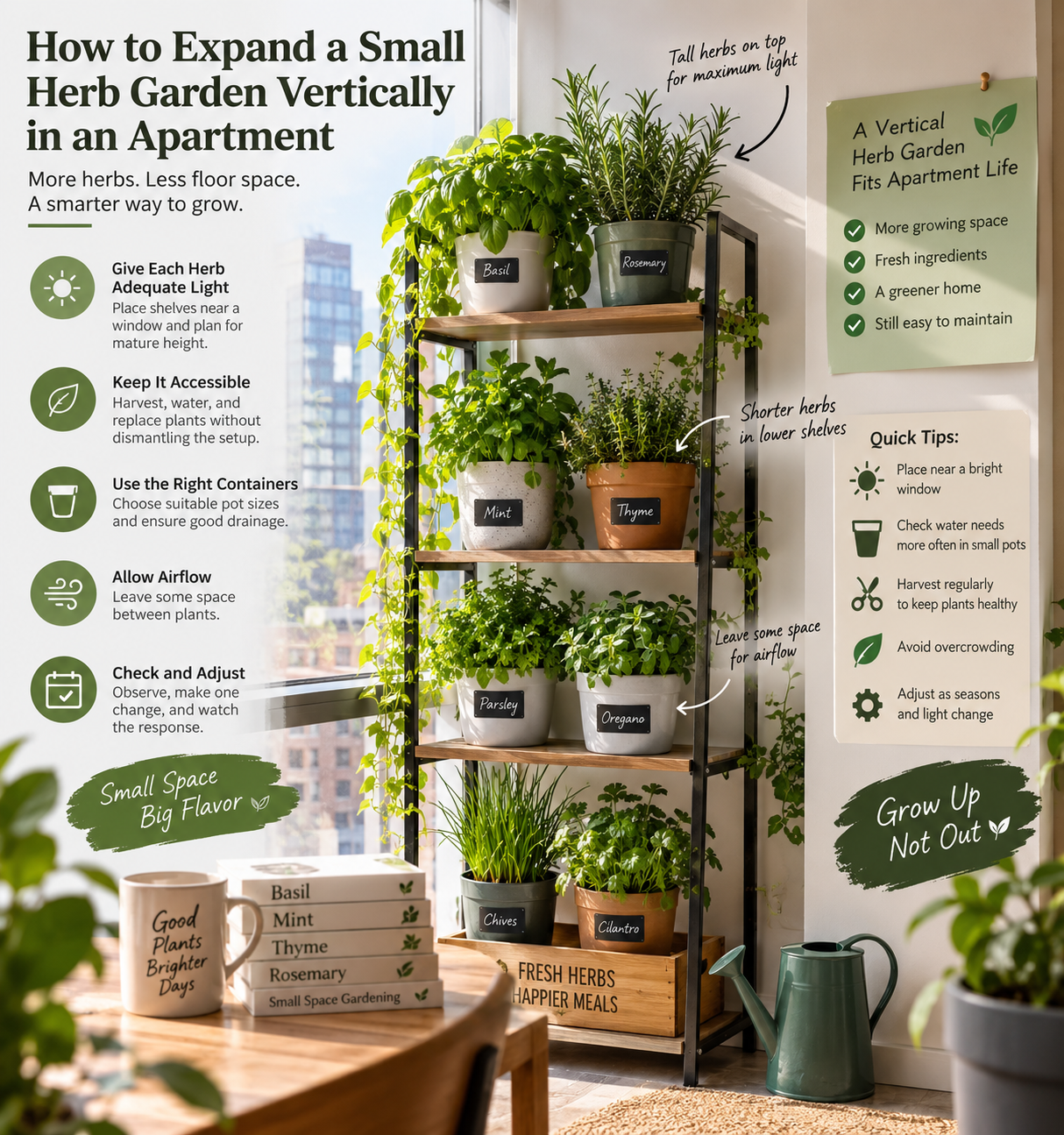
The goal is not to memorize another rule; it is to build a repeatable way to judge the situation before you act. A practical approach to how to expand a small herb garden vertically in an apartment should make the next decision clearer, not add another rigid schedule to remember. The central principle is that vertical expansion works only when each herb still receives adequate light and can be harvested, watered, and replaced without dismantling the whole setup. That matters here because herbs placed on lower shelves often become shaded by taller plants unless height and window angle are planned carefully. Frequent harvesting or new root formation changes water demand, so small containers should be checked more often without being kept constantly wet. Good small-space design leaves some open room for airflow, drainage, growth, and maintenance instead of treating every empty surface as a place for another pot. The aim of this article is to show which details are worth checking, how to make a proportionate adjustment, and what to watch afterward so the response can be evaluated.
What to Notice Before You Intervene
Start with a short inspection rather than a treatment. The most useful clues here are daily direct light, shelf depth, mature herb height, pot size, harvest frequency, airflow, and how easily runoff can be managed. None of them needs to be perfect on its own; the goal is to see whether several indicators point in the same direction. Checking neighboring plants can also be useful because a shared pattern may point to an environmental condition rather than an individual plant problem. The plant’s newest leaves or shoots are especially valuable because they developed under the most recent conditions. Mature plant size matters more than the size of a new purchase because crowded layouts become harder to manage as foliage expands. If the pattern is still mixed after this inspection, waiting for another check can be more useful than forcing a diagnosis.
Trace the Change Back to Its Context
A simple timeline turns vague concern into usable evidence. Note the last major care change, the first day the symptom was noticed, and what happened afterward. That sequence is often enough to rule out at least one tempting explanation. A short history can also reveal whether the plant has experienced that same pattern before under similar seasonal conditions. If you recently made a correction, give it enough time to be evaluated before layering another one over it. In a limited footprint, access is part of design: every pot still needs to be reached for watering, inspection, and cleanup. The mature size of a plant is a more useful planning number than the size it occupies on the day you buy it. The clearer the sequence, the less likely you are to mistake the effect of a recent change for a separate new problem.
The Reason This Detail Matters
The biology and the environment meet at one central idea: Vertical expansion works only when each herb still receives adequate light and can be harvested, watered, and replaced without dismantling the whole setup. If that relationship is missed, it is easy to respond to the appearance of the problem without addressing what is actually driving it. Thinking in causes and responses helps prevent a cosmetic symptom from becoming the reason for an unnecessary overhaul. This is why a single number, date, or visual symptom rarely deserves to control the entire care decision. Mature plant size matters more than the size of a new purchase because crowded layouts become harder to manage as foliage expands. With that foundation in place, the next inspection can focus on evidence rather than on every possible explanation.
Correct the Strongest Issue First
Once the evidence is reasonably consistent, use this decision rule: Build upward around the light source rather than simply stacking more pots in the darkest part of the room. Keep the change focused enough that you can judge it later, and avoid adding unrelated treatments at the same time. Avoid repeating the same intervention too quickly because plants often need time before a useful response becomes visible. If the step involves moving the plant, change the exposure gradually when a sudden jump in light, heat, or airflow could add stress. Leaving some empty space is functional because it preserves airflow, light distribution, and room for future growth. The next useful information comes from the plant’s follow-up response, not from adding another intervention immediately.
Keep Cosmetic Urgency From Driving the Decision
Avoid placing sun-loving herbs far from the window, using very small pots that dry constantly, and mixing aggressive growers with slower herbs in one container. Those habits can make the symptoms harder to interpret and may turn a manageable issue into a more complicated one. Avoid treating one online photo as a diagnosis because many unrelated problems produce similar-looking leaves. In this particular care decision, another mistake is solving for appearance first, such as removing all damaged tissue before understanding whether the stress is still active. A connected part of this decision is covered in How to Use Shelves and Vertical Space for Indoor Plants, which can help you compare the current pattern with another common care issue. For the setup described here, keeping the basics stable gives you a much better chance of understanding what actually changed.
How Nearby Conditions Shift the Result
Microclimates matter here: herbs placed on lower shelves often become shaded by taller plants unless height and window angle are planned carefully. Recheck the situation after seasonal changes, furniture moves, heating or cooling changes, or anything else that alters the plant’s immediate environment. Nearby plants can shade one another, reduce airflow, or change how easy it is to water and inspect each pot. The more stable the surrounding conditions are, the easier it becomes to tell whether the specific care change was helpful. Weight, runoff, wind exposure, and the path people use through the space are practical constraints, not decorative details. The mature size of a plant is a more useful planning number than the size it occupies on the day you buy it. For this small-space gardening topic, the exact location should therefore be part of every follow-up check.
A Better Way to Measure Recovery
Measure improvement with repeatable observations. Compare photos, pot condition, new growth, leaf firmness, or other relevant signs at similar times rather than checking constantly and reacting to small day-to-day fluctuations. New growth is particularly useful because it reflects conditions after the adjustment instead of simply before it. For light or placement issues, more balanced growth and healthier spacing between leaves may take several weeks to become obvious. Frequent harvesting or new root formation changes water demand, so small containers should be checked more often without being kept constantly wet. For this small-space gardening topic, this is also where How to Plan a Vertical Balcony Garden Without Wasting Floor Space can help, because it addresses a related decision that is easy to misread in isolation. For this small-space gardening topic, that is a more reliable measure of success than expecting old damage to disappear.
Create a Baseline You Can Reuse
Turn the lesson into a simple maintenance rhythm: harvest regularly, rotate containers when appropriate, and keep empty space for replacement plants instead of filling every slot permanently. When the same few checks are repeated, changes become easier to notice and you spend less time relearning what is normal for that plant or space. Consistency is valuable because it builds a baseline, but flexibility is what allows the routine to remain appropriate as conditions change. Short notes are most useful when they capture decisions, such as the date of repotting, feeding, moving, or a pest treatment. In this particular care decision, when you need to check the broader setup, How to Create a Compact Herb Garden in a Small Apartment gives a useful companion framework. The system should become less difficult to maintain over time, not more complicated with every new lesson.
The Principle to Carry Forward
Use this topic as a model for future decisions: vertical expansion works only when each herb still receives adequate light and can be harvested, watered, and replaced without dismantling the whole setup. The combination of observation, context, measured action, and follow-up is more useful than any one shortcut because it keeps the plant’s actual response at the center of the process. A reliable baseline is more valuable than a perfect-looking week because it helps you notice meaningful change early. Over time, the plant’s own history becomes the most useful reference for what normal looks like in your home. The mature size of a plant is a more useful planning number than the size it occupies on the day you buy it. Used consistently, it reduces guesswork without requiring perfect control over the local growing conditions.