Pet-Safe Houseplants: How to Verify Plant Toxicity Before Buying
“Pet-safe” is one of the most useful—and most casually misused—labels in plant shopping. A retailer may put the phrase on a display without naming the species, while a social post may declare an entire plant family safe based on a single example. A beautiful leaf is easy to recognize; the risk of chewing it depends on the plant’s actual identity and the animal involved.
A safer method begins before checkout. Identify the plant by its scientific name, verify that name against a reputable toxic-plant resource, and plan a household setup that accounts for your pet’s behavior. This does not eliminate all risk. Even plants categorized as non-toxic can cause stomach upset when eaten in quantity, and soil, fertilizers, decorative stones, or pesticides can create hazards separate from plant chemistry.
Start with the scientific name, not a marketing label
Common names can refer to several unrelated plants, and one species may be sold under multiple trade names. A “palm” in a supermarket may be a true palm, a cycad, or another plant entirely. Their risks can differ dramatically. A tag that says only “tropical foliage” provides too little information for a confident safety decision.
Look for a genus and species on the nursery label, for example a two-part Latin name. Cultivar names may follow it in quotation marks. If the label is ambiguous, ask the seller for the botanical identification before purchasing. A clear photo of leaves, stems, and growth habit can help an expert identify a plant, but image-recognition apps can make confident mistakes; do not let an app’s first guess replace verification.
Plant taxonomy changes over time. Some older labels remain in circulation after a species is moved into a different genus. When a database search returns no result, check reputable synonyms rather than assuming the plant is safe. Record the name you verified so future household members do not have to reconstruct the decision after the plant has been repotted.
Use an appropriate authority for toxicity information
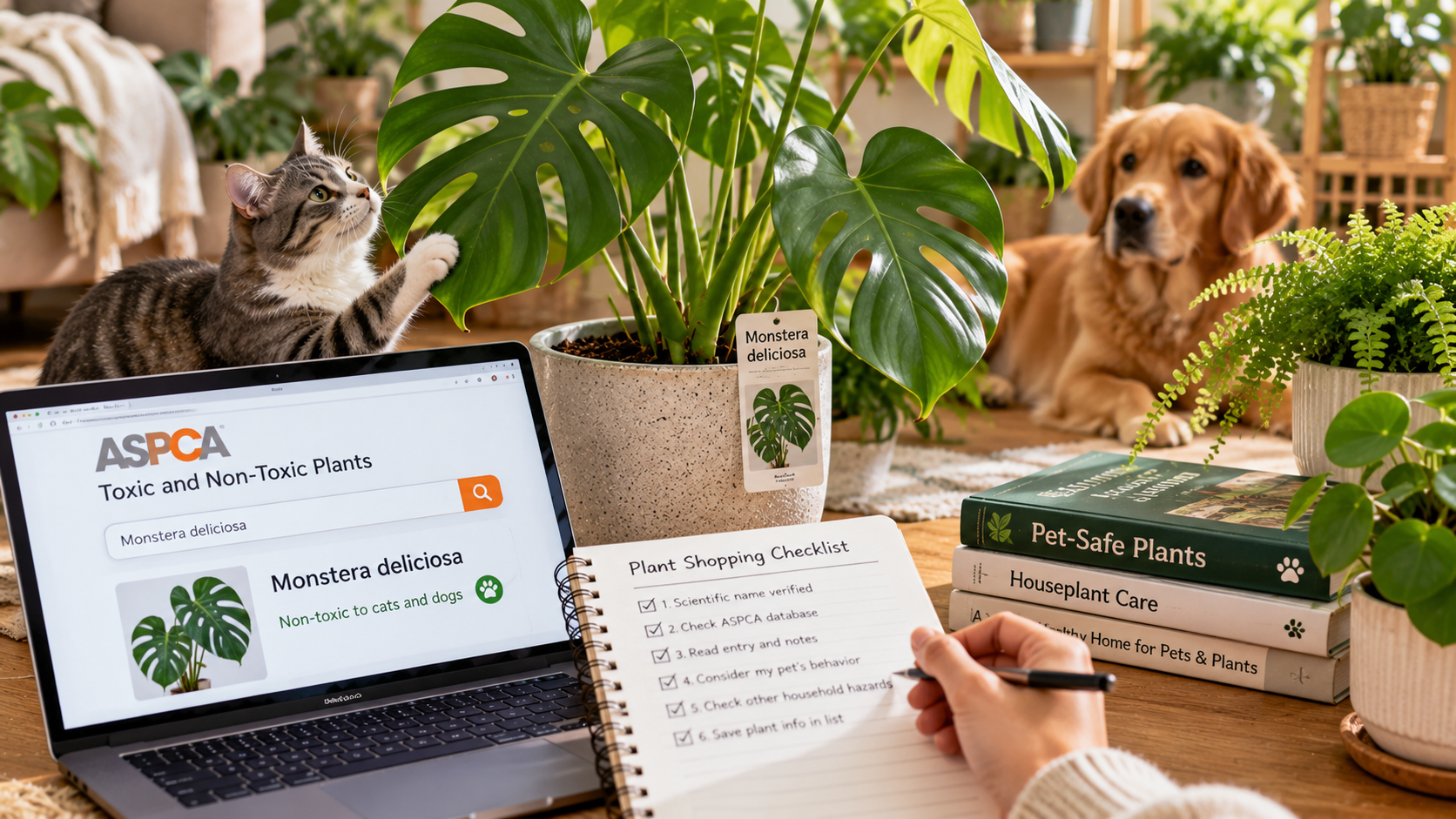
The ASPCA’s Toxic and Non-Toxic Plants database is a useful starting resource for cats, dogs, and horses. Search the scientific name where available, read the specific entry, and note which species of pet it covers. A source focused on human poisoning or agricultural livestock cannot automatically answer a question about a curious indoor cat.
Interpret the entry carefully. “Non-toxic” does not mean a plant is edible or that chewing large quantities will never cause nausea. “Toxic” can encompass a wide range of outcomes, from irritating oral tissues to potentially serious systemic effects. The database entry or linked veterinary guidance may distinguish these; a simple safe/unsafe graphic often does not.
If you have a rabbit, bird, reptile, or another animal, do not extend dog-and-cat conclusions automatically. Those species can have different dietary physiology and sensitivity. Consult a veterinarian experienced with the particular animal and use species-specific references whenever possible.
What to do when the database does not list the plant
Absence from one database is not evidence of safety. Check the spelling and botanical synonyms. Search a second credible veterinary or botanical source. If you cannot verify the identification or toxicity, postpone purchase or keep the plant inaccessible until a qualified source confirms the risk. A conservative decision is especially reasonable in homes with animals that repeatedly chew leaves.
Avoid crowdsourced lists that omit scientific names or cite each other in circles. An attractive infographic may be useful for inspiration, but it should not be the only evidence used to select a plant for an animal’s environment.
Separate plant toxicity from household hazards
A non-toxic plant can still introduce safety concerns. Sharp cactus spines, irritating hairs, and stiff leaf tips can injure eyes or mouths. Heavy containers can tip if a pet pulls a trailing vine. Fertilizer granules, systemic pesticide residues, and insect baits may pose risks that are not captured by a plant toxicology listing. Water in decorative reservoirs can also attract pets and should be managed hygienically.
Some pet owners grow cat grass to redirect chewing, but that does not guarantee an animal will leave other foliage alone. Likewise, putting a plant on a slightly taller stand is not effective containment for a determined climbing cat. A safety plan needs to reflect actual behavior, room layout, and the stability of the display.
The RootLuma guide to a healthy indoor plant corner can help you think through light and placement; add pet access, falling objects, and potential chewing to that ordinary plant-care plan. A decorative arrangement is only successful if it works for both the plants and the people or animals sharing the room.
Design a verification workflow before shopping
Use the following sequence for any plant you consider buying:
Record the botanical name from the label or a reliable seller.
Confirm the name using a credible plant reference if the label is unclear.
Search the ASPCA database or another veterinary authority for the species and relevant pet.
Read the actual entry rather than relying only on a search-engine snippet.
Note any symptoms or cautions the source identifies.
Decide whether the animal can physically access leaves, fallen material, media, or fertilizers.
Save the name and source in your household plant list.
The final step sounds administrative, but it becomes useful when someone else feeds the pets, waters the plants, or handles an emergency. A printed or shared list with botanical names is more reliable than “the green plant next to the couch.”
Compare uncertain shopping scenarios
A shop labels a plant “pet-friendly” but gives no species name. Ask for identification. If the seller cannot provide it, choose a different plant or delay the purchase. A marketing claim without a traceable identity is weak evidence.
An online seller lists an old scientific name. Check whether it is a recognized synonym. Taxonomic updates can create apparent differences between labels and databases without changing the plant itself. Record both names if useful.
A plant is listed as non-toxic to dogs but you own a cat. Look for the cat-specific entry. Do not assume the same status automatically applies, even if some sources cover both.
You own a bird that investigates plants constantly. A dog-and-cat database is insufficient for a bird. Ask an avian veterinarian and consider avoiding unverified foliage entirely within reach.
A plant is non-toxic but sits in a heavy cachepot on a narrow shelf. The mechanical risk of a falling object may be more immediate than chemical toxicity. Stabilize or relocate the display.
Understand misleading claims about familiar houseplants
Names such as peace lily, true lily, and calla lily are frequently discussed together, but they do not represent one identical plant group or one identical toxicological profile. Some contain irritating calcium oxalates; true lilies present especially serious risks to cats. Casual use of the word “lily” can therefore lead to dangerous oversimplification. Verify the actual species, particularly when a cut-flower bouquet enters the home.
Similarly, “palm” is not a guarantee of safety. The sago palm is a cycad, not a harmless substitute for the true palms commonly recommended for indoor decoration, and it poses a serious poisoning risk. Broad familiar names are precisely why scientific identification is essential.
Do not use these examples as an exhaustive list. Plant inventories change, and a safe-shopping workflow should continue to work when a new cultivar or unfamiliar species appears in stores. Better decisions come from verifiable identification and current veterinary resources, not memorizing ten internet favorites.
Make emergency information accessible
If you suspect a pet has eaten an unknown or potentially toxic plant, promptly contact a veterinarian or animal poison-control service. Do not wait for symptoms to become severe; some dangerous exposures have delayed effects. Save a photo of the plant and its label, along with the suspected amount and approximate time, if known. These details can help a professional assess the situation.
Do not induce vomiting or administer home remedies without professional guidance. Household substances that seem harmless to humans can create additional injury in animals. If the plant is from a bouquet or mixed arrangement, photograph every component because more than one species may be present.
Emergency planning is not an admission that every plant is dangerous. It is the sensible counterpart to keeping names and verification records. In a stressful moment, easily accessible information is more useful than a vague memory of a shopping-list blog.
Build a household plant register
A small table can prevent repeated uncertainty:
Field Example of what to record
Botanical name Name exactly as verified, plus any known synonym
Common name Label used in your home
Pet species checked Cat, dog, or other animal
Reference ASPCA entry or veterinary advice with date checked
Location Shelf, hanging basket, closed room
Access risk Reachable, fallen leaves possible, or securely separated
Other hazards Fertilizer, pesticides, unstable pot, spines
Update the register when plants move or pets develop new habits. A puppy that never chewed foliage may behave differently as it grows, and a kitten can reach places an older cat ignores. Even a hanging basket can drop leaves onto the floor.
How to shop when a label has conflicting names
Retail plant labels often combine a cultivar, a trade name, and an older scientific synonym. If a database does not recognize the exact string on the pot, separate those elements and look up the accepted botanical name. A plant nursery or botanical garden may list synonyms in its description. Verify that the different names refer to the same species before borrowing a toxicity conclusion.
For example, a common-name label may refer to more than one type of “ivy” or “fern.” Even a familiar word like “lily” can encompass unrelated botanical groups with very different risks to animals. That is why the final saved record should contain the name the veterinary source actually evaluated, not simply the retailer’s promotional phrase.
If two credible sources disagree, do not hide the uncertainty. Check whether they describe different species, different animal groups, or different levels of exposure. A toxic plant that typically causes oral irritation and one that poses an urgent systemic risk should not be collapsed into the same vague adjective. Contact a veterinarian for household-specific decisions when a pet is likely to chew plants.
Consider the whole life cycle of a plant
A plant placed high on a shelf today may shed leaves or flowers onto the floor tomorrow. Trailing vines can grow into reach, and a heavy pot may be knocked down. Reassess access as plants develop and as pets’ habits change. A “closed room” plan is useful only if the door is reliably kept shut. Decorative deterrent sprays are not guaranteed to stop chewing and may introduce additional exposure risks.
Train everyone in the household to use the register
A simple plant list is valuable only if others know where to find it. Share names with family members or pet sitters and make it clear that cuttings should not be offered as pet treats. Keep veterinarian and poison-control contact details accessible. If a plant is moved or replaced, update the entry rather than assuming everyone can visually recognize a cultivar from one photograph.
This can also improve plant care: correct naming helps you choose appropriate light, watering, and potting medium. The same discipline that prevents toxicology confusion makes a household collection easier to maintain.
Frequently asked questions
Does non-toxic mean safe to eat? No. The designation generally concerns known toxic effects, not nutrition or tolerance of large quantities of foliage.
Can I trust a photo identification app? Use it as a clue, not definitive evidence for a safety decision. Confirm botanical names with a reliable source.
Are all plants within one genus equally safe? Not necessarily. Verify the actual species and cultivar context whenever possible.
What if the plant is not listed? Lack of a listing is not a safety certification. Seek more evidence or avoid exposing your pet.
Can placement alone make a toxic plant acceptable? Only if access is reliably prevented. Consider fallen leaves, climbing, and what happens when no one is supervising.
Choose plants with evidence, not wishful thinking
A genuinely pet-aware plant collection begins with correct names and credible toxicology resources. Verify before buying, plan for the animal’s real behavior, and remember the hazards of soil additives, tools, and unstable containers. Keeping uncertainty visible may be less convenient than a “100% pet-safe” label, but it is far more useful when living animals share the space.
References
ASPCA Animal Poison Control — Toxic and non toxic plants