Growing Strawberries in Balcony Pots: Flowers to Harvest
A strawberry pot can be small enough for a balcony railing yet productive enough to make harvests genuinely satisfying. The fruiting plant, however, needs more than decorative flowers. Strawberries use light to build the energy for flowering and fruit development, require a consistent but aerated root zone, and need enough room for leaves and runners without drying out every afternoon.
Not every strawberry variety behaves the same way. June-bearing types, everbearing selections, and day-neutral varieties have different flowering and cropping patterns, influenced by cultivar and climate. Before buying a pot of flowering plants, decide whether you want a concentrated seasonal crop, scattered fruit over a longer period, or simply a modest edible display near the kitchen.
Start with light and climate, not the container color
Strawberries generally crop best with substantial direct sunlight, although excessive heat can reduce performance. Observe how many hours of useful sun reach your balcony and how that changes through the season. A bright living room may look welcoming to you but provide insufficient light for reliable fruiting. North-facing or heavily shaded balconies can support leafy growth while producing few sweet berries.
Wind is another balcony-specific factor. Tall exposed floors can dry foliage and medium rapidly or damage flowers during storms. A partially sheltered position with appropriate sunlight may be more practical than the sunniest ledge if pots risk falling or stems are constantly battered. Secure railing containers and obey building rules about runoff and load capacity.
Strawberries require suitable temperatures for their cultivar, and cold hardiness differs by region and winter conditions. A shallow suspended pot can freeze faster than soil in the ground. In hot climates, intense afternoon exposure may stress plants and fruit. Use local extension recommendations for planting time and variety rather than assuming an online “spring” calendar matches your hemisphere.
Choose the plant type for your harvest goal
June-bearing types typically concentrate production in a defined period, while day-neutral or everbearing varieties can have different or extended cropping habits. Local climate still affects which performs best. Some plants sold as “everbearing” may produce intermittent flushes rather than continuous fruit every week. Read the nursery’s cultivar description and favor selections recommended for your area.
Buy healthy plants with firm crowns and undamaged roots. Avoid specimens with obvious leaf spotting, wilting in wet medium, or severe insect damage. A plant loaded with ripe strawberries at purchase may have been grown under commercial conditions that differ from your balcony. Evaluate the foliage and crown, not just the appealing fruit already present.
If starting from bare-root plants, keep roots appropriately moist before planting and follow local planting guidance. The crown—the growing point where roots meet leaves—should not be buried deep in medium or left with roots exposed. Incorrect crown depth can cause establishment problems even when watering seems adequate.
Pick a pot with room for roots and drainage
Strawberries have relatively shallow root systems compared with many fruit crops but still need enough medium to buffer moisture and temperature. A very small decorative pot may dry out several times during a hot day. Choose a container with drainage holes, sufficient depth, and room for each plant to spread without compressing neighboring crowns tightly together.
Terracotta can dry quickly in wind. Plastic may retain moisture longer. Fabric containers offer different evaporation and handling characteristics. None is universally better. Consider how frequently you can check the plant and whether excess water can drain without creating a hazard below the balcony.
Use fresh, well-structured potting medium suitable for edible container crops. Dense garden soil can compact in small pots and may introduce pests. A balanced medium should hold enough moisture while remaining oxygenated after watering. Do not bury the crown under mulch or mix when planting.
Hanging baskets versus standing pots
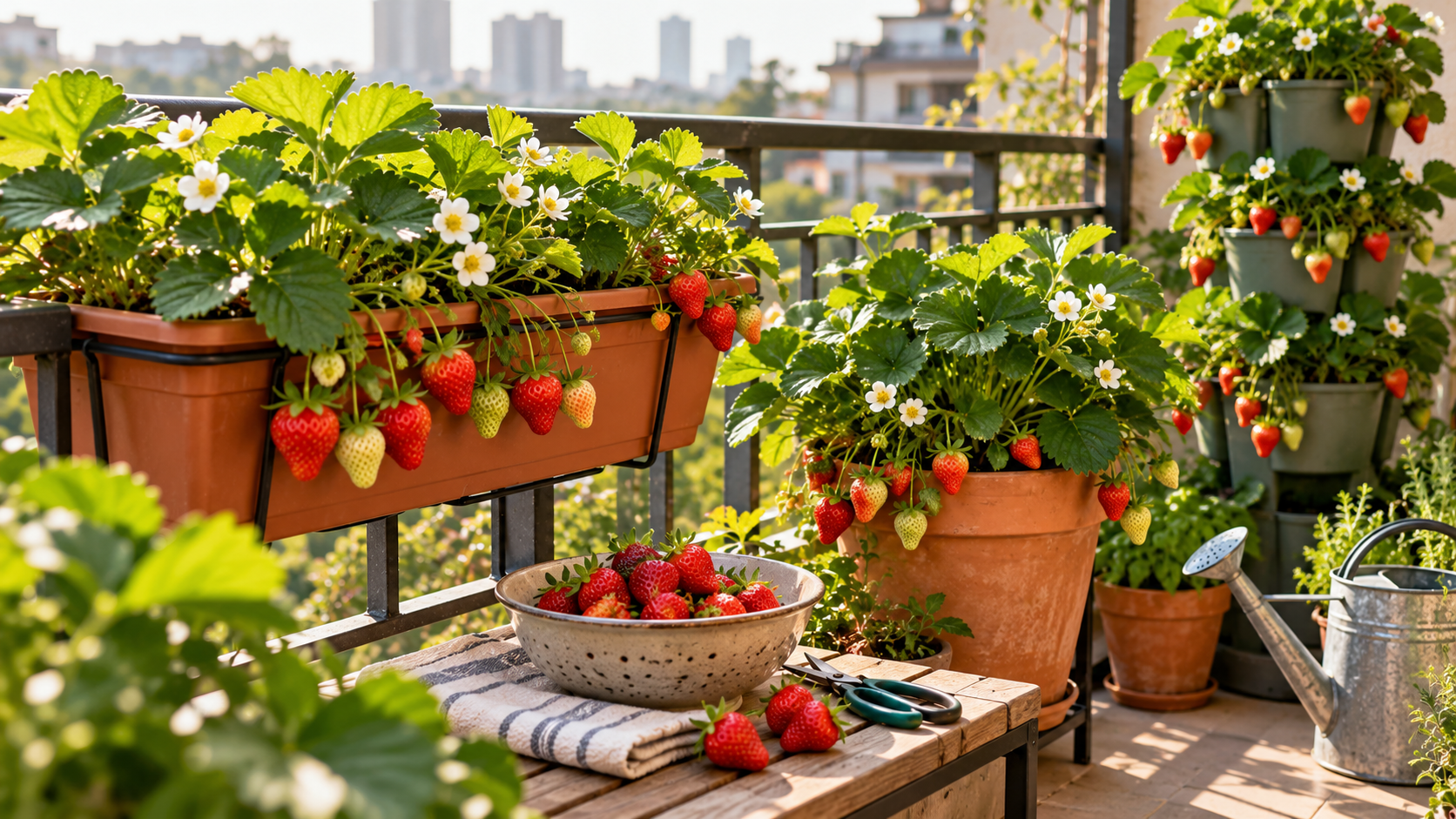
Hanging baskets keep fruit elevated and can look attractive, but they are exposed to wind and dry air on all sides. Small baskets often require closer watering checks. A broad standing pot can buffer moisture better and may be easier to protect during extreme weather. Tiered towers save floor area but may create unequal light and moisture between upper and lower planting pockets.
Try one manageable container before buying an elaborate strawberry tower. Learn how quickly the medium dries under your actual wind and sunlight. An accessible pot that makes inspection easy may produce better fruit than a large complex planter that is difficult to water evenly.
Water consistently without saturating the crown
Inconsistent moisture during fruit development can stress plants and reduce fruit quality. Water when the root zone needs it, applying enough to moisten the medium and allow excess to drain. Do not rely solely on a surface that appears pale; inspect below the top layer, especially in windy conditions. On very hot days, small containers may need more attention, but daily watering is not a universal requirement in cool, shaded weather.
Avoid wetting developing fruit unnecessarily, particularly when airflow is limited and fungal disease is a concern. Water at the medium level where practical. Remove standing drainage water from trays rather than leaving the pot immersed. Mulch can help reduce soil splash and fruit contact with wet medium if used carefully around, not over, the crown.
Overfeeding is not a solution to unreliable moisture. Excess fertilizer can promote unwanted vegetative growth or salt stress depending on formulation and rate. Use a container-appropriate nutrient plan based on the product label and local guidance, and watch the plant’s leaf color and growth instead of chasing maximum leaf size.
From flower to fruit: support pollination
A strawberry flower needs successful pollination for full, even fruit development. Many strawberry varieties are self-fertile, but insect activity and movement of pollen can influence fruit shape and yield. A balcony behind solid screens or glass may see limited pollinator visits. Distorted fruit can have several causes; poor pollination is one possibility, not the only explanation.
Where feasible, allow pollinating insects safe access during flowering. Avoid applying insecticides to open flowers unless a product is specifically approved and necessary under local guidance. In very enclosed settings, gentle manual movement of pollen may help some flowers, but do not expect hand pollination to compensate for severely insufficient light, temperature stress, or an unhealthy plant.
Observe how fruit begins to swell after petals fade. Not every flower will become a market-perfect berry. Fruit quality varies with cultivar, temperature, nutrition, and pollination conditions. Rather than discarding the plant after one imperfect berry, look for consistent patterns across the next set of flowers.
Manage runners and foliage
Many strawberry plants produce runners that form daughter plants. These are useful for propagation, but vigorous runner production can draw resources away from fruiting, depending on cultivar and season. Decide whether your goal is more plants or the current container’s crop. If fruit production is the priority, remove excess runners appropriately instead of allowing a tangled network of new plants to crowd the pot.
Keep the crown exposed and remove clearly dead leaves or decaying fruit. Avoid stripping healthy foliage because leaves provide the energy for fruit development. Check undersides for mites or aphids and inspect berries for rot after wet weather. Good air movement and moderate spacing make these checks easier.
The RootLuma beginner balcony guide discusses light and wind in compact growing spaces. For strawberries, those broad principles translate directly into watering frequency, flower protection, and the stability of suspended planters.
Harvest and handle fruit carefully
Harvest fully colored berries according to cultivar expectations. Strawberries do not sweeten dramatically after picking in the way some climacteric fruit can, so taste and color matter. Pick with a small portion of stem when appropriate instead of pulling hard on the plant, which can injure the crown or loosen a shallow-rooted container.
Remove damaged or rotting fruit promptly and avoid leaving it to attract insects. Wash harvested strawberries before eating and follow food-safety guidance for storage. Keep produce away from balcony dust, unsafe runoff, and any chemicals not approved for edible crops.
A simple first-season checklist
Stage Main question Useful action
Before planting Does the balcony provide enough sun? Observe exposure and choose a locally suited cultivar
Establishment Is the crown at proper depth? Plant in a draining pot and stabilize watering
Flowering Are pollinators or pollen movement available? Preserve access and protect flowers from harsh conditions
Fruit development Is moisture reasonably consistent? Check the root zone and avoid standing water
Harvest Are berries fully colored and healthy? Pick gently and handle as fresh food
After cropping Are runners crowding the container? Decide between propagation and fruit-focused care
Troubleshooting disappointing fruit
Many leaves but few flowers. Check sunlight, cultivar, season, and excess vegetative growth before applying more fertilizer.
Small or misshapen berries. Pollination may have been incomplete, but heat, moisture stress, or other factors can contribute. Compare patterns across several harvests.
Fruit rots before ripening. Improve airflow, remove decaying fruit, reduce unnecessary wetting of berries, and investigate local disease guidance if losses continue.
The basket dries too fast. Consider a larger medium volume, a less exposed location, or a container that buffers moisture better. Do not compensate by leaving roots in stagnant water.
The plant sends out long runners but little fruit. Review cultivar behavior and whether you are in an active fruiting period. Trim excess runners if the primary goal is a crop from the current plant.
The RootLuma leafy-greens guide is useful for general balcony container routines, but fruiting strawberries require attention to flower development, pollination, and runners that leafy greens do not.
Manage fruit quality when a balcony is unusually hot
A strawberry plant may tolerate a warm afternoon without producing its best fruit. Excess heat can stress flowers and cause berries to ripen unevenly or remain small. A dark pot standing on hot concrete also exposes roots to temperatures different from those in a garden bed. Observe when the container heats up, whether foliage wilts temporarily, and whether fruit quality changes during heat waves.
Where possible, shade the container wall or move the plant to a position that avoids the most damaging heat while preserving substantial light for fruit production. Do not solve overheating by keeping the root system permanently waterlogged. Improving the temperature environment and maintaining consistent appropriate moisture are separate tasks.
A note on disease and fruit contact
Ripe strawberries touching wet potting media can be vulnerable to decay. Use a clean suitable mulch or support to keep developing berries off muddy surfaces where appropriate, while ensuring the crown remains exposed. Remove obviously rotting fruit promptly; leaving it among healthy berries can increase hygiene problems and attract insects. Handle any fungicide decision according to identification, edible-crop labeling, and local guidance—not as a routine spray applied to every flowering container.
Choose whether runners are a crop or a nuisance
When a healthy plant produces daughter plants on runners, you have a choice. Rooting selected daughters may help renew your planting, while removing excess runners may focus maintenance on current fruiting plants. Avoid assuming that every runner is waste or that every daughter should remain crowded in the same pot. If you root a daughter in its own container, wait for a reasonable root system before separating it from the parent. This lets you expand the planting deliberately without sacrificing all the root space of the original pot.
Winter and off-season care
A perennial strawberry in a container experiences seasonal cold and heat more strongly around its roots than an in-ground plant. Winter protection requirements vary considerably by climate and cultivar. Consult local recommendations before leaving a small pot exposed to a prolonged freeze or moving a dormant plant into a warm dim indoor room. The goal is to protect the crown while respecting its seasonal growth cycle.
Frequently asked questions
Can strawberries grow in shade? They may survive partial shade, but reliable fruiting generally benefits from substantial sunlight suited to the climate.
Do I need two plants for pollination? Many garden strawberry cultivars are self-fertile, though good pollination conditions can improve fruit development. Verify the variety.
Are hanging baskets better than pots? They save floor area but often dry more quickly. Choose according to exposure and maintenance.
Will strawberries fruit year-round? Not reliably. Cultivar, temperature, and day length affect cropping patterns.
Can I reuse the same plant next season? Strawberries are perennial in suitable climates, but productivity and winter survival depend on variety, care, and conditions.
Aim for a steady harvest, not a perfect photo
The strongest strawberry balcony plan begins with sunlight and a locally suitable cultivar. Add a draining container large enough to manage moisture, protect blooms from damaging exposure, and observe pollination and runner growth. Even a small harvest teaches useful lessons about the site. A balcony that supports a few healthy berries consistently is more rewarding than a decorative tower that looks productive only on the day it is purchased.
References
University of Maryland Extension — Growing strawberries home garden
University of Maryland Extension — Types containers growing vegetables