How to Water Small Containers Without Overwatering or Letting Them Dry Out
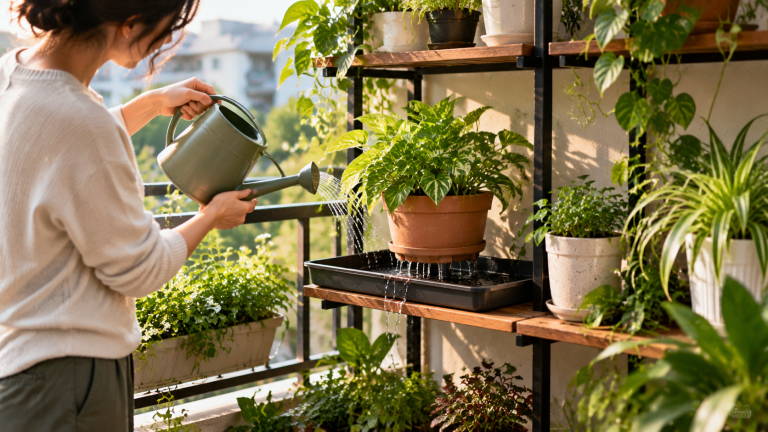
This topic is easiest to manage when you begin with the plant’s recent normal pattern and then look for meaningful changes. For everyday care, how to water small containers without overwatering or letting them dry out is best approached through factors that can actually be checked at home. The central principle is that small containers change moisture quickly, but their actual watering needs still depend on plant size, mix, sun, wind, temperature, and drainage. That matters here because a tiny pot in strong balcony sun may dry rapidly while the same size pot indoors in low light can remain wet for much longer. Pot size, substrate texture, temperature, airflow, and root density all change how quickly a container dries. The mature size of a plant is a more useful planning number than the size it occupies on the day you buy it. The sections that follow focus on practical evidence, common mistakes, and a routine that can be repeated without turning plant care into a complicated project.
Useful Signs to Compare
A better first check focuses on pot weight, soil feel, leaf condition, weather, wind, root density, drainage speed, and whether the container receives direct sun. Compare those observations with the plant’s recent normal condition and give repeated patterns more weight than a single unusual leaf or one reading taken out of context. Checking neighboring plants can also be useful because a shared pattern may point to an environmental condition instead of an individual plant problem. When the issue involves placement, compare leaf orientation and growth with the actual light path rather than with the room’s general brightness. A setup that looks simple but blocks watering or traps runoff often creates more maintenance than it saves. A consistent inspection gives you a baseline that becomes more valuable each time it is repeated.
Think in Microclimates, Not Room Labels
The method should fit the real space. Remember that a tiny pot in strong balcony sun may dry rapidly while the same size pot indoors in low light can remain wet for much longer. That single observation is often enough to explain why a routine that worked previously no longer gives the same result. The more stable the surrounding conditions are, the easier it becomes to tell whether the specific care change was helpful. If you use a meter, thermometer, or light reading, treat it as one piece of evidence and compare it with what the plant does next. For this small-space gardening topic, good small-space design leaves some open room for airflow, drainage, growth, and maintenance instead of treating every empty surface as a place for another pot. Rechecking those local conditions is especially worthwhile when the season, heating, cooling, or sun angle changes.
The Practical Principle to Keep in Mind
At the center of this topic is one practical principle: Small containers change moisture quickly, but their actual watering needs still depend on plant size, mix, sun, wind, temperature, and drainage. Once that is clear, the visible signs become easier to interpret because they can be connected to a plausible cause instead of treated as isolated defects. It also explains why two plants with similar symptoms may need different responses when their root zones or environments are not alike. Once the process is understood, individual observations become simpler to rank instead of being treated as equal evidence. Leaving some empty space is functional because it preserves airflow, light distribution, and room for future growth. That gives you a practical reference point for the observations that follow.
A Short Care History Can Save Unnecessary Work
Recent history matters because plants do not always respond instantly. A change in the root zone or environment can happen first, while leaves show the consequence later. Reconstructing the order of events helps prevent a second intervention from being added before the first one has even had time to show its effect. The point is not to reconstruct every detail perfectly, but to make the sequence clear enough to rule out weak assumptions. Even a simple calendar note can help you avoid repeating an action because you cannot remember when it was last done. Vertical space can increase capacity, but height also changes light, wind, heat, stability, and the difficulty of watering each container. A useful watering decision combines soil condition with pot weight and the plant’s recent behavior rather than relying on a fixed weekday. This makes timing a practical filter instead of simply a guess about cause.
Turn the Evidence Into One Clear Decision
Once the evidence is reasonably consistent, use this decision rule: Check more frequently because conditions change quickly, but water only when the root zone shows a real need. Keep the change focused enough that you can judge it later, and avoid adding unrelated treatments at the same time. Keep the rest of the basic environment as stable as practical so the response has a clear reference point. A good intervention should solve a defined issue, not simply make you feel that something has been done. This is also where Growing Leafy Greens in Containers on a Small Balcony can help, because it addresses a related decision that is easy to misread in isolation. The next useful information comes from the plant’s response, not from adding another intervention immediately.
What Usually Makes the Situation Worse
The most common mistakes are watering all small pots daily by default, giving tiny sips that wet only the surface, and assuming wilt always means dry soil. These responses usually come from trying to make the plant look better immediately, but they can hide the original cause or create a second problem before the first one is understood. In this particular care decision, trying to make every plant follow one household schedule is another common source of repeated watering and placement mistakes. For the setup described here, avoid making permanent changes from one abnormal day, especially during heat waves, cold snaps, travel, or other temporary conditions. Good small-space design leaves some open room for airflow, drainage, growth, and maintenance instead of treating every empty surface as a place for another pot. The more uncertain the diagnosis, the more valuable it is to avoid unnecessary variables.
Look for the Next Trend, Not a Perfect Leaf
A useful result is often stability before it is obvious recovery. Do not expect damaged tissue to become perfect again; instead, watch whether new damage slows and whether fresh growth develops under the improved conditions. Keep expectations realistic because damaged tissue may never look new again, even when the plant has stabilized. For root-zone issues, a return to more predictable drying and stable posture can be an encouraging sign even before new leaves appear. In this particular care decision, good small-space design leaves some open room for airflow, drainage, growth, and maintenance instead of treating every empty surface as a place for another pot. For the setup described here, a related RootLuma guide, Balcony Gardening for Beginners, can help you verify whether the surrounding conditions are contributing to what you see. Progress becomes more straightforward to judge when a familiar set of checkpoints are checked at similar intervals.
Use a Small Number of Reliable Checkpoints
The simplest sustainable habit is this: learn the weight and drying pattern of each small container and group pots with similar needs where practical. Repeating that process gives you a personal baseline that becomes more useful than generic timing recommendations. When a routine starts creating unnecessary actions, simplify it back to observation, prioritization, and one measured response at a time. As the collection grows, protect the simplicity of the system by adding plants only when light, access, and care capacity are still adequate. For this small-space gardening topic, for a second checkpoint, use How to Arrange Houseplants Indoors Without Crowding Them to compare the plant’s response with a care factor that has already been discussed on RootLuma. a care rhythm built this way stays useful even when the plant’s growth rate or the room conditions change.
A Calm Way to Handle This Going Forward
The most reliable long-term approach is not a perfect schedule but a dependable way to decide. Remember that small containers change moisture quickly, but their actual watering needs still depend on plant size, mix, sun, wind, temperature, and drainage. Combine that principle with the clues you can actually observe, then let the plant’s next response confirm whether the adjustment was useful. That balance—steady basics, specific observations, and measured adjustments—is what turns general advice into useful everyday care. A reliable baseline is more valuable than a perfect-looking week because it helps you notice meaningful change early. Limited space makes every design decision do two jobs: it must support plant growth and preserve safe, comfortable access for the people using the area. The result is a more resilient routine that can adjust as plants, seasons, and spaces change.