What “Low Light” Really Means for Houseplants Indoors
Understand what low light really means for houseplants, why survival is different from healthy growth, and how to judge whether a dim indoor spot is workable.

Practical guidance for healthier houseplants, thoughtful indoor gardening, and greener living in spaces of every size.
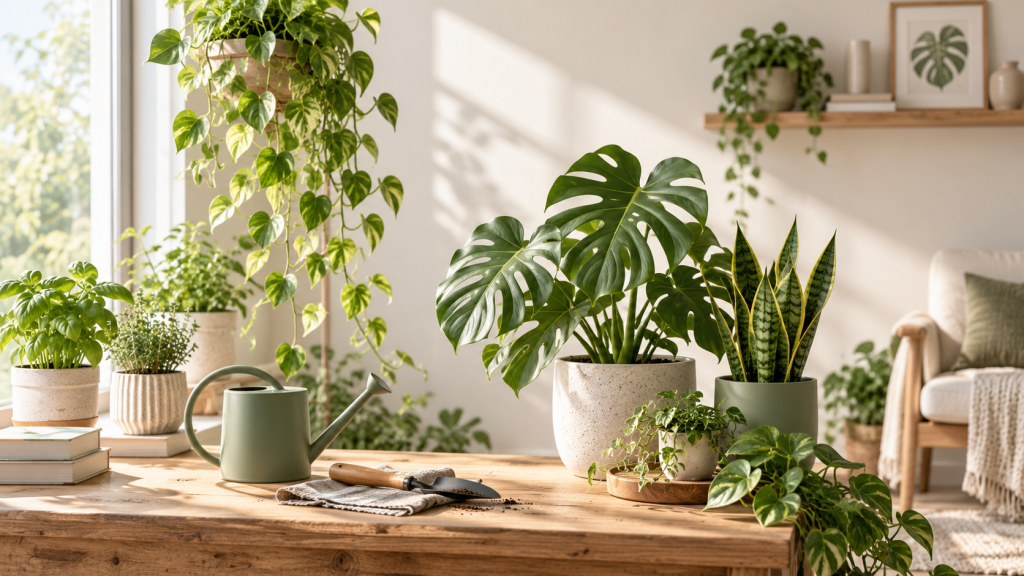
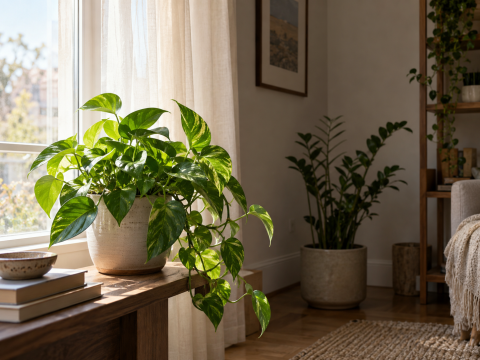
Understand what low light really means for houseplants, why survival is different from healthy growth, and how to judge whether a dim indoor spot is workable.
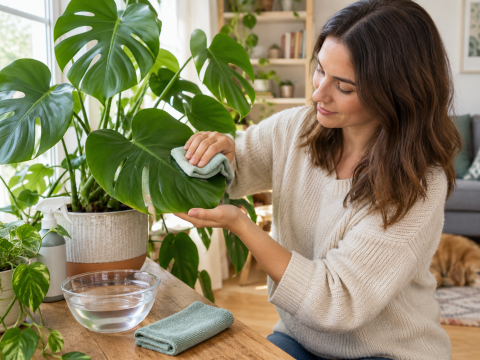
Clean dusty houseplant leaves safely with gentle methods that protect leaf surfaces, improve inspection, and avoid unnecessary oils or harsh household products.
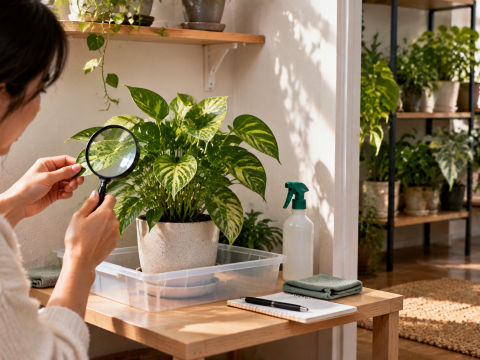
Use a practical quarantine period for new houseplants so you can inspect for pests, stabilize care, and reduce the chance of immediately exposing your whole collection.
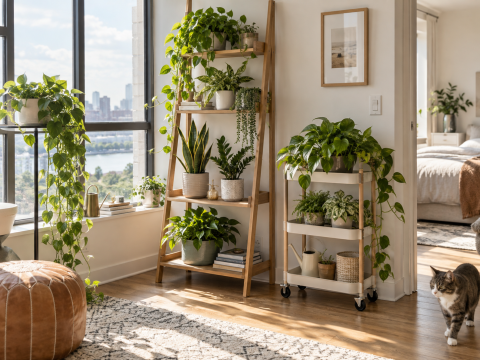
Create rental-friendly plant displays with freestanding shelves, tension systems, window ledges, stands, and movable groupings that do not require permanent drilling.
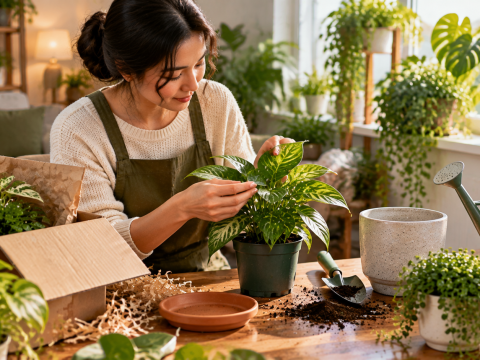
Help a new houseplant adjust to your home by stabilizing light, temperature, watering, and placement before making unnecessary repotting or feeding changes.
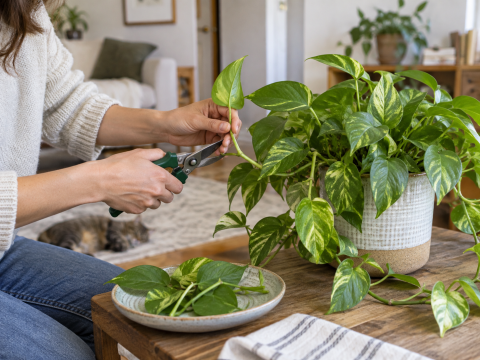
Plan indoor plant placement by room using actual light, temperature, humidity, traffic, and watering access instead of assuming kitchens, bathrooms, or bedrooms have fixed conditions.
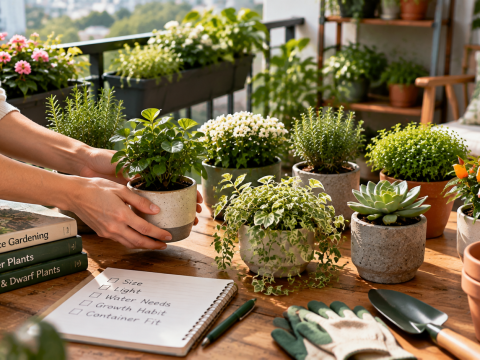
Choose compact and dwarf plants by looking at mature size, growth habit, container needs, pruning requirements, and light rather than assuming every small nursery plant stays small.
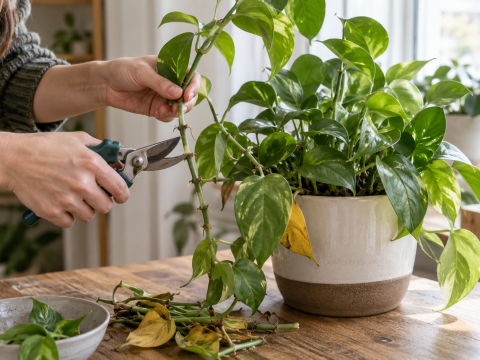
Learn how to prune houseplants with clean cuts, realistic goals, and careful timing so you can remove damaged growth and improve shape without overpruning.
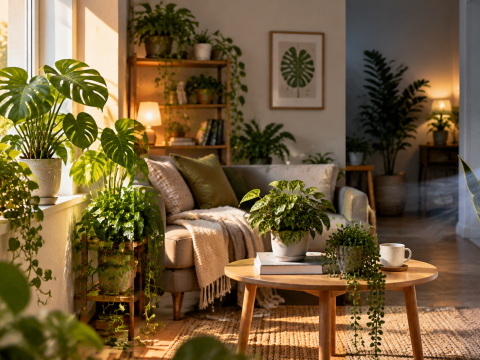
Learn how indoor plant microclimates form around windows, vents, walls, shelves, and groups of plants, and use those small differences to improve placement.
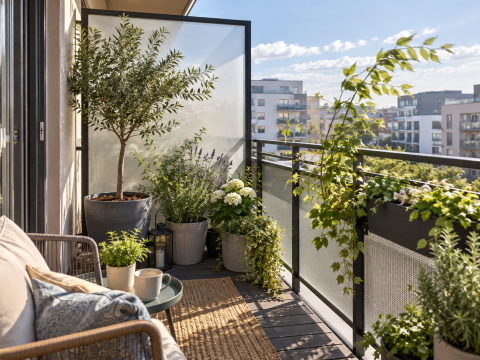
Protect balcony plants from strong wind with stable containers, thoughtful placement, partial barriers, and plant support while preserving useful airflow and light.
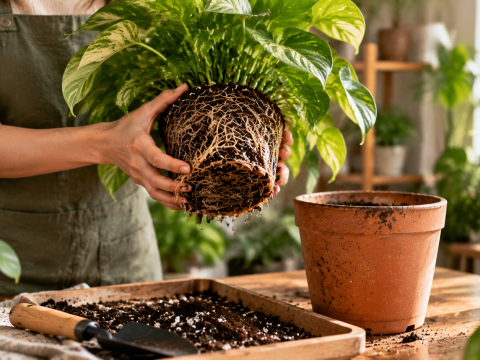
Learn the practical signs of a root-bound houseplant, why visible roots are not always an emergency, and how to decide whether repotting is actually needed.
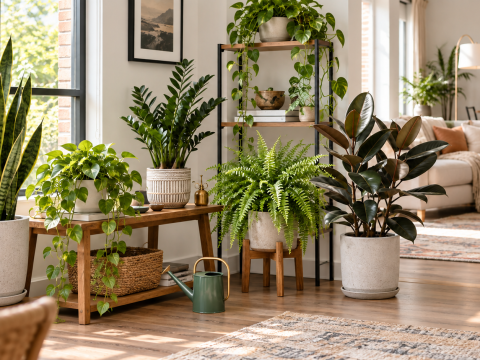
Group houseplants indoors in a way that looks cohesive while preserving light, airflow, pest visibility, watering access, and enough space for future growth.