What “Low Light” Really Means for Houseplants Indoors
Many plant-care problems become confusing only after several possible causes are treated as if they were equally likely. A practical explanation of what “low light” really means for houseplants indoors should make the next decision clearer, not add another rigid rule. The central principle is that low light is not the same as no light, and a plant that survives in a dim location may grow very slowly or lose quality over time. That matters here because human vision adapts to indoor brightness, making a room seem well lit even when plant-usable light is modest. Human vision adapts to dim rooms, which can make a corner seem brighter than it is from a plant’s perspective. Indoor conditions are highly local: a plant beside a window, under a vent, or behind a curtain can experience a different environment from one only a short distance away. The goal is a calmer method: understand the likely process, check the strongest clues, make one change, and let the next trend provide feedback.
How Nearby Conditions Shift the Result
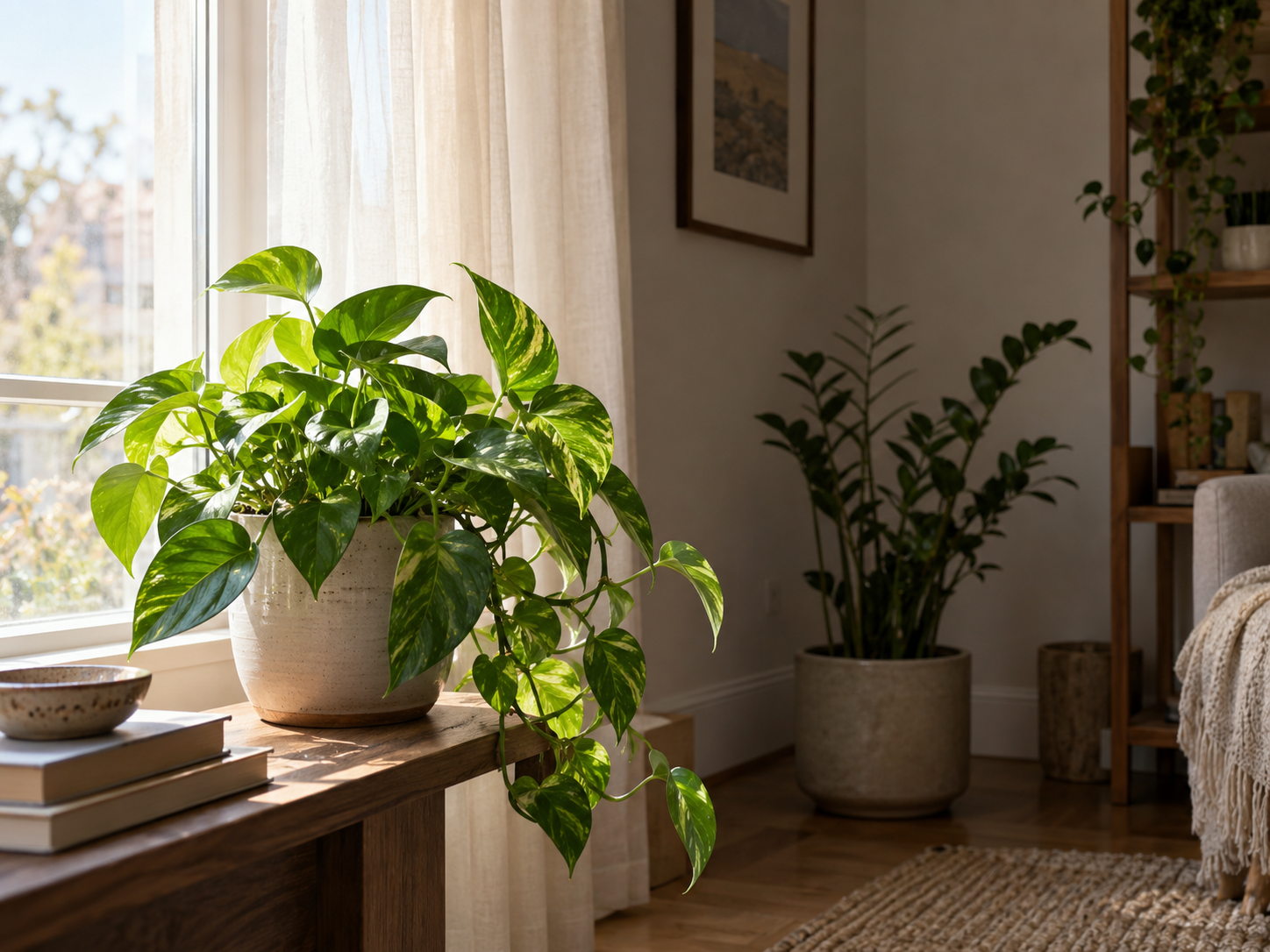
Environmental context helps explain why two similar plants can respond differently. Here, human vision adapts to indoor brightness, making a room seem well lit even when plant-usable light is modest. Check the actual position of the leaves and root zone rather than relying on broad labels such as bright room, warm corner, or sheltered balcony. A location that works during mild weather may behave very differently during the brightest or coolest part of the year. Nearby plants can shade one another, reduce airflow, or change how easy it is to water and inspect each pot. In this particular care decision, room labels such as bright, warm, or humid are only rough descriptions; the exact plant position often matters more. Rechecking those local conditions is especially worthwhile when the season, heating, cooling, or sun angle changes.
The Clues That Deserve the Most Weight
The first five minutes should be spent looking, touching, and comparing rather than fixing. Pay attention to very soft shadows, long spaces between leaves, smaller new growth, leaning, slow soil drying, and proximity to the nearest unobstructed window. A pattern that persists across checks deserves more weight than something that appeared once. In this particular care decision, use the same viewing angle or checking method when possible so a later comparison means something. Checking neighboring plants can also be useful because a shared pattern may point to an environmental condition instead of simply an individual plant problem. When you need to check the broader setup, How to Rotate Indoor Plants for More Even Growth and Better Light gives a useful companion framework. The purpose of the check is to build enough agreement between clues that the next step is defensible and easy to evaluate.
The Reason This Detail Matters
The biology and the environment meet at one central idea: Low light is not the same as no light, and a plant that survives in a dim location may grow very slowly or lose quality over time. If that relationship is missed, it is easy to respond to the appearance of the problem without addressing what is actually driving it. Understanding the mechanism gives you a reason to pause when a popular shortcut does not match the conditions you can observe. That distinction matters because a symptom can be real while the first explanation for it is still wrong. A practical indoor setup should support the plant without making watering, cleaning, inspection, or normal use of the room unnecessarily difficult. With that foundation in place, the next inspection can focus on evidence instead of simply on every possible explanation.
Turn the Evidence Into One Clear Decision
Turn the diagnosis into one clear move: Use low-light-tolerant plants only where there is still meaningful ambient daylight or provide supplemental light when the spot is truly dim. The purpose is not to force instant improvement but to create conditions in which the plant can show whether the reasoning was sound. For the setup described here, use the response to refine the plan rather than assuming the first adjustment must be permanent. For the setup described here, if that part of the diagnosis is still unclear, our article How Much Light Do Indoor Plants Really Need? A Room-by-Room Guide provides a practical reference without requiring you to change everything at once. After that step, return to observation and resist the urge to improve several other things at the identical time.
The Sequence of Events Matters
The sequence of events is often more informative than the severity of one symptom. Review what changed before the pattern appeared, including care routines, placement, room climate, and any recent disturbance. This does not prove a cause, but it helps you rank explanations instead of treating every possibility as equally likely. A major clue is whether the timing lines up with the beginning of the visible change. If you recently made a correction, give it enough time to be evaluated before layering another one over it. This is also where Grouping Houseplants Indoors can help, because it addresses a related decision that is easy to misread in isolation. The clearer the sequence, the less likely you are to mistake the effect of a recent change for a separate new problem.
What Usually Makes the Situation Worse
The most common mistakes are placing plants in windowless rooms indefinitely, interpreting slow decline as normal, and overwatering because low-light pots dry slowly. These responses usually come from trying to make the plant look better immediately, but they can hide the original cause or create a second problem before the first one is understood. More water, more light, more fertilizer, or more humidity are not automatically improvements; each can become a stress when the plant does not need it. Do not confuse frequency with quality: repeating a weak or inappropriate action more often rarely turns it into the right solution. For this indoor gardening topic, seasonal sun angle matters because a location that is gentle in one part of the year can become much brighter or dimmer later. Good troubleshooting protects the clarity of the next observation as much as it protects the plant.
Signs That the Situation Is Stabilizing
The plant’s next response is part of the diagnosis. Over the following checks, look for a slower rate of decline, normal drying or growth patterns, and fewer new symptoms rather than judging success by one old leaf. For light or placement issues, more balanced growth and healthier spacing between leaves may take several weeks to become obvious. For root-zone issues, a return to more predictable drying and stable posture can be an encouraging sign even before new leaves appear. Usable light at leaf level can change sharply over a short distance, especially beside windows with curtains, overhangs, or nearby buildings. Human eyes adapt quickly to indoor brightness, which is one reason direct observation of plant growth and leaf orientation is often more useful than room impressions. That is a more reliable measure of success than expecting old damage to disappear.
Use a Small Number of Reliable Checkpoints
Turn the lesson into a simple maintenance rhythm: watch the quality of new growth over several weeks and move the plant closer to light if it becomes progressively weaker or more stretched. When the same few checks are repeated, changes become easier to notice and you spend less time relearning what is normal for that plant or space. When a routine starts creating unnecessary actions, simplify it back to observation, prioritization, and one measured response at a time. Keep tools where they are easy to use so inspection does not become a chore that gets postponed until symptoms are obvious. Indoor conditions are highly local: a plant beside a window, under a vent, or behind a curtain can experience a different environment from one only a short distance away. That is how general advice turns into a baseline that is specific to your own home.
The Principle to Carry Forward
Bring the process back to one idea: low light is not the same as no light, and a plant that survives in a dim location may grow very slowly or lose quality over time. Observe first, rank the likely causes, make a proportionate change, and watch the trend. That sequence keeps everyday plant care understandable even when the exact answer differs from one home to another. It also makes the collection easier to maintain because fewer changes are made for reasons that cannot later be evaluated. That balance—steady basics, specific observations, and measured adjustments—is what turns general advice into useful everyday care. A practical indoor setup should support the plant without making watering, cleaning, inspection, or normal use of the room unnecessarily difficult. Used consistently, it reduces guesswork without requiring perfect control over the plant’s surroundings.