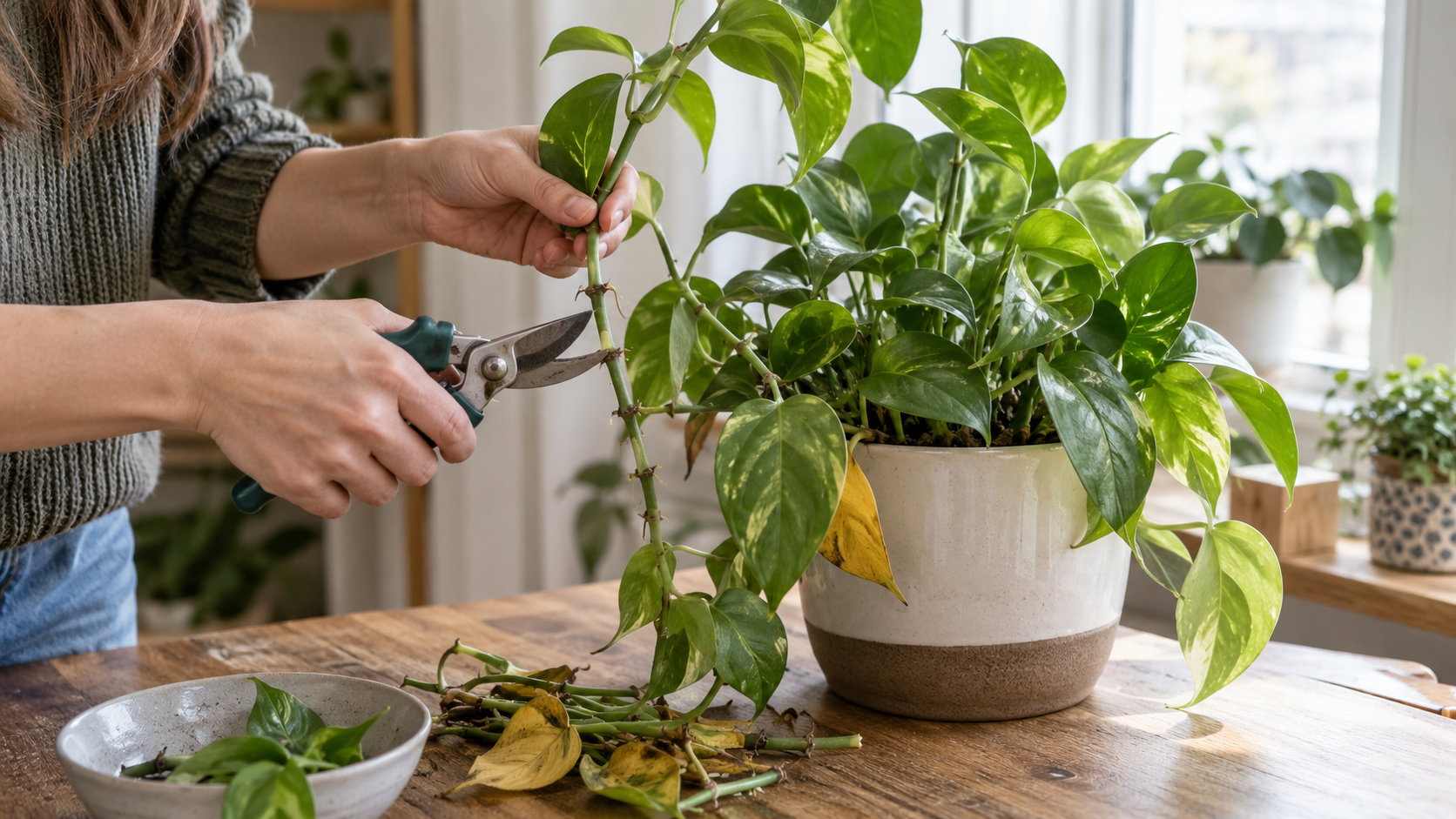
How to Prune Houseplants for Healthier, More Balanced Growth
Houseplant care becomes easier when the decision is tied to what the plant and its environment are actually showing. For everyday care, how to prune houseplants for healthier, more balanced growth is best approached through factors that can actually be checked at home. The central principle is that good pruning removes a clear problem or redirects growth; it is not a routine requirement to cut a plant simply because it has become larger. That matters here because different houseplants respond differently to cuts, but clean tools and conservative removal reduce unnecessary stress. Leaves record past conditions, so older damage may remain visible even after the cause has been corrected. A houseplant often shows stress after the triggering condition has been present for days, so a symptom is best treated as evidence instead of simply an instant diagnosis. This keeps the advice useful even when the exact timing differs from another home, climate, or container setup.
Look for Agreement Between the Clues
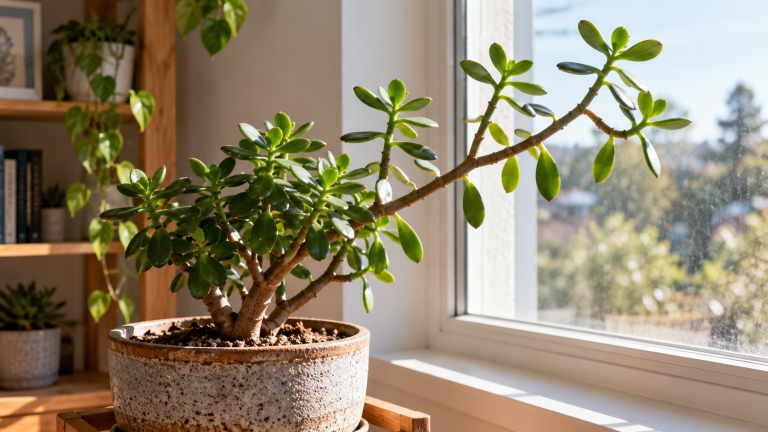
The first five minutes should be spent looking, touching, and comparing rather than fixing. Pay attention to dead leaves, damaged stems, leggy sections, crowded growth, weak branches, and a clear node or branching point for the intended cut. A pattern that persists across checks deserves more weight than something that appeared once. Checking neighboring plants can also be useful because a shared pattern may point to an environmental condition rather than an individual plant problem. The goal is not to collect every possible measurement; it is to gather enough consistent evidence to choose a reasonable next step. The best comparison is usually the plant against its own recent healthy pattern instead of simply against a perfect specimen in a photograph. A consistent inspection gives you a baseline that becomes more valuable each time it is repeated.
What Is Actually Happening
The most important point is that Good pruning removes a clear problem or redirects growth; it is not a routine requirement to cut a plant simply because it has become larger. That statement is useful because it describes a process, not a calendar rule, and it gives you something concrete to compare with the plant’s response. Thinking in causes and responses helps prevent a cosmetic symptom from becoming the reason for an unnecessary overhaul. That distinction matters because a symptom can be real while the first explanation for it is still wrong. For plant-care questions, the condition of the root zone and the quality of new growth usually deserve more attention than one damaged older leaf. New growth is usually a better indicator of current conditions than cosmetic improvement on tissue that is already damaged. With that foundation in place, the next inspection can focus on evidence instead of on every possible explanation.
Why Timing Matters
Recent history matters because plants do not always respond instantly. A change in the root zone or environment can happen first, while leaves show the consequence later. Reconstructing the order of events helps prevent a second intervention from being added before the first one has even had time to show its effect. Changes that occurred after the symptom began are less likely to be the original cause, even if they affect what happens next. If you recently made a correction, give it enough time to be evaluated before layering another one over it. To keep the practical next action grounded, cross-check this with Brown Leaf Tips on Houseplants before assuming the most dramatic explanation is the correct one. Treat the timeline as supporting evidence, then compare it with what the plant is showing now.
Light, Heat, Airflow, and Containers Still Matter
The same technique can behave differently in another location because different houseplants respond differently to cuts, but clean tools and conservative removal reduce unnecessary stress. Light, temperature, airflow, humidity, container size, and seasonal changes can alter both the plant’s needs and the speed at which the growing medium changes. In compact spaces, the safest and healthiest arrangement is usually the one that preserves both plant needs and human access. If you use a meter, thermometer, or light reading, treat it as one piece of evidence and compare it with the plant’s response. Stable basics—appropriate light, sensible watering, drainage, and time—make it easier to tell whether a more specific intervention is actually needed. In this particular care decision, that context helps explain why care needs can shift even when the plant itself has not moved.
A Better Decision Rule
Turn the diagnosis into one clear move: Decide what you want the cut to accomplish, remove the smallest amount needed, and pause before making additional cuts. The purpose is not to force instant improvement but to create conditions in which the plant can show whether the reasoning was sound. If roots or soil are involved, make sure the container can drain before adding water intended to correct another problem. Write down the change if you are likely to forget it; the next review is more meaningful when you know exactly what was altered. Changing several care factors at once makes it difficult to know which adjustment helped or caused new stress. The best comparison is usually the plant against its own recent healthy pattern instead of simply against a perfect specimen in a photograph. A focused change is easier to evaluate and usually easier on a plant that is already adapting.
Common Shortcuts That Create New Problems
Several well-intentioned responses can backfire: removing too much foliage at once, cutting without considering growth points, using dirty blades, and pruning a severely stressed plant for appearance. A better approach is to correct the clearest problem and leave unrelated factors stable long enough to evaluate the result. Another mistake is solving for appearance first, such as removing all damaged tissue before understanding whether the stress is still active. Do not confuse frequency with quality: repeating a weak or inappropriate action more often rarely turns it into the right solution. For plant-care questions, the condition of the root zone and the quality of new growth usually deserve more attention than one damaged older leaf. When you need to check the broader setup, Why Houseplants Droop gives a useful companion framework. Keeping the basics stable gives you a much better chance of understanding what actually changed.
Give the Plant Time to Answer
Monitoring should answer one question: is the problem still progressing? Old yellowing, browning, scars, or stretched growth can remain visible after the cause is corrected, so give more weight to what is happening on newer tissue. The speed of change matters: a problem that stops spreading is different from one that continues appearing on fresh tissue. If decline continues despite appropriate basics, consider whether the original explanation was incomplete and move to the next most plausible factor. Stable basics—appropriate light, sensible watering, drainage, and time—make it easier to tell whether a more specific intervention is actually needed. If you are building a more complete routine, pair this advice with How to Rotate Indoor Plants for More Even Growth and Better Light so the two care decisions support rather than contradict each other. Progress becomes easier to judge when the same indicators are checked at similar intervals.
Use Consistency Without Becoming Rigid
Long-term confidence comes from a routine you will actually use. inspect plants monthly for damaged tissue but prune only when there is a specific health or shape reason. Add notes or photos only when they help you recognize patterns; the goal is clarity, not a complicated tracking system. As the collection grows, protect the simplicity of the system by adding plants only when light, access, and care capacity are still adequate. For this plant care topic, when a routine starts creating unnecessary actions, simplify it back to observation, prioritization, and one measured response at a time. A houseplant often shows stress after the triggering condition has been present for days, so a symptom is best treated as evidence rather than an instant diagnosis. The system should become more straightforward to maintain over time, not more complicated with every new lesson.
Final Notes for Everyday Care
The goal is not to control every variable. It is to recognize the factors that matter most and respond consistently. good pruning removes a clear problem or redirects growth; it is not a routine requirement to cut a plant simply because it has become larger. With a stable baseline, you can adjust care as the season, plant size, or growing space changes without starting from scratch each time. That balance—steady basics, specific observations, and measured adjustments—is what turns general advice into useful everyday care. A reliable baseline is more valuable than a perfect-looking week because it helps you notice meaningful change early. New growth is usually a better indicator of current conditions than cosmetic improvement on tissue that is already damaged. That process keeps everyday care practical, adaptable, and easier to trust.