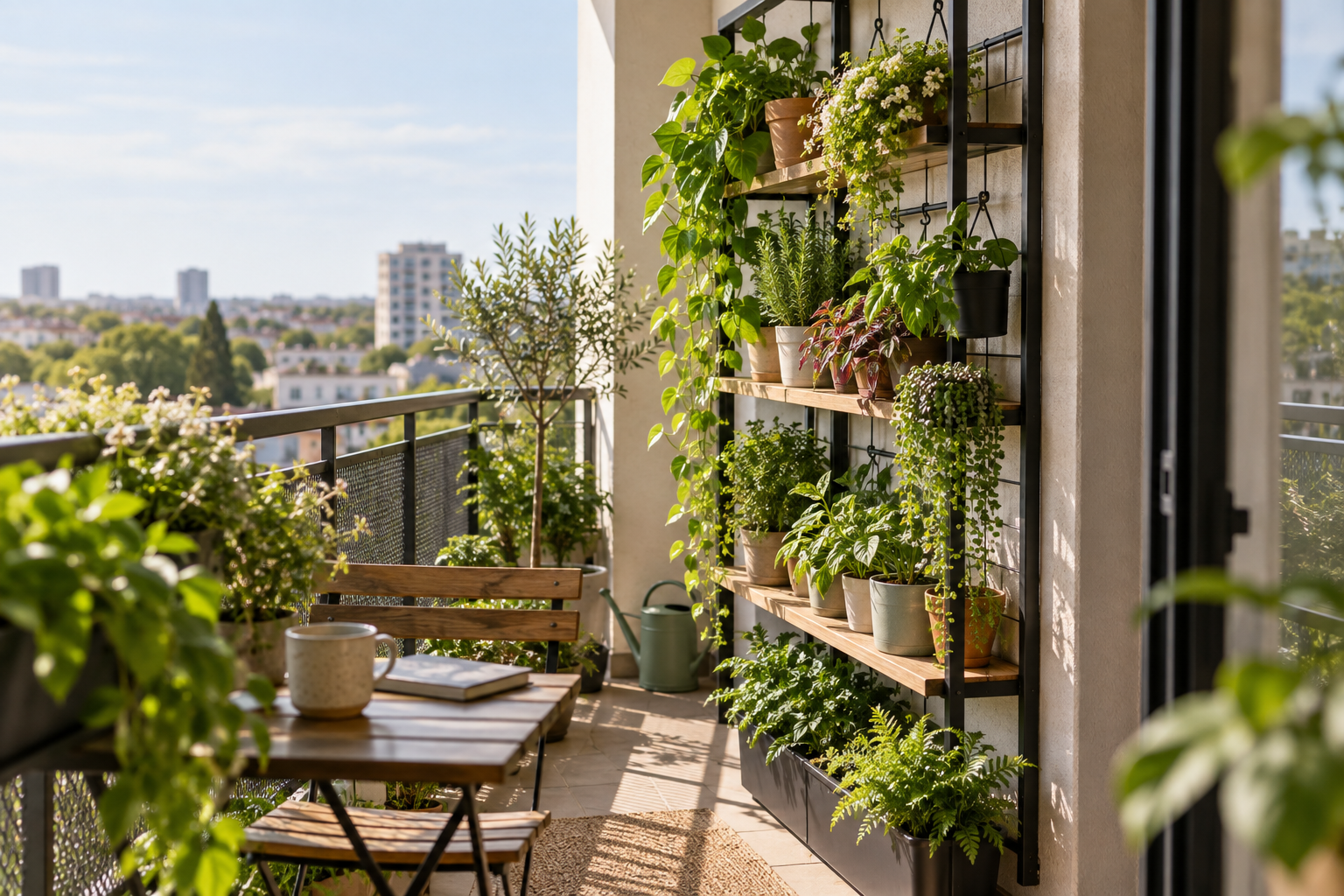
How to Plan a Vertical Balcony Garden Without Wasting Floor Space
The most useful way to approach this topic is to separate visible evidence from assumptions and then work from the strongest clues. When how to plan a vertical balcony garden without wasting floor space is treated as a process instead of a fixed rule, the advice becomes easier to adapt to different plants and rooms. The central principle is that vertical gardening works best when the structure solves a real space problem without blocking light, creating unsafe loads, or making watering difficult. That matters here because upper levels usually receive different sun and wind exposure from lower shelves, so one vertical frame can contain several growing conditions. Mature plant size matters more than the size of a new purchase because crowded layouts become harder to manage as foliage expands. Good small-space design leaves some open room for airflow, drainage, growth, and maintenance instead of treating every empty surface as a place for another pot. The goal is a calmer method: understand the likely process, check the strongest clues, make one change, and let the next trend provide feedback.
What the Plant Is Responding To
The biology and the environment meet at one central idea: Vertical gardening works best when the structure solves a real space problem without blocking light, creating unsafe loads, or making watering difficult. If that relationship is missed, it is easy to respond to the appearance of the problem without addressing what is actually driving it. Thinking in causes and responses helps prevent a cosmetic symptom from becoming the reason for an unnecessary overhaul. This is why a single number, date, or visual symptom rarely deserves to control the entire care decision. Good small-space design leaves some open room for airflow, drainage, growth, and maintenance instead of treating every empty surface as a place for another pot. Once this relationship is clear, the rest of the care decision becomes easier to keep proportionate.
A Short Care History Can Save Unnecessary Work
Recent history matters because plants do not always respond instantly. A change in the root zone or environment can happen first, while leaves show the consequence later. Reconstructing the order of events helps prevent a second intervention from being added before the first one has even had time to show its effect. A short history can also reveal whether the plant has experienced the same pattern before under similar seasonal conditions. This prevents the common cycle of forgetting a recent adjustment and then treating its delayed effect as a brand-new problem. Compact gardens are easier to maintain when containers share a few predictable care zones instead of every pot requiring a completely different routine. In a limited footprint, access is part of design: every pot still needs to be reached for watering, inspection, and cleanup. This makes timing a practical filter in place of a guess about cause.
Build a Baseline From Several Clues
A better first check focuses on sun path, railing rules, wall strength, wind direction, weight when pots are wet, drainage path, and access to every container. Compare those observations with the plant’s recent normal condition and give repeated patterns more weight than a single unusual leaf or one reading taken out of context. The goal is not to collect every possible measurement; it is to gather enough consistent evidence to choose a reasonable next step. A short, deliberate inspection keeps small variations from being mistaken for emergencies. If you are building a more complete routine, pair this advice with Balcony Gardening for Beginners so the two care decisions support instead of contradict each other. If the pattern is still mixed after this inspection, waiting for another check can be more useful than forcing a diagnosis.
Light, Heat, Airflow, and Containers Still Matter
The method should fit the real space. Remember that upper levels usually receive different sun and wind exposure from lower shelves, so one vertical frame can contain several growing conditions. That single observation is often enough to explain why a routine that worked previously no longer gives the same result. A location that works during mild weather may behave very differently during the brightest or coolest part of the year. Windows, exterior walls, fans, air conditioners, radiators, reflective surfaces, and balcony railings can all create local differences. Vertical space can increase capacity, but height also changes light, wind, heat, stability, and the difficulty of watering each container. Small-space gardening becomes easier when plants with similar needs are grouped into a few manageable care zones. The exact location should therefore be part of every follow-up check.
A Practical Next Step
Action is useful when it is specific and measurable. In this situation, Map the balcony first, then assign plants to levels according to their mature size and the conditions at each height. Treat that as a testable step, not as permission to overhaul the entire setup. The best next step is often the one that improves a limiting condition while leaving the rest of the system easy to monitor. A good intervention should solve a defined issue, not simply make you feel that something has been done. Mature plant size matters more than the size of a new purchase because crowded layouts become harder to manage as foliage expands. Compact gardens are less difficult to maintain when containers share a few predictable care zones instead of every pot requiring a completely different routine. The next useful information comes from the plant’s response, not from adding another intervention immediately.
Avoid Adding Noise to the Diagnosis
Good troubleshooting includes knowing what not to do. In this case, stacking too many heavy pots high up, letting runoff fall onto lower foliage, blocking doors, and filling every level before understanding light. Resist the urge to stack treatments simply because the first improvement is not immediate. When the plant is already stressed, unnecessary repotting or moving can make it harder to separate the original issue from transplant or acclimation stress. Do not confuse frequency with quality: repeating a weak or inappropriate action more often rarely turns it into the right solution. If that part of the diagnosis is still unclear, our article Window Gardening provides a practical reference without requiring you to change everything at once. The more uncertain the diagnosis, the more valuable it is to avoid unnecessary variables.
Watch What Happens Next
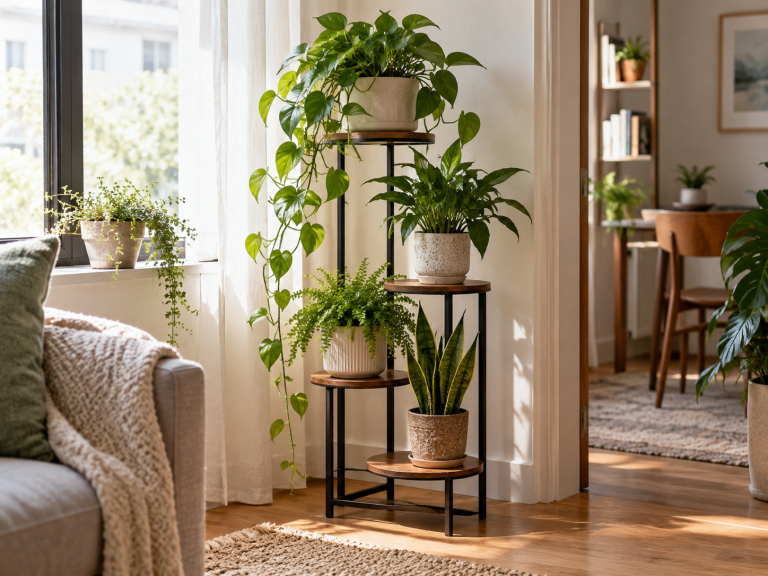
Judge progress by the trend that develops after the change. Older marks may remain, so look for fewer new symptoms, steadier posture, more predictable moisture changes, and new growth that better matches the plant’s normal form. If decline continues despite appropriate basics, consider whether the original explanation was incomplete and move to the next most plausible factor. For light or placement issues, more balanced growth and healthier spacing between leaves may take several weeks to become obvious. Good small-space design leaves some open room for airflow, drainage, growth, and maintenance instead of treating every empty surface as a place for another pot. When you need to check the broader setup, How to Use Shelves and Vertical Space for Indoor Plants gives a useful companion framework. Use the direction of the trend to decide whether to continue, refine, or reconsider the original approach.
Use Consistency Without Becoming Rigid
The simplest sustainable habit is this: start with part of the structure, observe one weather cycle, and expand only after watering and stability are proven practical. Repeating that process gives you a personal baseline that becomes more useful than generic timing recommendations. A simple weekly look can include moisture, new growth, leaf undersides, stability, drainage, and changes in the surrounding space. Short notes are most useful when they capture decisions, such as the date of repotting, feeding, moving, or a pest treatment. Good small-space design leaves some open room for airflow, drainage, growth, and maintenance instead of treating every empty surface as a place for another pot. Weight, runoff, wind exposure, and the path people use through the space are practical constraints, not decorative details. For this small-space gardening topic, the system should become easier to maintain over time, not more complicated with every new lesson.
Keep the Evidence Stronger Than the Impulse to Fix
A practical routine should reduce uncertainty rather than create more rules. The key point remains that vertical gardening works best when the structure solves a real space problem without blocking light, creating unsafe loads, or making watering difficult. When care is matched to the real room, container, season, and plant condition, small problems are easier to notice before they turn into repeated cycles of correction. You do not need perfect control; you need enough consistency to see cause and effect clearly. That mindset makes future problems less intimidating because you already have a process for deciding what deserves attention first. In a limited footprint, access is part of design: every pot still needs to be reached for watering, inspection, and cleanup. the response is a more resilient routine that can adjust as plants, seasons, and spaces change.