Venus Flytrap Indoors: Light, Water, and Dormancy Choices
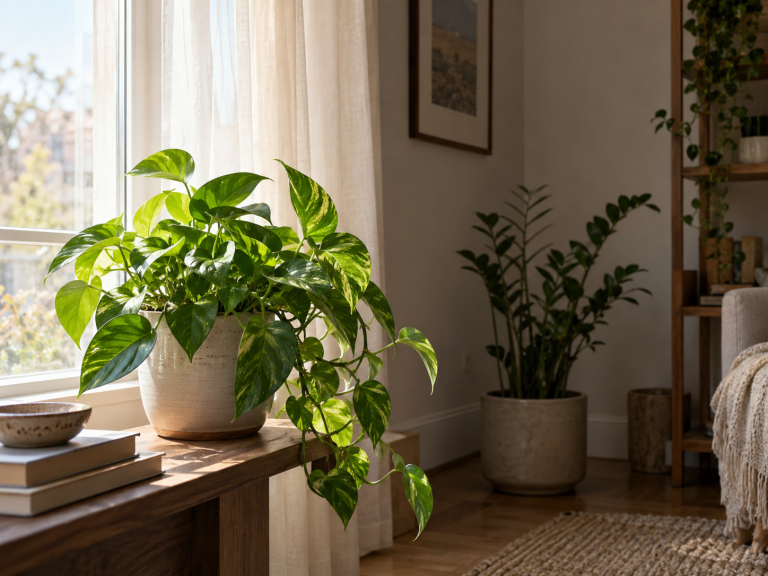
A Venus flytrap on a desk may look like a playful miniature monster, but it is not an ordinary tropical foliage plant. Its roots evolved in nutrient-poor wet habitats, its traps need ample light to function well, and its seasonal growth changes are easy to mistake for death. Treating it like a pothos—moderate light, regular fertilizer, and the same room temperature all year—can shorten its life.
The essentials are surprisingly specific: suitable bright light, low-mineral water, a specialist low-nutrient substrate, and an understanding of dormancy. The difficult part for indoor growers is coordinating those requirements in an actual home, especially when a sunny windowsill becomes cold at night or indoor heating prevents a seasonal rest period.
Learn what the traps are for
The Venus flytrap, Dionaea muscipula, forms a rosette of leaves whose ends become paired lobes. When the sensitive hairs inside a trap are triggered in the appropriate sequence, the lobes can close around small living prey. Digestion supplies additional nutrients in habitats where the substrate itself is exceptionally poor in mineral fertility.
That adaptation does not mean you should replace plant care with frequent feeding. Flytraps still need photosynthesis to grow. Light supplies much of their energy; captured prey supplements mineral nutrition. A plant kept in dim light will not become healthy because insects are placed into its traps.
Do not close the traps for entertainment. Trap movement uses resources, and repeated unnecessary triggering can exhaust a leaf. Each trap has a limited functional lifespan. A blackened old trap is not automatically evidence of a catastrophic disease when the rest of the plant remains vigorous.
The Royal Horticultural Society’s Venus flytrap guide describes the plant’s need for strong light, low-mineral water, and a special nutrient-poor medium. It also makes clear that its winter behavior differs from that of many evergreen indoor ornamentals.
Give the plant usable light, not simply a bright-looking room
Indoor light is often weaker than it appears to human eyes. Flytraps are adapted to open sunny conditions. A plant positioned several feet from a window may survive briefly but produce weak, elongated traps or pale new leaves. The better choice is a very bright location suited to the species, with care taken to avoid abrupt scorching when moving a plant from shaded retail conditions into intense direct sunlight.
Observe where the sun actually reaches. A south-facing window in the Northern Hemisphere or a north-facing window in the Southern Hemisphere may be promising, but window tint, overhangs, buildings, season, and climate can dramatically change the result. A balcony or outdoor space may provide excellent light during suitable weather, provided temperature, wind, and watering can be managed.
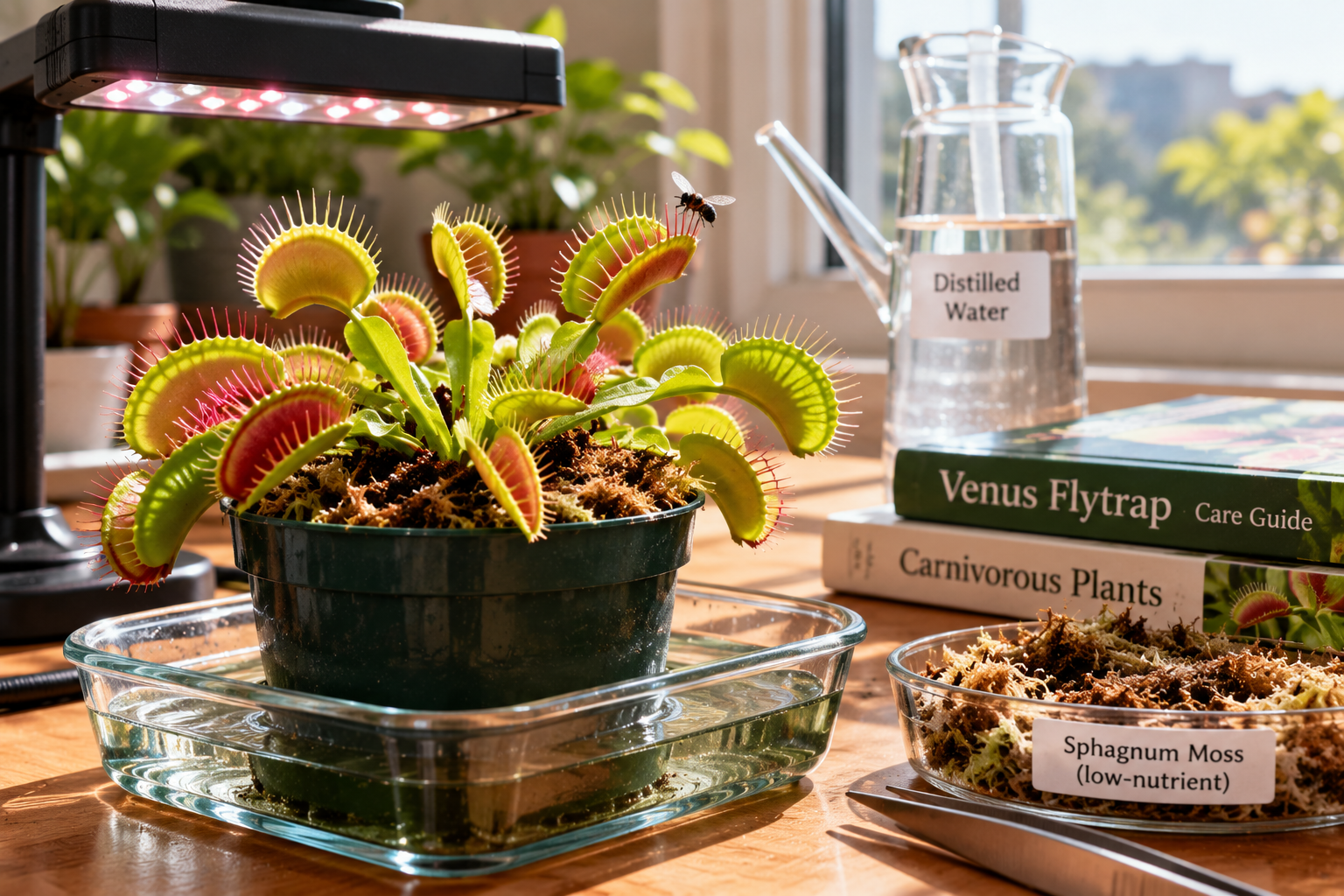
If sunlight is insufficient, an appropriate horticultural grow light may help. Choose a fixture with credible output information and position it according to manufacturer guidance rather than guessing from wattage alone. Manage heat and electrical safety around the wet tray that a flytrap often requires. Bright light is valuable only if the surrounding setup is safe.
Introduce increased exposure gradually. Leaves produced under dim conditions may discolor in strong direct sun even though new growth later adapts. Do not judge the plant’s long-term capacity from a single scorched old trap immediately after relocation.
Use water with a suitable mineral content
Flytraps are unusually sensitive to mineral accumulation in their root environment. Many household tap-water supplies contain dissolved calcium, magnesium, and other salts. Some water sources are low in dissolved minerals while others are much harder; clear appearance alone does not reveal which you have.
Rainwater collected safely or distilled water is commonly recommended. Reverse-osmosis water can also be suitable if it is genuinely low in dissolved solids and the system is maintained correctly. Do not assume that ordinary filtered drinking water has had its minerals removed; many carbon filters improve taste without producing low-mineral water.
The RHS recommends rainwater or distilled water for a flytrap. If you cannot provide reliable low-mineral water, consider whether this is the right plant for your home. Repeatedly irrigating with unsuitable hard water and hoping to compensate later is not a sustainable approach.
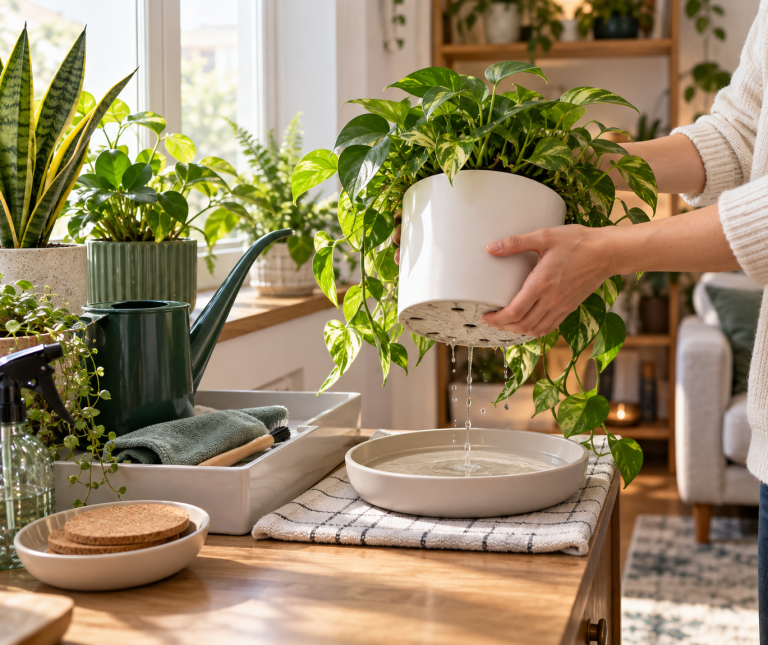
Monitor the tray and pot rather than setting and forgetting a permanent water level. During active growth, the growing medium generally needs to remain wet, unlike the well-aerated drying routine appropriate for many succulents. The depth and frequency of replenishment depend on the pot design, weather, and seasonal stage. Avoid letting the pot become bone dry simply because a general houseplant article recommends that practice.
Choose a low-nutrient growing medium
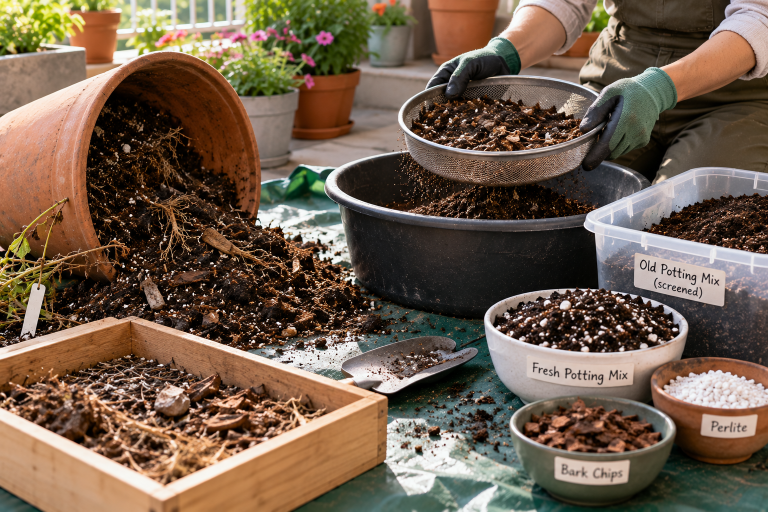
A standard enriched houseplant mix is not appropriate. Many contain fertilizers or nutrient-rich compost that can overwhelm roots evolved for low-fertility conditions. Use a product formulated for carnivorous plants and check that its components and nutrient levels suit Dionaea. Sustainable peat-free sphagnum-based options are increasingly available; the exact choice should follow a reliable horticultural guide rather than a decorative potting recipe.
Repot only when the plant and medium require it. A newly purchased healthy flytrap may not benefit from immediate root disturbance. When repotting is necessary, handle its small roots carefully and avoid burying the crown deeply. Rinse and prepare any medium according to its instructions, using appropriate low-mineral water.
Do not add normal liquid houseplant fertilizer as a boost. The RHS cautions against fertilizing flytraps in the manner used for other houseplants. Similarly, do not bury food scraps or meat in the pot; decay can create conditions that harm the roots and does not mimic insect capture.
If the substrate begins to smell foul or the crown becomes soft, inspect whether stagnant, contaminated conditions or disease are involved. That is different from normal aging of individual traps. A bog plant needs wet roots but still requires a healthy, functioning growing environment.
Feed cautiously—or allow the plant to catch its own prey
A healthy flytrap in a suitable environment can capture occasional small live insects on its own. There is no requirement to hand-feed every trap. If natural prey is scarce indoors, the plant can still photosynthesize and grow with adequate light and care; lack of regular insect meals does not explain every weak specimen.
Do not place raw meat, cheese, or other household foods in traps. They do not provide the intended natural trigger conditions and can rot. Do not insert insects that are too large for the lobes to seal, or repeatedly poke trigger hairs as a demonstration. The plant is not a kitchen waste processor or a toy for testing reflexes.
Some trap closures fail to result in digestion, and old traps eventually blacken. Remove dead tissue once clearly finished if desired, without damaging emerging leaves. Inspect the health of the crown and new traps before concluding that one blackened lobe means the plant is dying.
Understand dormancy before winter arrives
Venus flytraps experience a seasonal rest period in their natural cycle. During dormancy, growth slows and the rosette may become smaller or less showy. Some older leaves die back. A grower used to tropical houseplants may interpret these changes as failure and respond with more fertilizer, more heat, and repeated repotting.
Avoid that reflex. The plant’s need for a cooler period should be planned as part of the annual growing method. However, do not take one generic temperature instruction and expose a valuable specimen to freezing conditions without understanding its provenance and local climate. Winter protection differs between a sheltered mild region, an unheated porch with occasional frost, and an apartment where temperatures never drop significantly.
RHS guidance describes a cooler winter rest for the species, while its broader carnivorous plant growing guide emphasizes species differences and adjustments to watering in dormant periods. Use those recommendations in conjunction with local horticultural advice and the actual hardiness of your setup.
Plan your winter location before buying
If the only available space is a constantly warm, dim office, maintaining a healthy long-term flytrap may be difficult. A brighter, seasonally cool yet protected position could be more suitable. Do not place a wet electrical lighting installation in an unprotected freezing or rain-exposed area; plan safe power and water management separately.
During dormancy, keep the medium appropriately moist without treating summer tray levels as an inflexible winter requirement. Check for persistent rot and remove completely dead material carefully. The plant may look unimpressive for weeks, and the return of new growth in favorable conditions is the clearer test of recovery.
Do not repeatedly move a dormant plant between radically different locations out of impatience. Note seasonal observations, maintain suitable moisture and temperature, and allow the plant to resume growth in its own cycle.
A realistic apartment scenario
A buyer brings home a small flytrap in a plastic pot. It sits on a desk beneath a ceiling light and receives ordinary tap water. For a month the traps remain attractive, then new leaves become weak and some old traps turn black. The buyer considers feeding it insects every day.
The more useful inspection begins with the environment. The desk receives little plant-usable daylight, and the water source is mineral-rich. The owner moves the plant gradually toward a brighter suitable location or a properly managed grow light, switches to low-mineral water, and confirms that the medium is a suitable carnivorous plant product. No extra fertilizer is added.
As seasons change, the owner prepares a cooler safe dormancy location rather than assuming the plant should grow at identical speed all year. A few old traps still die, but the owner watches the crown and new leaves to judge health. The plan addresses the species’ biology rather than treating trap closure as the sole sign of success.
A different apartment might have an excellent sunny balcony but unsafe winter freezes. There the summer location may be easy and winter protection the central challenge. Flytrap care is best planned around both extremes instead of a single picturesque spot.
What common advice gets wrong
“Any drinking water will do.” Dissolved minerals vary widely. Use reliably low-mineral water as advised for the species.
“You must feed it every week.” No. Photosynthesis is fundamental, and excessive hand-feeding or false triggers waste resources.
“Regular potting soil helps it grow faster.” Nutrient-rich mixes can be inappropriate. Use a specialized low-fertility carnivorous plant medium.
“Black traps always mean the plant is dead.” Individual traps age and die; dormancy also changes appearance. Inspect the crown and pattern of new growth.
“Dormancy is optional if the plant is indoors.” A stable annual routine should account for seasonal rest. Seek suitable local guidance rather than treating the plant as a perpetually warm tropical foliage specimen.
“A closed terrarium is always best.” Trapped heat, stagnant conditions, and insufficient light can create trouble. The right setup depends on actual airflow, light, and temperature rather than glass aesthetics.
Monitor the crown and roots rather than counting traps
A weekly note can include new leaf firmness, light conditions, source of water, whether the medium stayed wet, and seasonal growth stage. Do not attempt to maximize the number of functioning traps at every point of the year. Healthy seasonal cycles can look different from retail greenhouse displays.
If the crown softens or rot spreads, investigate promptly. If a plant merely slows in the appropriate season, avoid aggressive intervention. If new traps remain weak during active growth, recheck light before buying special foods or additives.
Because flytraps have such different water and nutrient needs from ordinary houseplants, resist combining their care routines. Their successful growth depends on respecting their natural specialization. Give them appropriate light, clean low-mineral water, specialist medium, and a workable plan for seasonal rest, and their striking traps can remain a pleasure rather than an endless troubleshooting exercise.
A final note about plant labels
Retail labels sometimes use “carnivorous plant” as though every species wants the same conditions. A tropical Nepenthes pitcher plant and a temperate Venus flytrap do not share identical seasonal needs, even when sold together on the same shelf. Keep the botanical name with your care notes, especially if you have several carnivorous species. This helps prevent a well-meant dormancy treatment or watering method from being transferred to the wrong plant. Local advice can also clarify how to protect a flytrap through winter in your specific climate without exposing it to avoidable extremes.
References
Royal Horticultural Society — Venus flytrap
Royal Horticultural Society — How to grow carnivorous plants
Royal Horticultural Society — How to care for a Venus flytrap