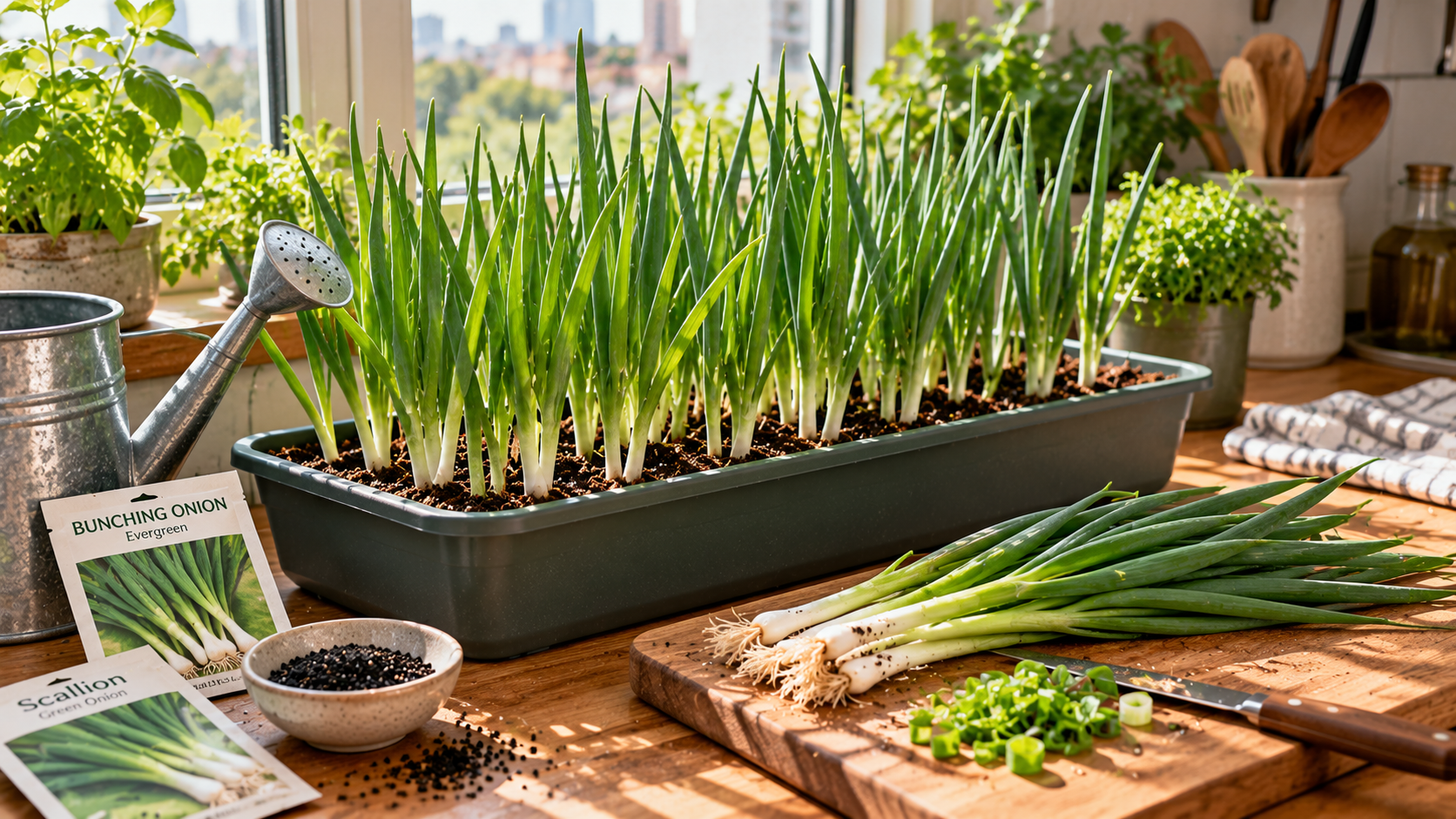
How to Grow Green Onions From Seed in Small Pots
Green onions are a practical crop for a kitchen-facing garden because they occupy little width, tolerate repeated small harvests under suitable conditions, and do not need a deep fruiting-plant container. But the name can cause confusion. “Green onion,” “scallion,” and “spring onion” may refer to different Allium crops and harvest stages in different regions. Before sowing, choose a variety sold for bunching or green-stem production rather than assuming any onion seed will give the same result.
Starting from seed is different from standing supermarket onion scraps in water. Seed-grown plants develop a full root system and a predictable growth habit, while regrowing trimmed bases offers only a short-term use of remaining reserves. This guide focuses on producing new plants from seed in a compact pot.
Choose the right seed and container
Look for bunching onion or scallion varieties suited to your climate. Some types form little or no bulb and are harvested for long slender stalks; others are onions taken young. Read the packet for maturity, cold or heat tolerance, and final spacing. Store seed appropriately because onion seed viability can decline relatively quickly compared with some other vegetable seeds.
A broad modest-depth pot or window box with drainage holes can support a small row or cluster. Unlike tomatoes, green onions do not need huge containers, but a shallow dish with almost no root volume will dry rapidly and limit growth. Use a clean, loose potting medium suitable for edible crops, not compacted garden soil from outdoors.
Position the container where it receives useful sunlight. Many green onions grow better with substantial light, though local heat may influence placement. An indoor kitchen counter far from a window may be convenient for harvesting but insufficient for vigorous growth. A bright windowsill or suitable supplemental grow light may work if temperature and air circulation are also appropriate.
Sow thinly and plan for actual harvest size
Sow seed at the depth recommended on the packet, generally shallow compared with larger-seeded vegetables. Keep the surface evenly moist during germination without saturating the entire pot. Very fine seed can shift if watered with a strong stream; use a gentle rose or careful method that does not wash it into a corner.
The temptation is to sow an enormous quantity because young onion seedlings are thin and do not seem to take up space. As roots and leaves develop, however, plants compete for light and nutrients. Follow packet spacing for bunching or individual stalk production. Some growers intentionally produce close bunches and harvest them young, but that is a different objective from growing larger robust stems.
If seedlings emerge unevenly, check whether the pot surface dried out or crusted, whether seed was old, and whether temperatures were suitable. Avoid excavating delicate germinating seed to check progress. Once seedlings establish, thin or harvest them as appropriate, trying not to pull and damage the roots of the remaining plants unnecessarily.
Light and airflow shape the result
Green onion leaves should become progressively sturdier under suitable conditions. Very thin, pale, floppy growth can suggest insufficient light, crowding, or other stress. Under strong indoor lighting, follow the manufacturer’s instructions for plant distance and daily duration, and avoid placing the lamp so close that it overheats the leaves.
The RootLuma grow-light guide explains the basics of light intensity and duration. A green onion crop grown for food has a different harvest goal from an ornamental plant, but the principle is the same: the perceived brightness of a room is not proof that the plants receive enough usable light.
Allow room air to move gently around foliage. Crowded wet leaves may remain damp after overhead watering, especially near a cool window. Do not use a strong fan that bends thin seedlings over; simply avoid constantly stagnant, enclosed conditions.
Water consistently without drowning the roots
Keep young seedlings from drying completely while roots are small. As plants grow, water according to actual moisture in the pot rather than on an automatic daily schedule. A window box exposed to a hot afternoon can dry much faster than one in a cool, sheltered room. Check below the crust and lift the pot to compare its weight after drainage with its normal lighter stage.
Provide enough water to moisten the root zone and allow runoff through drainage holes. Do not leave the pot permanently sitting in a tray of water. Saturation reduces oxygen around roots and encourages decline, while frequent severe drought can slow leaf development and make harvests less satisfying.
Mulch is usually not essential in a very small indoor container, and a thick top layer may bury seedlings or make moisture harder to judge. Outdoors, a light appropriate mulch can help in hotter conditions, but keep it clear of the youngest stems.
Feed for leaves without pushing excessive salts
Because green onions are grown primarily for their foliage, adequate nutrients support leaf production. Commercial mixes vary in their nutrient content. Begin with a suitable product and use fertilizer according to its label and local edible-crop guidance if needed. A pot with numerous thin seedlings may exhaust nutrients more quickly than a sparse container, but excess fertilizer can burn roots and build up salts.
Do not interpret every yellow leaf as nitrogen deficiency. Overwatering, root damage, pests, temperature stress, and old leaf aging can produce similar signs. Check the growing environment first. A small crop needs proportionate inputs, not a complicated supplement regime.
Harvest for the kitchen
For bunching onions, harvest when stems reach a useful size for your cooking and the variety’s intended stage. You can often cut outer leaves or remove selected whole plants, depending on growth habit and how you want to use the crop. Repeated leaf cutting may allow further growth while the plant remains healthy, but regrowth is not unlimited; crowded old roots and declining vigor can reduce later harvest quality.
Use clean scissors or a knife, keep edible foliage free from soil and pesticide residues, and wash produce according to food-safety advice before eating. If you harvest whole plants, gently loosen roots to avoid disturbing neighboring seedlings. Remove any slimy or decaying tissue rather than mixing it with sound leaves.
A row sown at one time may become ready together. To maintain a small continuing supply, sow a second pot after the first is established. That lets you harvest one container while the next develops, reducing the temptation to cut a young crop before it has enough leaf area.
Compact growing scenarios
A sunny apartment windowsill: Use a shallow-to-moderate draining planter that fits securely and does not obstruct window operation. Monitor for cold glass in winter and heat buildup in summer. Rotate only as useful for even exposure.
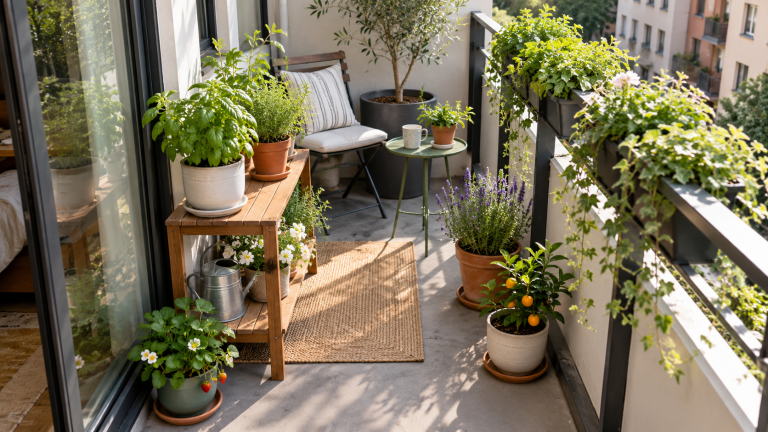
A sheltered balcony ledge: The crop may receive more useful sunlight, but wind can dry the medium rapidly. Secure the planter and avoid runoff onto neighbors below.
A kitchen with little natural light: Do not expect vigorous seed-grown onions from room lighting alone. Consider a suitable grow light or a brighter location rather than adding fertilizer to weak seedlings.
A pot shared with herbs: Mixed planting can look attractive, but roots and water needs differ. Separate small pots are often easier to manage than forcing onions and a spreading mint plant into the same narrow box. The RootLuma compact herb-garden guide can help with the broader layout while keeping crop-specific care decisions clear.
Observation Investigate Adjustment
Sparse germination Seed age, moisture, depth, temperature Improve the next sowing setup
Pale floppy leaves Low light, crowding, root stress Correct the clearest limiting factor
Yellow tips Salts, watering, heat, aging Review pot conditions before feeding
Very thin stems Spacing and growth time Thin appropriately and allow establishment
Slow regrowth after cutting Limited leaf area or exhausted roots Harvest less aggressively or sow a fresh pot
Mistakes to avoid
Starting with onion scraps but expecting a new seed-grown harvest cycle leads to confusion. So does crowding hundreds of seedlings into a miniature dish and then feeding heavily to compensate. A pot without drainage invites root trouble, while a dark shelf produces weak foliage. Distinguish the goal—fresh green stems—from the decorative appeal of a dense grassy pot.
Avoid applying general houseplant pesticides to an edible crop unless the product is specifically approved for that crop and context. The same caution applies to unknown seed treatments. Food grown a few feet from a kitchen is still food and should be produced and handled accordingly.
Plan for a steady kitchen supply instead of one harvest
A single crowded pot can produce a dramatic green tuft, but the kitchen may need only a handful of stems each week. Try two small containers sown at different times. Harvest from the older one while the younger pot establishes, then refresh the exhausted container as needed. This spreads work and avoids stripping immature plants simply because nothing else is ready.
Make a small note of seed variety, sowing date, and first practical harvest. Different green onion types may vary considerably, and indoor light conditions can slow growth compared with outdoor expectations. If a planting takes much longer than the packet suggests, investigate light and temperature before adding fertilizer.
Decide whether you want individual stalks or bunches
A thinly spaced planting gives each stem more room to develop. Closer bunching may be appropriate when you want young tender greens and plan to harvest them together. Neither approach is automatically wrong, but it is important to choose intentionally. A densely sown pot does not have the same space for each root as a well-spaced bed.
When thinning, cutting surplus seedlings near the surface may avoid uprooting those remaining. Harvested small greens can be used only if the crop was correctly identified and grown with materials safe for edible plants. Never confuse ornamental Allium species with a verified culinary crop merely because the leaves look similar.
Diagnose slow leaf growth in winter
A bright summer windowsill may become a weak growing site when the sun angle changes or nearby buildings block light. In addition, cold glass can chill seedlings even if the room thermometer reads comfortably. Compare growth before and after seasonal changes. If new leaves become pale and weak while roots are sound, improving usable light may matter more than adding a stronger fertilizer solution.
If supplemental lighting is needed, mount it safely and check the actual plant response. Longer operating hours do not make every weak lamp effective, and excessive heat close to foliage can injure seedlings. Keep water trays away from electrical connections and ensure the light fixture is suitable for its surroundings.
A note on pest prevention for edible leaves
Green onions may attract thrips or other pests in some growing conditions. Inspect leaves and their bases if streaking or distortion appears. Confirm the pest before using a product, and do not transfer ordinary ornamental-houseplant treatments to edible onions without checking crop-specific approval. Simple physical removal and improved growing conditions may suffice for minor problems, but serious infestations should follow credible local vegetable guidance.
End-of-cycle decisions
Over time, repeated cuts and crowded roots can reduce the vigor of a pot. At that point, starting fresh seed may be more efficient than trying to force old plants to produce indefinitely. Empty the container, remove old debris, wash it, and use suitable refreshed medium. The ability to restart a small batch easily is one of the strongest advantages of growing green onions in pots.
Create a repeatable small-pot harvesting rhythm
Sow a modest quantity of seed first, then assess the space each seedling needs as it develops. When shoots are tall enough to use, cut cleanly above the growing point if the cultivar and harvest method support regrowth, or remove a whole plant when that suits your kitchen. Cutting repeatedly does not provide unlimited harvests; plants may weaken, age, or bolt.
After each harvest, check whether the medium still drains, whether roots are crowded, and whether winter light is limiting new leaves. Sow a fresh small batch before the older one declines if you want more continuous supply. Keep onion seedlings distinct from vigorous spreading herbs such as mint, whose different growth habit can overwhelm a shared pot.
The goal is not to maximize the number of stems in a photograph. Track the interval from sowing to first usable cut, the actual quantity harvested, and whether a second sowing would use your limited space more efficiently.
Favor a repeatable small crop
A few healthy green onions can be more useful than a huge tray of crowded seedlings. Choose seed intended for the harvest you want, sow at a sensible density, provide enough light, and maintain consistent but aerated moisture. Harvest cleanly and start another pot when needed. That approach turns a narrow window or balcony corner into a manageable kitchen crop rather than an ongoing rescue project.
References
Virginia Cooperative Extension — Container vegetable gardening
University of Maryland Extension — Types containers growing vegetables