Peppers in Balcony Pots: Flowers, Fruit Set, and Heat Stress
A pepper plant may be covered in blossoms and still produce very little fruit. The flowers drop, new leaves curl during a hot afternoon, or small developing peppers stop growing before reaching size. In a balcony container, these outcomes often reflect a combination of temperature, water availability, pollination, and plant maturity rather than a simple lack of fertilizer.
Growing peppers successfully in pots starts with choosing a variety that matches your space and climate. The next challenge is maintaining enough root room and consistent moisture while avoiding harsh heat around the flowers. A plant can survive difficult conditions and still fail to set fruit; understanding that distinction lets you respond appropriately without turning every dropped flower into a crisis.
Select a pepper that can fit the balcony
Peppers include sweet bell types, small-fruited chilies, and a wide range of intermediate forms. Plants differ in mature height, branching, time to harvest, and tolerance of local conditions. A compact cultivar bred for containers is more manageable in a small space than a vigorous large-fruited type with an extensive root system.
Read the packet or nursery description for plant height, spacing, expected fruit size, and days to maturity. The last figure is a guide rather than a prediction: warm-season peppers respond strongly to temperature and light, and growing conditions in a balcony can differ from those in a field or greenhouse.
Container volume matters. University of Maryland Extension gives a five-gallon container as a broad minimum reference for many pepper plants. Compact cultivars may perform in smaller pots, but do not assume that an ornamental-looking small container supports a large plant loaded with fruit. Drainage, stability, and root space are as important as appearance.
A broad heavy pot can be safer on a windy balcony than a tall narrow one. Place it where runoff will not damage floors or drip onto neighbors. Confirm that the balcony structure and building rules allow the expected total weight after watering; a large container filled with moist growing mix can be substantially heavier than an empty pot.
Give peppers enough light for flowering
Peppers need a substantial light supply for vigorous growth and dependable fruiting. A balcony with brief morning sun but deep shade the rest of the day may keep the plant alive without providing the conditions required for a strong harvest. Observe the direct-light period over several days and across seasons; mapping sunlight on a small balcony can clarify where nearby buildings cast shifting shadows.
In hot climates, a plant receiving intense sun reflected from concrete or glass can experience heat stress even if the number of sunny hours seems ideal. Light and temperature are connected but not identical. Protective shade during an extreme afternoon may reduce stress, while permanent deep shade can reduce fruit production.
A newly purchased pepper raised under sheltered conditions should be acclimated gradually before exposure to full outdoor sun and wind. Sudden hardening conditions can scorch leaves and increase water demand. A few days of careful adjustment are preferable to moving the plant directly from a retail shelf into a blistering balcony corner.
If stems stretch dramatically and flowers are sparse, first assess light rather than increasing fertilizer. Excessive nitrogen may encourage lush foliage without solving a fundamental light problem. The aim is healthy, compact growth with sufficient energy to support developing fruit.
Understand why flowers fall without fruit
A pepper flower contains reproductive structures that must function under suitable environmental conditions. Temperature extremes can interfere with pollen viability or flower retention. Very hot days and nights may reduce successful fruit set; cold conditions can also slow development. This is why a flush of flowers during a heat wave may produce fewer peppers than a later bloom under milder weather.
Water stress adds another layer. A plant that dries severely during flowering may shed buds or flowers, especially when high temperatures raise water demand. Conversely, saturated roots can be unable to supply water effectively even though the pot feels heavy. Both scenarios may lead to wilt or poor performance.
Occasional flower drop is normal. Plants often produce more blossoms than they can mature into fruit. Do not diagnose a problem from the first fallen blossom on a young plant. Look for a repeated pattern over several flowering flushes while monitoring temperatures and the health of new leaves.
The presence of flowers also does not guarantee that a pepper is mature enough to carry a large crop. Young plants may allocate resources differently during establishment. Avoid drastic pruning or high-dose fertilizer immediately after the first few flowers fall.
Support pollination without overcomplicating it
Pepper flowers are generally capable of self-pollination, although movement and insects can help transfer pollen. Outdoor breezes and pollinators may contribute, depending on the location. A sheltered balcony with little air movement may benefit from gentle plant movement when flowers are open, but aggressive shaking can damage branches and buds.
If peppers are flowering abundantly without setting fruit, do not assume pollination is the only issue. Heat stress, water stress, low light, or crop maturity may be stronger explanations. Check the growing conditions before buying special pollination tools or trying unusual hand-pollination mixtures.
Avoid spraying household substances onto flowers to “increase pollen.” Water droplets, oils, and untested chemicals can damage delicate tissues or interfere with visiting insects. If pest control becomes necessary on edible crops, use only appropriately labeled products and observe all precautions, including pollinator protection and harvest intervals.
A small observation note can distinguish poor pollination from general flower loss. Are flowers opening normally and then dropping? Are small fruitlets forming and then stopping? Does fruit set improve when temperatures moderate? Each pattern suggests different next questions.
Water for a stable root zone
Containers can dry quickly during warm windy weather. The surface may look dry while the middle remains moist, so check the root zone rather than watering solely because the top centimeter appears pale. A deep thorough irrigation followed by drainage is usually more useful than frequent tiny splashes that wet only the top layer.
Avoid standing water in saucers or cachepots. Pepper roots need oxygen; chronic saturation can reduce vigor and contribute to root disorders. If the pot drains slowly, inspect the mix and container rather than responding by giving less and less water to a damaged system.
Mulch can help moderate surface drying in some outdoor pots when applied appropriately, but it should not obscure the ability to monitor moisture or encourage stems to remain wet. Choose clean suitable material and keep the crown from being buried.
Water use increases as plants grow and the canopy becomes larger. An established pepper with developing fruit may draw substantially more moisture than a newly transplanted seedling. A routine that was adequate in the first week can become insufficient in the middle of a warm season.
Feed carefully through growth and fruiting
Peppers need nutrients, but excessive fertilizer is not the answer to every blossom problem. Use a suitable growing mix and follow a balanced feeding program appropriate to the crop, container, and product. Account for any slow-release fertilizer already present in the mix.
When new leaves are pale or growth is slow, assess light, root moisture, and pests along with nutrition. Deficiency symptoms can overlap with root stress. Large doses of soluble fertilizer can raise salt concentration around roots and make water uptake harder, especially in a small pot under high evaporation.
Fruiting vegetables require ongoing support, but the ratio and dose depend on the growing medium and local conditions. Do not copy an intensive greenhouse hydroponic formula directly into a domestic balcony pot. Test products at label rates and monitor plant response.
If fertilizer residue builds up around the rim, review feeding and irrigation water. Draining top irrigation can help remove soluble salts in an appropriate system, but it does not repair a pot whose roots have been damaged by heat or chronic waterlogging.
Prevent structural problems as fruit develops
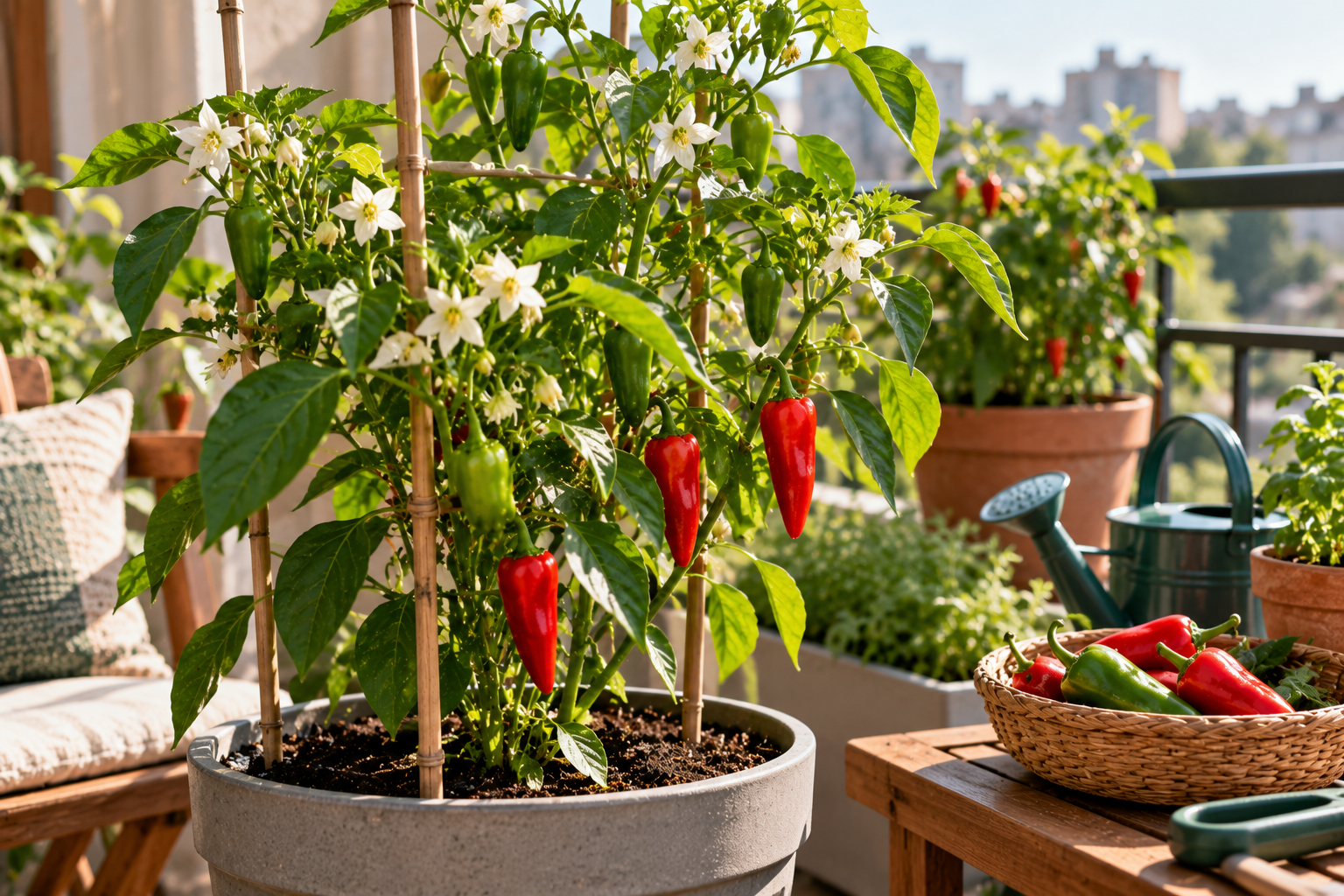
A small pepper plant can carry surprisingly heavy fruit. Support branches early when necessary with a compact stake or cage that will not damage the root ball. Tie stems loosely with soft materials that allow growth rather than constricting them.
On an exposed balcony, wind can rub leaves against rails and snap fruiting branches. Locate the container where it is stable and protected from strong gusts. Avoid placing stakes in positions that obstruct safe access or become hazards to people using the balcony.
If a plant becomes excessively tall or top-heavy, consider whether cultivar choice, light, and support are suitable. Severe pruning during heavy flowering can remove productive sites and add stress. Any shaping should have a clear purpose, such as removing a broken shoot or allowing air to circulate around dense foliage.
Some pepper plants may need a larger pot as they mature, but repotting while carrying fruit can be disruptive. Plan sufficient root room before the plant establishes whenever possible. If the pot is clearly too small, weigh the risk of disturbance against the ongoing restriction and proceed carefully.
What leaf curling and sun stress reveal
Leaves may curl or droop during a very hot afternoon and recover when temperature and water conditions improve. Temporary protective leaf movement is not necessarily evidence of a specific pest. Persistent curling, mottling, severe distortion, or visible insects requires more investigation.
Look under the leaves for aphids, mites, and other common pests. Check new growth, not only older damaged foliage. If an insect is found, identify it and choose a proportionate response suitable for an edible crop. Do not assume that a curled leaf proves the plant needs more water.
Blossom drop during repeated hot nights may not be solved by one watering change. A better location, temporary shade during extreme heat, or simply waiting for a more favorable flowering window may be more realistic. Climate and season determine which option is available.
If leaves become bleached after relocating a sheltered plant outdoors, consider sunscald. Gradual acclimation is preferable to cutting off every affected leaf immediately. Healthy green portions can still photosynthesize while the plant develops new foliage.
A practical case: peppers blooming through a heat wave
A balcony grower has a compact chili cultivar in a well-drained pot. It receives long hours of direct afternoon sun and reflects heat from a pale wall. The plant is healthy enough to flower, but blossoms drop repeatedly during several very hot weeks. The grower considers applying extra nitrogen fertilizer.
Instead, the grower checks moisture below the surface and confirms the pot has been drying severely by evening. Watering is adjusted to the actual root-zone needs and excess allowed to drain. A temporary light shade is used during the most extreme exposure without moving the plant into deep shade all day.
The grower records approximate maximum and overnight conditions and watches the next bloom flush as weather changes. New fruitlets may set more reliably in milder conditions. If they do, the evidence favors reduced environmental stress, though no single adjustment can be proven solely from one observation.
A neighbor with the same cultivar in a windy but cooler balcony may face a different limitation: branches breaking under fruit rather than flower abortion. The solution is support and shelter, not more shade. Good container care depends on the actual stress involved.
Harvest without assuming every green pepper is unripe
Pepper fruits can be harvested at different developmental stages depending on variety and intended use. Some are eaten green; others develop a characteristic final color and flavor as they mature. Read the cultivar description rather than assuming all peppers must become red before harvest.
Use clean snips for fruits attached firmly to a brittle branch, avoiding damage to the stem. Wash harvested produce and follow food-safety practices, particularly if the balcony receives dust or runoff from surrounding surfaces. Do not eat fruit grown in media or containers contaminated by unsuitable chemicals.
Regular appropriate harvesting may encourage continued production on some cultivars, but plant vigor, weather, and nutrient supply still set limits. A compact pepper in a small container will not match the yield of a large field plant simply because fruit is picked promptly.
Keep notes on fruit size, color, set, and time to harvest. Those observations help decide whether the variety suits your balcony and whether to choose a different type next season.
A short troubleshooting sequence
If flowers fall, check temperature patterns, moisture in the root zone, and overall vigor. If foliage is lush but few flowers form, assess light and feeding. If small fruitlets develop then stop, inspect water supply, temperatures, pests, and pot size. If branches snap, add appropriate support and shelter.
Resist changing fertilizer, position, pot size, and watering all at once. Work from the strongest evidence and monitor the next flush of flowers or growth. The goal is not perfect fruit set on every blossom; it is steady, healthy production within the limits of your balcony and climate.
Successful pot peppers are a study in balance: enough light for flowers, roots with sufficient room and oxygen, consistent access to water, and protection from extreme stress. Give those fundamentals attention before reaching for bloom boosters, and your plant has a better chance of setting and maturing useful fruit.
References
University of Maryland Extension — Growing Vegetables in Containers and Salad Tables
University of Maryland Extension — Growing Vegetables in Containers