Dwarf Cucumbers in Pots: Trellis, Water, and Harvest Timing
A cucumber vine can transform a sunny balcony into a miniature vegetable garden, but the plant often grows faster than its owner expects. A few small leaves become tendrils, branching shoots, and fruit that can hide behind foliage. In an undersized pot, watering becomes difficult; without a stable support, the vine may collapse into a tangled mass just when cucumbers begin developing.
Dwarf or compact cucumber varieties make container growing more realistic, yet “dwarf” does not mean maintenance-free. Plan the pot, light, climbing route, and pollination requirements before the vine fills its space. Once fruit begins forming, consistent water and timely harvesting matter as much as the initial container choice.
Choose a cultivar for the space you actually have
Cucumbers vary from vigorous field vines to compact patio cultivars. Some are described as bush, dwarf, mini, or container-friendly, but those terms can refer to different traits. A plant may remain compact yet produce normal-length fruit; another may be a vigorous climber that produces small cucumbers. Read the mature-vine description rather than relying only on the size of the pictured harvest.
Check whether the cultivar is parthenocarpic, meaning it can develop fruit without pollination, or whether it normally benefits from insect pollination. Some protected-culture types have special instructions about pollination because fertilization may affect fruit shape or quality. Do not assume every cucumber flower requires the same intervention.
The University of Maryland Extension container vegetable guide lists cucumbers as suitable container crops and provides general guidance on size and support. Around five gallons is a useful broad starting reference for a substantial cucumber plant, but the exact cultivar and growing conditions matter. Large vigorous vines may need considerably more room.
If your balcony receives only brief direct sun, reconsider the crop before buying elaborate trellis equipment. Cucumbers generally need strong light and warm growing conditions to fruit well. A cool dim space may support leaves without a dependable harvest.
Give roots a stable, well-drained home
A cucumber uses water quickly once a broad leaf canopy develops. The pot must provide enough root volume for moisture buffering while draining excess water. Containers with drainage holes are easier to manage than decorative vessels that conceal standing water.
Use a high-quality container growing mix with a balance of air space and water retention. Dense garden soil can compact and drain poorly when used alone in a pot. Very coarse mix may drain so rapidly that roots struggle to remain hydrated during hot afternoons. Test the setup by watering thoroughly before transplanting or sowing.
Choose a stable container with enough weight or width to resist tipping once a trellis and leafy vine are attached. Account for the load of wet media, water, support, and fruit. On a balcony, make certain the arrangement does not block exits or create runoff that falls onto neighboring property.
Do not start with an already rootbound nursery plant and expect an undersized decorative pot to support abundant fruit. A compact cultivar reduces aboveground demands but does not eliminate the need for functioning roots.
Build the trellis before the vine needs one
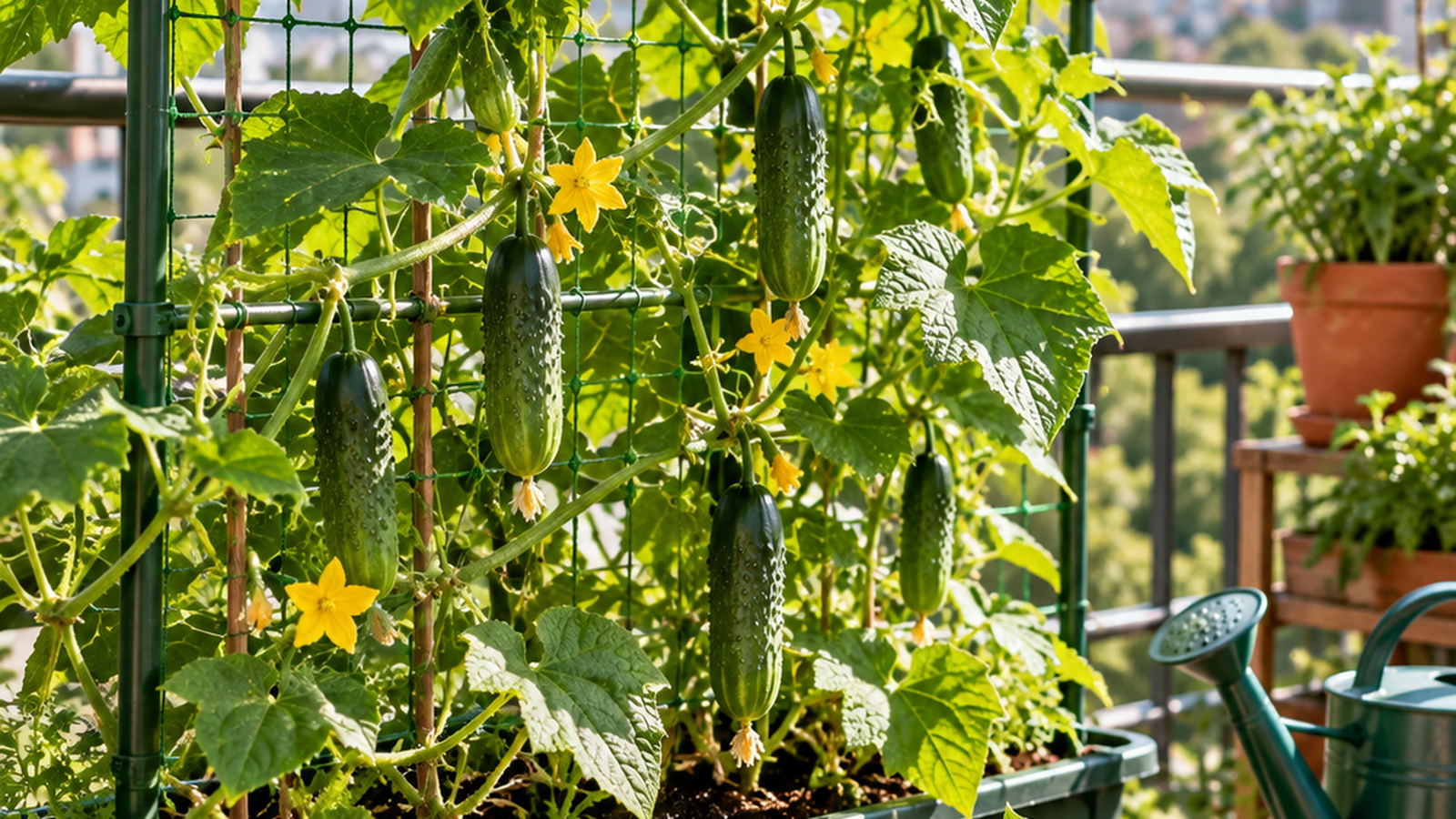
Climbing cucumber vines may attach with tendrils, but tendrils need something suitable to grip. Install a compact trellis, mesh, or other support while plants are small so that later construction does not tear roots or break stems. Check the manufacturer’s load capacity and secure the support against wind.
A trellis should let you inspect both sides of foliage and reach developing cucumbers. A very dense narrow mesh can create a visually attractive wall that is difficult to harvest from behind. Choose openings large enough for hands and fruit without inviting stems to be pulled through sharp edges.
Avoid fastening tendrils directly to metal railings that become extremely hot in sun or create a risk of shoots falling outside the balcony. Use a freestanding or safely anchored frame inside your own space. Never assume building rules permit drilling into railings or attaching loads to common structures.
Guide young vines gently in the intended direction. Use soft ties with enough room for stem growth where needed. Do not wind thick older stems forcibly around the structure; cucumber stems can kink or break. A branching vine may need occasional redirection even when the cultivar is advertised as self-climbing.
Understand male, female, and pollination requirements
Many cucumber plants produce male and female flowers. Female flowers are recognizable by the small immature fruit-like swelling behind the petals. Where pollination is required, adequate pollen transfer helps fruit develop. Insects may perform this outdoors, but windy high-rise balconies, screened areas, or pesticide use can change pollinator access.
Parthenocarpic cultivars can set fruit without pollination and may be convenient for protected or low-insect locations. However, cultivar descriptions should guide management because pollen exposure can affect some specialized types. A guide for ordinary garden cucumber cannot be assumed to apply identically to every greenhouse-bred variety.
If fruitlets yellow and fail to enlarge, inspect more than pollination. Heat, water stress, weak plants, or nutrient imbalance may contribute. Do not spend hours hand-pollinating a plant that is constantly wilting in a tiny pot and receiving too little light.
Where hand pollination is appropriate for the cultivar, gentle pollen transfer between open flowers can be attempted, but follow reputable crop guidance and avoid breaking fragile parts. Do not spray home mixtures onto blossoms in the hope of improving set.
Water through the full rooting zone
Cucumbers often have high water demand during active growth and fruiting. A small pot in full sun can dry quickly, especially in wind. Check the mix below the surface, not merely the top layer, and water thoroughly when needed so the root zone is rehydrated. Allow drainage and remove runoff collected in saucers.
Repeated extreme drying may stress the plant and reduce fruit quality, while permanent saturation can impair root oxygen. A simple moisture check using pot weight and a finger or suitable probe can help you learn the container’s pattern. The right frequency changes as vines grow, fruit develops, and weather shifts.
Apply mulch only if appropriate for the container. A thin surface layer may reduce evaporation, but do not bury the stem base or use contaminated yard debris. Mulch does not replace the need to check the root zone during hot conditions.
If the vine wilts briefly in intense afternoon sun and recovers by evening, inspect both water availability and heat exposure before assuming a root disease. If it wilts while the pot remains saturated or the stem becomes soft, investigate more urgently rather than giving additional water automatically.
Feed for steady growth and fruit production
Cucumbers need appropriate nutrition, but the crop does not benefit from random high-dose feeding whenever a new fruit appears. Start with a suitable potting mix and follow a balanced fertilizer program recommended for container vegetables. Account for any slow-release product already in the growing medium.
If leaves become pale, review the whole plant before diagnosing a deficiency. Inadequate light, damaged roots, pests, or an undersized container can create symptoms that resemble a nutrient shortage. Concentrated fertilizer in a small pot can raise soluble salts and make water uptake more difficult.
As the vine develops fruit, it will continue drawing resources from the root zone. A container that supported a young seedling may become limiting later. If the pot was chosen sensibly at the outset, consistent light, water, and moderate feeding are usually more helpful than repeated attempts to push rapid growth.
Avoid claiming that a particular homemade fertilizer causes sweeter cucumbers or cures bitter fruit. Flavor and bitterness can be influenced by genetics and growing stress. A stable growing environment is more defensible than a miracle additive.
Harvest small fruit at the right stage
Cucumbers can expand rapidly once conditions suit them. A fruit hidden under large leaves may become oversized before it is noticed. Check vines regularly during the harvest period, moving foliage gently rather than pulling stems around. Use the intended size for the cultivar as your guide.
Picking fruit at a suitable stage can help maintain quality and may support continued production in a vigorous plant, but overall yield remains limited by light, roots, and weather. An oversized cucumber left on the vine may divert resources into seed maturation, yet the exact response varies by type.
Harvest with clean snips when pulling could damage the vine. Check for rubbing against the trellis, where a developing cucumber can become trapped or scarred. Choose a support configuration that allows fruit to hang or grow without being sharply pressed against a railing.
Wash harvested cucumbers before eating and follow ordinary food-safety practices. If the balcony receives polluted runoff or the growing medium has been exposed to unsafe chemicals, do not assume fruit is automatically safe merely because the plant looks healthy.
Read common signs before reacting
Tiny fruit turns yellow. Check cultivar pollination needs, current temperatures, plant vigor, and water availability before deciding that the flower was simply not pollinated.
Leaves wilt in afternoon heat. Confirm moisture at root depth and consider heat stress; do not water a saturated pot repeatedly.
Vine has leaves but few flowers. Review light, cultivar maturity, excessive feeding, and growing conditions. A young plant may still be establishing.
Fruit becomes distorted. Uneven pollination may matter for some varieties, but water stress and cultivar characteristics also deserve attention.
White powder appears on leaves. Powdery mildew can affect cucurbits. Identify the lesion before using a fungicide, and prefer appropriate crop-specific management rather than applying household mixtures.
Stem snaps against support. Improve ties and trellis positioning. A damaged stem cannot always be repaired simply by wrapping tape tightly around it.
A realistic small-balcony example
A renter buys a compact cucumber labeled “patio” and places it in a shallow pot beside a hot balcony wall. The vine grows quickly and produces flowers, but the soil dries severely every afternoon. Tendrils wrap around a metal chair, making fruit difficult to inspect. The renter blames the seed variety when several young cucumbers stop developing.
The next attempt begins with a stable, adequately sized container and a freestanding trellis placed before planting. The vine is trained where leaves receive light and can be reached safely. Watering is adjusted after checking actual root-zone moisture, especially as the canopy enlarges. The renter reads whether the chosen cultivar needs pollination and monitors blossoms accordingly.
Fruit is checked frequently and harvested at the size intended for the cultivar. The outcome still depends on weather and root conditions, but every change addresses a specific limitation rather than adding a random fertilizer or moving the plant constantly.
A wind-exposed balcony might require additional shelter and anchoring; a shaded balcony might not be a suitable location for cucumbers at all. Recognizing the limits of the site is part of successful container gardening.
Keep a short growing log
Record cultivar, container size, sowing or transplant date, trellis design, approximate direct sun exposure, and early signs of water stress. When flowers appear, note whether fruitlets develop and how they behave after hot or windy weather. During harvest, record approximate fruit size and frequency.
The log helps identify whether a disappointing crop was primarily a location issue, water-management problem, or cultivar mismatch. It also lets you compare one season with the next without relying on vague memories of how the plant looked.
Growing dwarf cucumbers in pots works best when you treat the vine as a compact but productive crop with real root and support needs. Choose a suitable cultivar, establish it in a large enough draining container, make the trellis safe, and keep water supply steady during fruiting. The payoff is not a guaranteed yield; it is a crop with conditions that allow it to perform well in the space available.
A final practical boundary is that a compact cucumber still needs a suitable season. Cool nights, prolonged cloudy weather, or extreme heat can constrain growth in ways that a trellis cannot fix. Before planting again, compare your site with local vegetable-growing guidance. If conditions are consistently unsuitable, choosing a different crop for that balcony may be a better use of space than trying to force a cucumber to succeed there.
References
University of Maryland Extension — Growing Vegetables in Containers and Salad Tables
University of Maryland Extension — Growing Vegetables in Containers