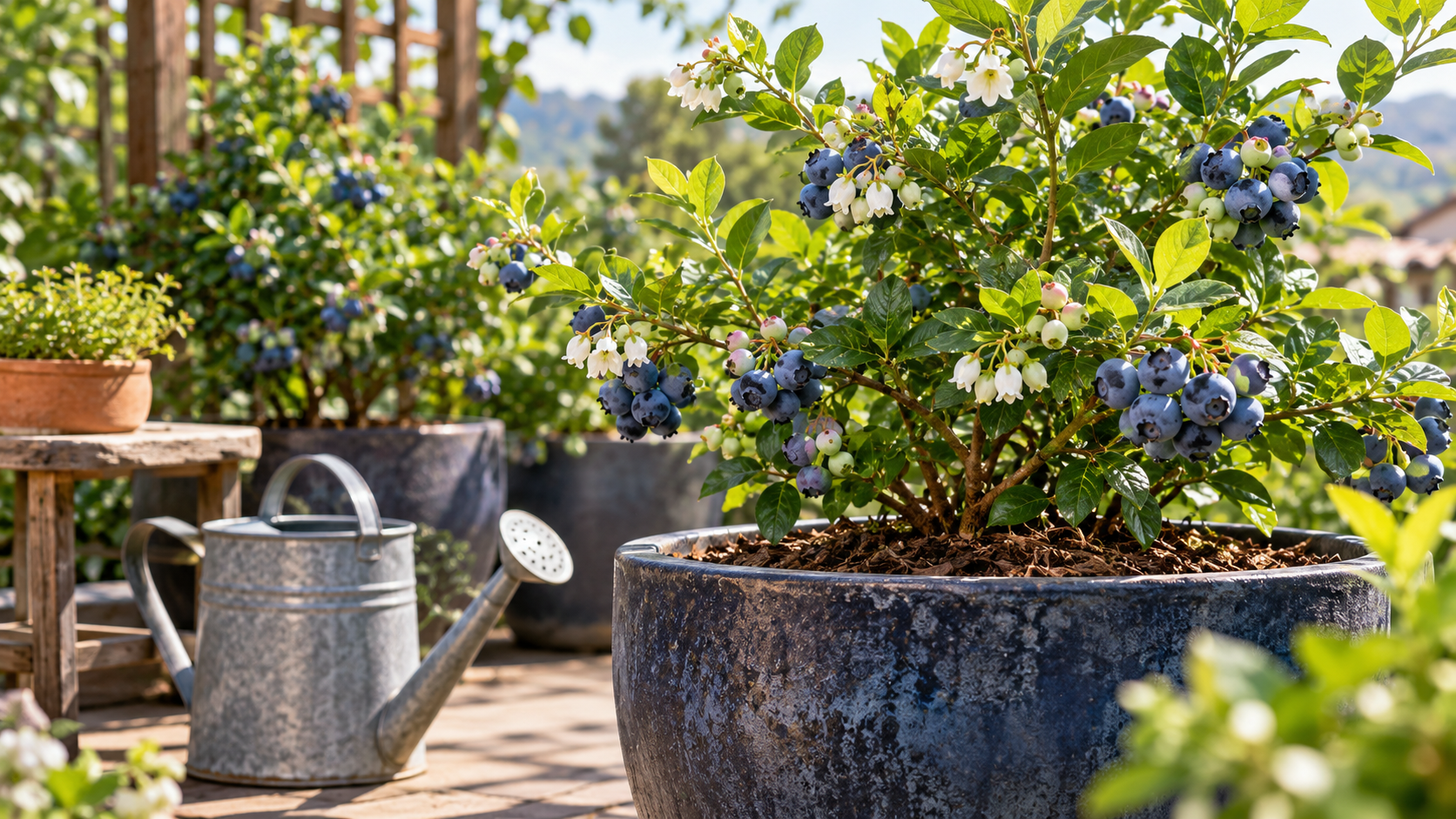
Blueberries in Pots: Acidic Mix, Water Quality, and Pollination
Blueberry bushes can grow in containers even when garden soil is unsuitable, but they do not behave like a generic fruit shrub planted in ordinary compost. Their roots depend on an acidic growing environment, and the water you use can gradually alter that environment. A healthy-looking bush may produce flowers yet carry little fruit if pollination, variety, or local climate is poorly matched.
Container blueberries work best when you plan the pot and growing medium before buying the plant. The species and cultivar need an appropriate climate and chill pattern, the roots need acidic but aerated media, and the flowers need opportunities for effective pollination. Treat the pot as a managed ecosystem rather than a decorative way to avoid soil problems.
Choose a blueberry for your climate first
Blueberries are not one interchangeable plant. Highbush, rabbiteye, lowbush, and hybrid types differ in mature size, chilling requirements, fruiting seasons, and suitability for various climates. A variety bred for cooler regions may struggle in a hot tropical location, while some southern-adapted cultivars may respond differently to winter conditions.
Before purchasing, consult local horticultural guidance about cultivars known to fruit in your area. The label “dwarf” tells you about size, not whether a plant will meet its seasonal requirements. A compact shrub that never experiences suitable conditions for flowering or bud development is unlikely to reward good container care with a large harvest.
Check mature width and height as well as the suggested pot size. A plant that seems small in a nursery container may develop a substantial root and branch system over several years. Choosing a realistic cultivar from the beginning is easier than trying to hold an inherently vigorous type in a tiny pot indefinitely.
The Royal Horticultural Society guidance on blueberry fruit in containers notes that containers are useful where existing ground soil lacks the acidity blueberries prefer. That convenience should not be confused with a guarantee that every climate or cultivar will fruit reliably.
Understand why acidity matters
Blueberries prefer a comparatively acidic root environment. Many common potting mixes are adjusted toward a less acidic range, and ordinary garden compost may not be suitable for sustained blueberry production. A medium labeled ericaceous is formulated for acid-loving plants and is generally the relevant starting point.
The RHS lists a soil pH around 4.5–5.5 for many highbush blueberry cultivars, though suitability depends on plant type and conditions. This number is not a target that every household must chase with repeated additives. It is a useful indication that blueberries have specific chemistry needs that differ from common vegetables.
When pH rises too far, some nutrients become less available to roots. Leaves may show yellowing, sometimes between green veins, but yellowing is not proof of a single deficiency. Root stress, excessive moisture, drought, and pests can produce similar symptoms. Assess the growing medium and care history before applying chemicals to change pH.
Use a well-draining acid-loving plant mix appropriate for containers. Do not simply pour strong household acids, vinegar, or concentrated fertilizer into a pot to “make it acidic.” Such shortcuts can injure roots and produce unstable conditions. For persistent problems, a credible growing-medium test or local specialist advice is more useful than guesses.
Give roots enough volume without waterlogging
A blueberry grown for years in a small pot can become rootbound, making watering increasingly difficult and growth less vigorous. Choose a container with adequate drainage and enough room for the cultivar’s root system. Pot on gradually as the plant grows rather than jumping immediately into an enormous volume of wet unused mix.
The RHS has suggested eventual container diameters of roughly 40–50 cm for established highbush blueberry specimens, with maintenance and repotting considerations thereafter. The relevant choice still depends on cultivar vigor and how the container drains under your conditions.
Avoid a pot with no drainage outlet. Acidic media do not protect roots from oxygen deprivation. Water thoroughly when the root zone needs moisture, and let excess escape. In a cachepot, empty standing water so the inner pot does not remain submerged.
Containers warm and dry differently from garden soil. A dark plastic pot against a hot wall may experience high root-zone temperatures, while a sheltered pot in cool weather may remain wet for days. Monitor both moisture and location rather than following a fixed calendar for all seasons.
Water quality can change the medium over time
The water source matters because dissolved minerals and alkalinity can affect growing-medium chemistry across repeated irrigations. Hard or alkaline tap water may gradually make it more difficult to maintain the acidic environment blueberries favor. Rainwater can be useful when collected safely, though its availability and quality depend on location.
The RHS specifically recommends rainwater where practical for blueberries in pots. That is a sensible default when a household’s tap water is strongly alkaline, but never allow a plant to dry dangerously while waiting for perfect rainwater. If the only available water is tap water, learn its characteristics and seek local advice about a sustainable approach.
Do not rely on a single inexpensive pH strip dipped in irrigation water to diagnose the whole root zone. Water pH and alkalinity are not identical, and the medium’s buffering properties influence how it changes. A proper media or irrigation-water assessment gives stronger information when a problem persists. Keep a brief record of water sources when rainfall or municipal supplies change. If young leaves yellow, check the root-zone pH before treating it as a fertilizer deficiency.
Avoid adding “acid-loving fertilizer” every time you water in an attempt to correct chemistry blindly. Nutrient concentration can build up in a container, particularly if drainage is poor. Choose an appropriate formulated feed and follow its label, taking existing nutrients and the plant’s growth stage into account.
Match light and temperature to fruiting needs
Blueberries generally benefit from a bright sunny growing position, with suitability influenced by climate. A shrub grown in persistent deep shade may produce healthy foliage without much fruit. Conversely, intense heat reflecting from concrete can stress a pot, especially when limited roots cannot keep up with evaporation.
Position containers where they receive enough light and can be watered reliably. On windy balconies, protect flowering branches from damaging gusts while preserving access for pollinators. Extremely exposed railing placements can be both unsafe and horticulturally stressful.
Seasonal temperature cues influence some blueberry cultivars. In regions without a suitable winter chill, certain varieties may be unreliable regardless of fertilizer or watering technique. This is why the cultivar should be chosen for climate before the owner commits to a sophisticated potting recipe.
During hot periods, monitor root-zone moisture carefully. A water-stressed shrub may drop developing berries or suffer reduced growth. Keep the medium moist according to the plant’s needs but not constantly saturated. Mulch can help stabilize the surface when used appropriately, but it must not hide waterlogging.
Pollination is more than having flowers
Many blueberry varieties are at least partly self-fertile, yet cross-pollination with a compatible second cultivar can improve fruit set, berry size, or overall yield in some situations. The degree of benefit depends on the type and cultivar. Do not assume that adding any random blueberry plant nearby solves pollination if flowering periods do not overlap.
Check bloom compatibility when choosing a pair. Two cultivars must produce flowers at overlapping times, and local pollinators need access. On a high balcony or inside a screened enclosure, insect visits may differ from those in an open garden. Blueberries are pollinated effectively by certain bees, and a location without pollinator access can limit results.
The RHS blueberry growing guidance encourages multiple cultivars for improved yield in suitable situations. Interpret that as a choice about compatible varieties, not an instruction that every balcony must fit three pots.
If you have space for only one shrub, seek a cultivar known to perform reasonably with self-pollination in your region. Fruit quantity may differ from a compatible pair, but a well-suited healthy single plant can still be a worthwhile experiment.
Feed, mulch, and prune without copying vegetable rules
Blueberries are perennial shrubs, not short-season annual vegetables. Their fertility management should support steady wood, buds, and fruit without pushing excessively soft growth. Use a fertilizer appropriate for acid-loving plants where feeding is needed, and account for nutrients already present in the medium.
Avoid applying high concentrations as a quick fix when leaves yellow. Inspect acidity, roots, water supply, and seasonal patterns first. Overfeeding a stressed plant can worsen salt injury and does not correct poor pollination.
Mulch can reduce surface temperature swings and evaporation in suitable pots. Choose a material compatible with the acidic growing medium, and do not pile it against stems. Check root-zone moisture below the mulch; a wet-looking surface can mislead you about conditions deeper in the container.
Pruning aims to maintain healthy productive wood as a shrub matures. Requirements vary by blueberry type and age. Do not strip all older branches from a young plant merely because a general pruning video recommends cutting woody stems. Follow cultivar- and region-specific guidance, using clean tools and preserving a balanced structure.
A practical case: green leaves, flowers, few berries
A gardener buys one compact blueberry and plants it in ordinary multipurpose potting mix. The shrub produces attractive leaves and a few flowers, but fruit set is disappointing. The owner assumes it needs more fertilizer and begins feeding every week.
A better review starts with the nursery label. Is the cultivar adapted to the local climate? Does it need a compatible pollinator for more reliable fruiting? What is the medium’s acidity, and does the tap water have high alkalinity? Does the balcony receive sufficient light while keeping the root zone reasonably cool?
For the next season, the gardener selects an appropriate ericaceous container medium if repotting is needed, improves water management, and consults local guidance on compatible cultivars. The grower may arrange a second overlapping-bloom variety if space permits. Fertilizer is used conservatively rather than as the default answer to poor fruiting.
Any improvement is evaluated over a meaningful period. A blueberry can take time to establish and develop a productive structure. No single change guarantees an immediate bumper crop, but the revised plan addresses the actual factors associated with fruiting.
Recognize problems without jumping to a deficiency
Yellow leaves with greener veins. Consider root-zone chemistry and nutrient availability, but also inspect roots and watering. Testing is more reliable than guessing from a photograph.
Flowers but little fruit. Assess climate suitability, overlapping bloom, pollinator access, and recent temperature stress before changing fertilizer.
Leaves scorch or curl during hot weather. Check whether the pot overheats, whether water availability is adequate, and whether the location has intense reflected heat.
Shrub seems stunted in a small pot. Inspect root crowding and the condition of the growing medium. Pot on when justified without leaving a young root ball in an enormous wet container.
Berries disappear before harvest. Birds and other animals can take ripe fruit. Use an appropriate safe barrier if necessary, avoiding netting that traps wildlife.
Harvest and maintain a productive pot
Berry color alone may not indicate peak sweetness for every cultivar. Read the variety guidance and allow berries to develop their intended flavor and firmness. Harvest carefully so fruiting wood remains intact. Wash produce before eating and avoid harvesting from containers exposed to unsafe chemicals or contaminated runoff.
After harvest, continue normal care rather than abandoning the shrub as though it were an annual crop. Perennial roots and buds are preparing for future growth, and seasonal requirements still matter. In cold regions, container roots may need winter protection according to local guidance; a plant in a pot is more exposed than roots insulated in the ground.
Record cultivar names, flowering periods, water source, medium changes, and fruiting results. The notes help you decide whether a pollination partner or a different cultivar would be more useful than another product advertised as a yield booster.
Container blueberries reward specificity. Use a climate-suited cultivar, an acidic aerated root medium, appropriate water, and a realistic pollination plan. Those decisions give you a far better foundation than treating the plant as a generic bush in a pretty pot.
References
Royal Horticultural Society — Growing fruit in containers
Royal Horticultural Society — Vaccinium corymbosum
Royal Horticultural Society — Growing blueberries in pots (archived guidance)