Bush Tomatoes on a Balcony: Container Size, Support, and Pollination
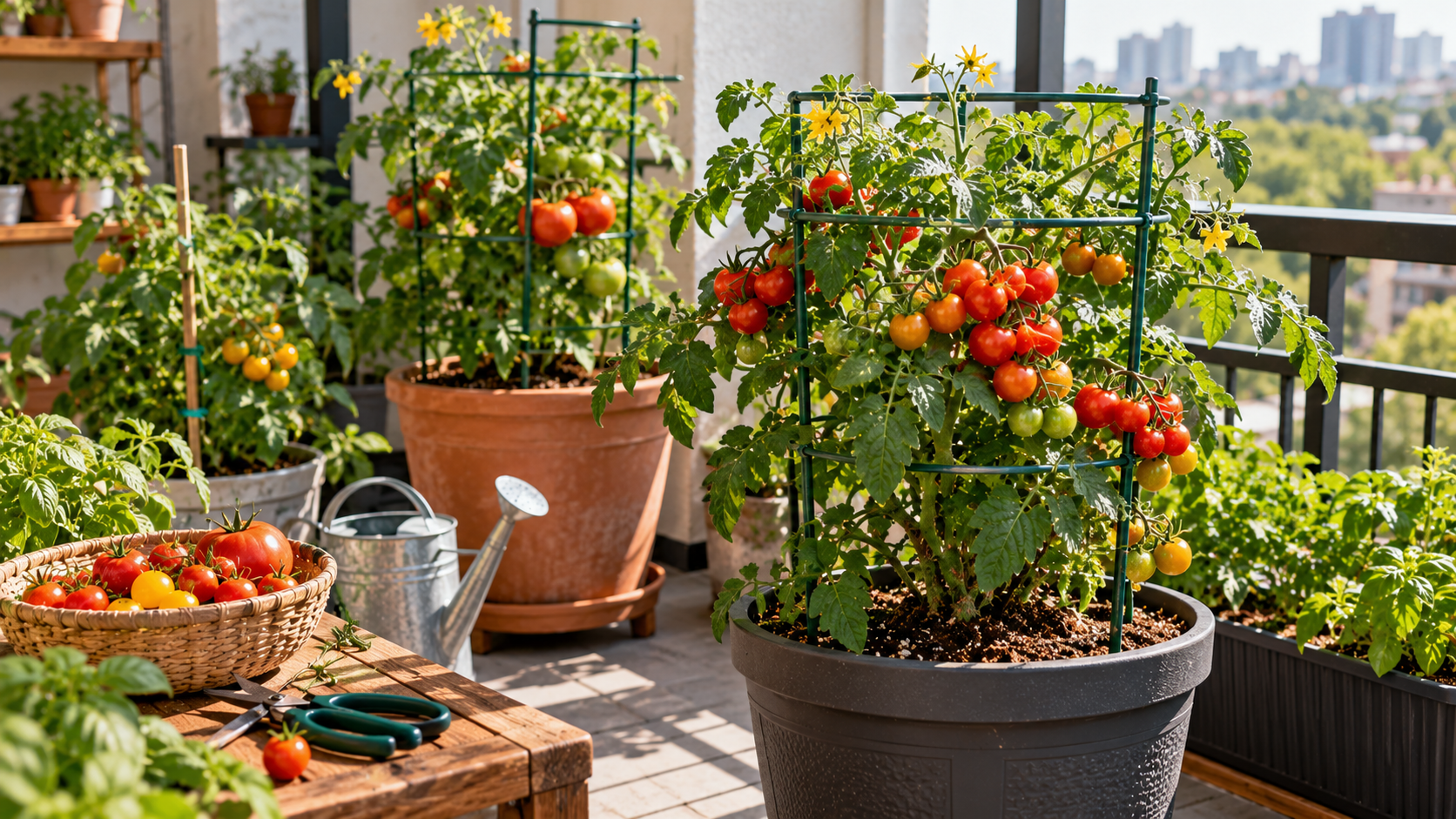
A compact tomato plant covered in yellow flowers can make a balcony look wonderfully productive, but flowers are only the beginning. Tomatoes need enough light, root space, water, and nutrients to develop fruit, and the plant must stay stable as branches grow heavier. A “bush” or “determinate” label describes growth habit; it does not necessarily mean the plant will thrive in a tiny decorative pot.
Growing tomatoes in containers works best when you select a locally suitable cultivar and design the setup around its mature size. A dwarf patio tomato and a vigorous determinate slicing tomato can both be called bush types yet require different containers and supports. Start with the plant’s true growth potential, the available sunlight, and your ability to water regularly during warm weather.
Choose the tomato for your actual space
Read the seed packet or nursery label for mature height, spread, fruit size, and disease-resistance characteristics. Dwarf and compact patio cultivars are often more manageable on narrow balconies. Determinate tomatoes typically have a more bounded growth pattern than indeterminate vines, but they can still become heavy and sprawling when loaded with fruit.
Check local growing-season temperatures. Tomatoes are warm-season crops but excessive heat can disrupt flower set, and cold weather can damage or stall plants. A cultivar successful in a mild summer may struggle in a very hot humid climate. Consult regional extension recommendations rather than adopting planting dates or cultivar rankings from an unrelated climate.
Inspect transplants for firm stems, normal foliage, and no obvious pest or disease symptoms. Avoid choosing the tallest, leggiest plant simply because it looks advanced. A compact healthy transplant with a strong root system may establish more readily than an oversized plant bound tightly inside a small nursery cell.
Sunlight comes before yield expectations
Tomatoes generally require substantial direct sunlight for worthwhile production. Observe your balcony over several days. A wall that blocks morning light or a deep overhang can reduce useful exposure even when the outdoor area feels bright. The stronger light available at the edge of a railing may be paired with stronger wind and more dangerous pot placement, so weigh productivity against safety.
In very hot settings, afternoon heat can stress pollen, flowers, and fruit. Providing a more sheltered location or seasonally appropriate shading may help prevent extreme stress, but deep shade reduces photosynthesis. These tradeoffs are location-specific. A plant that flowers but consistently fails to set fruit deserves an investigation of temperature and pollination as well as nutrition.
Wind also increases evaporation. A relatively heavy, stable container is preferable to a lightweight pot perched on an exposed ledge. Follow building restrictions and ensure that irrigation runoff does not reach neighbors below. The RootLuma balcony planning guide provides the broader site-safety considerations; tomatoes add considerable foliage and fruit weight as they mature.
Give roots enough container volume
Tomato plants use significant water and nutrients during active growth. A small pot may be able to keep a dwarf plant alive yet dry too quickly to support consistent fruit quality. Use the cultivar’s recommended container volume as a starting point, with drainage holes and a sturdy base. Larger determinate plants generally need more root space than miniature windowsill varieties.
Select a high-quality potting mix for edible container crops instead of dense garden soil. A well-structured mix holds enough moisture while allowing air around roots after watering. Avoid a gravel drainage layer that steals root volume. Put the support system in place at planting when possible so you do not have to drive stakes through a mature root ball later.
Dark containers can become hot in direct sun, depending on climate, and very thin plastic may dry rapidly. Consider material and color as practical factors rather than styling details. If the container is tall or narrow, check stability when the plant and wet medium are at their heaviest.
Install support before branches bend
Bush tomatoes may still require a compact cage, sturdy stake, or other support. The point is to carry fruiting branches and prevent stems from breaking, not to train every plant into a tall single vine. Choose a cage large enough for the cultivar but narrow enough for safe balcony access. Anchor it securely within the container or to an appropriate independent structure.
Tie branches loosely with soft material if needed. Avoid thin wire that cuts into stems and do not squeeze the main stem into an upright position after it has become rigid. Heavy fruit clusters may need extra support later. Inspect the cage after strong wind or watering because a small shift in a top-heavy pot can create a serious fall hazard.
Do not automatically prune determinate tomatoes like indeterminate greenhouse vines. Removing too many side shoots may reduce potential fruiting sites on a bush variety. Follow cultivar-specific pruning guidance, and remove only obviously diseased or damaged tissue when necessary. Air circulation matters, but stripping healthy leaves can expose fruit to sunscald.
Make watering consistent during fruit growth
Tomatoes in containers can dry quickly under summer sun. Check moisture below the surface, especially when wind increases, and water thoroughly when needed so the root zone is evenly moist and excess drains away. Extreme cycles of drought and heavy watering can contribute to uneven growth and fruit-quality problems.
Blossom-end rot, visible as dark sunken tissue at the blossom end of fruit, relates to calcium supply within developing fruit and is commonly associated with inconsistent water movement and other stresses. It does not automatically mean the pot needs a large dose of calcium fertilizer. Good moisture management and a balanced nutrient program are often more important than adding crushed eggshells after symptoms appear.
Do not keep the pot standing in runoff water. Saturated roots can lose oxygen and decline, particularly in poorly aerated mixes. In a scorching week, adjust monitoring frequency rather than following the same schedule used during cloudy weather.
Feed to support fruit, not just foliage
Commercial potting mixes differ in their initial fertilizer content. Check the label and use a container-appropriate fertilizer program for edible tomatoes, respecting concentration and timing. Too much nitrogen may encourage lush foliage without corresponding fruiting benefits. Excess soluble salts can injure roots, especially when a small pot dries frequently.
If plants are pale and slow-growing, do not assume fertilizer is the only issue. Inspect roots, moisture, and sunlight first. A plant cannot make a large crop in deep shade merely because it receives more nutrients. Likewise, high temperatures can reduce fruit set even in a well-fed plant.
Understand tomato pollination on a balcony
Most common cultivated tomatoes have self-fertile flowers. Their pollen is often released with vibration, normally aided by wind and pollinating insects. In a sheltered balcony, gently tapping a flower truss or shaking a support lightly during suitable flowering conditions may help pollen movement, but it is not a guaranteed fix for heat-related failure or unhealthy flowers.
High temperatures, very low or high humidity, and plant stress can interfere with flower set. If clusters flower but fall without developing fruit, note the weather during those days. Do not apply pesticide to open flowers without a justified and labeled need, and avoid aggressive hand manipulation that breaks the truss.
Fruit begins swelling after successful set and needs continued plant support. Check ties and cage spacing while fruit is still small rather than waiting until a heavily loaded branch is already bent.
A useful decision table
Symptom Check first Avoid assuming
Flowers fall without fruit Temperature, light, and flower conditions Every blossom needs a second plant
Plant has many leaves, little fruit Cultivar, light, feeding, season More nitrogen will create tomatoes
Dark patches on fruit bottom Moisture pattern and root function Eggshells provide an instant cure
Fruit cracks after rain or watering Variation in water supply and cultivar All cracking is a disease
Plant topples Support anchoring and pot stability Tightening a tie solves an unstable base
A practical first-season routine
Before planting, confirm the balcony receives enough sun and that the selected cultivar suits the regional season. At planting, install a stable cage and label the variety. During growth, photograph the plant weekly and track the date of first flowers. As fruit develops, pay closer attention to pot moisture and branch load. Check for pests on leaf undersides during ordinary watering rather than waiting for obvious damage.
At harvest, pick ripe fruit according to cultivar color and handling guidance. Do not use unknown sprays on edible tomatoes. Wash produce before eating and keep tools and containers clean. Remove diseased plant waste appropriately at the end of the season instead of leaving it in a crowded balcony corner.
If you grow leafy greens alongside tomatoes, remember that the two crops have different light, nutrient, and space needs. RootLuma’s container leafy-greens guide can help with the companion crop, but tomatoes deserve separate decisions about support, flowers, and fruit load.
Common mistakes and how to correct them
Buying a fruiting plant that will outgrow the space. Choose a true compact cultivar and verify mature size before checkout. A tiny nursery pot is not a reliable indicator of final plant size.
Putting the pot on an unsafe railing. Heavy wet media and wind increase risk. Secure containers on stable surfaces and respect building rules.
Pruning every side shoot. Determinate varieties may lose fruiting potential under aggressive pruning. Follow cultivar-specific recommendations.
Letting the plant wilt dramatically between waterings. Moisture inconsistency can reduce fruit quality. Check the root zone and adjust for weather.
Treating flower drop as a pollinator shortage only. Temperature and overall growing conditions often matter. Observe the timing and conditions around the affected trusses.
How to tell whether a compact tomato is truly thriving
A tomato plant can look impressive when its canopy is large, yet its fruiting performance may be disappointing. Evaluate more than leaf volume. Are new flowers developing and setting fruit under suitable temperatures? Are stems strong enough to carry the crop? Is watering predictable, or does the container swing between wilting and saturation? Those questions provide a fuller picture of success than the plant’s height.
During heavy fruiting, lift or gently assess the pot before watering and note how quickly the medium dries in different weather. Look for fine roots near the drainage openings without repeatedly pulling the plant out. If the container has become top-heavy, stabilize it before a storm rather than waiting for a fallen cage to break a mature stem.
Use the first fruit cluster as information
Observe the earliest cluster from flower opening through fruit swelling. If flowers abort during an extreme hot period, note that weather context. If fruit forms but develops dark patches near the blossom end, review moisture and root function before rushing to add calcium. If the crop sets successfully, maintain the conditions that supported it rather than escalating fertilizer merely because the harvest feels exciting.
The first cluster is also a useful forecast of support needs. A branch that looks sturdy when flowers open may bend significantly once fruit enlarges. Add a loose supportive tie early enough to prevent stress, while keeping foliage open to air and light.
Decide what a disappointing season teaches
Some balconies simply do not receive enough direct sun for the cultivar chosen. Others are exposed to prolonged heat that prevents consistent set. If the plant remains healthy but yields poorly, record the reason you suspect and choose a different planting season or smaller cultivar next time. A realistic small harvest can be worthwhile; there is no benefit in pretending that every balcony can produce greenhouse-level yields.
Frequently asked questions
Do bush tomatoes need a cage? Many benefit from support even if they are shorter than climbing varieties, particularly when carrying fruit.
How large should the pot be? Match the container volume to the cultivar’s mature root and top growth; avoid a universal small-pot number for every “bush” label.
Can tomatoes grow indoors? Fruiting generally requires substantial light and suitable conditions. A dim windowsill seldom supports worthwhile production.
Do I need two tomato plants? Most common garden tomato cultivars are self-fertile, though pollen movement and environmental conditions influence set.
Why are fruits splitting? Uneven water supply, genetics, and weather can contribute. Improve consistency but recognize that not every crack is preventable.
A productive balcony tomato is a system
Choose a suitable compact cultivar, establish it in enough draining medium, provide ample light and stable support, and manage moisture and nutrition as the crop grows. Pollination matters, but no single trick can compensate for poor root conditions or unsuitable temperatures. A small plant with a manageable load of healthy fruit is a better success than a giant top-heavy vine struggling in a pot chosen only for appearance.
References
Virginia Cooperative Extension — Container vegetable gardening
University of Maryland Extension — Growing vegetables containers and salad tables