Growing Mint in Pots: Contain Its Spread and Harvest Well
Mint is useful in a small garden precisely because it grows vigorously—but the same habit can make it a poor neighbor for other plants. Many mints spread through stems and underground runners, quickly filling the space available. Keeping mint in a container is a practical way to manage that behavior while providing fresh leaves for tea, drinks, sauces, and cooking.
The objective is not to make mint stay tiny forever. A productive pot needs enough light, moisture, nutrients, and occasional renewal to keep leaf growth healthy. A container limits its spread into nearby garden beds, but it does not remove the need to watch roots, drainage, and stems escaping over the rim.
Choose the mint for your taste and climate
Peppermint, spearmint, apple mint, and other cultivars have different aromas, growth habits, and sometimes different vigor. The common name “mint” alone is not enough to predict culinary flavor. Buy from a reliable nursery or use a correctly identified plant from someone you trust. Different cultivars may become difficult to distinguish after planting together, especially when stems intermingle.
Taste and aroma are personal, but botanical identification matters for safe culinary use. Do not consume an unidentified plant simply because its crushed leaves smell minty; other species can have mintlike aromas. If growing specifically for food, select a known edible culinary mint and avoid plants treated with products unsuitable for consumption.
Assess local climate and season. Many mints grow actively in mild conditions but can slow under extreme heat or winter cold. Container roots are more exposed to temperature swings than roots in the ground. In very warm climates, partial afternoon protection may improve leaf quality, while deep shade can produce stretched growth with fewer vigorous shoots.
Give the roots a dedicated draining pot
A separate pot is the easiest way to prevent mint from overtaking slower-growing companions. Choose enough width and medium volume for a healthy root system, with drainage holes that can release excess water. A tiny pot may keep the plant alive briefly but require frequent watering and rapid root management. An enormous container, meanwhile, can hold more wet medium than a small young division uses.
Use fresh well-structured potting mix suited to edible herbs. Mint typically appreciates reliable moisture without a saturated root zone. Dense garden soil or a decorative container without drainage can create oxygen problems and root decline. Choose a stable container that will not tip when stems grow outward and catch wind.
If mint sits in a larger decorative cachepot, remove standing runoff promptly. A container can also fail at limiting spread if stems trail into adjacent soil and root there. Check where stems touch other pots or garden beds, particularly during vigorous summer growth.
Light shapes aroma and leaf quality
Many mints grow well with good light, though exact exposure depends on cultivar and local heat. Observe the leaves rather than following a rigid “full sun everywhere” rule. A plant in a temperate spring may enjoy strong sunlight; the same pot in a hot exposed balcony corner may wilt or scorch. A deeply shaded plant may survive but become leggy and sparse.
Aim for a position where stems grow sturdily and new leaves have characteristic color and aroma. If the plant stretches markedly toward a window, consider a brighter location. If tips wilt only in intense afternoon heat while the medium remains adequately moist, protection from extreme exposure may be more helpful than repeatedly soaking the pot.
Mint grows differently from small slow ornamental herbs, so avoid packing many species in the same planter. A single mint can occupy the full root area of a box originally shared with basil or parsley. The RootLuma guide to compact herb gardens can help with the overall layout, while this article focuses on the spreading habit and harvest of mint itself.
Manage moisture through the growing season
Mint commonly uses water readily during active growth. Check the medium below the surface and learn how quickly the pot becomes lighter after a thorough watering. Water to moisten the root zone and allow excess to drain. The goal is consistent moisture without leaving roots in stale standing water.
A windy balcony can dry the same pot much faster than a sheltered windowsill. In a cool season, slower growth means water use may drop sharply. Do not continue peak-summer irrigation unchanged when the plant is barely growing. Likewise, allowing the pot to dry hard repeatedly can reduce leaf quality and cause stressed stems even if mint recovers later.
If water runs down the pot edge without wetting the root ball, the medium may have become dry and hard to rewet. Apply water gradually according to the medium’s condition and check whether the middle has hydrated. Simply pouring more water rapidly into the saucer may leave the roots dry while the outer tray fills.
Harvest to encourage useful regrowth
For a few leaves, snip clean healthy tips as needed. For a larger harvest, cut stems back to appropriate nodes while leaving enough foliage for the plant to recover. Regular moderate harvesting can encourage branching and maintain tender growth, but extreme repeated stripping may weaken a small root-bound plant.
Use clean scissors and avoid pulling stems upward, which can disturb roots. Harvest before the plant becomes heavily woody or overgrown for the culinary texture you want, while recognizing that aroma and flavor can vary by cultivar, season, and growth stage. Wash leaves appropriately before eating and discard damaged or contaminated material.
Mint may produce flowers, which can be useful for pollinators outdoors. If your primary goal is tender kitchen leaves, you may choose to trim some flowering shoots and encourage vegetative growth. If flowers are part of your balcony ecology plan, leave selected stems to bloom and harvest from other shoots. The choices are compatible when the plant is vigorous and space is adequate.
Keep the root system from becoming a hard mat
Vigorous mint can become pot-bound. Water may then run around the dense root ball while the center dries unpredictably. If growth slows, the pot tips easily, or roots heavily circle the container, consider dividing the plant or refreshing its potting medium at an appropriate time.
Lift the plant carefully when intervention is justified. Separate healthy rooted sections with a clean tool, preserve sufficient shoots and roots on each division, and replant in fresh draining medium. Do not treat every mature root as disease. A dense healthy root mat is different from soft foul-smelling decay, although both can interfere with good water management.
A divided mint plant needs time to establish. Avoid harvesting all remaining foliage immediately after root disturbance. Keep the new pots under suitable light and monitor moisture as their smaller root systems resume growth.
A practical monthly container check
Observation Why it matters Response
Shoots trailing into another pot Stems may root and escape confinement Trim or redirect them
Pot dries unusually quickly Dense roots or seasonal heat may be involved Check root volume and water behavior
Weak pale growth Light, nutrients, or crowding may be limiting Diagnose before feeding
Soft stems in saturated mix Possible root-zone decline Improve drainage and investigate roots
Old woody stems Tender harvest may be reduced Renew with measured pruning
Flower buds forming Harvest versus pollinator goal Decide which stems to keep
Record changes in the actual pot rather than assuming mint is indestructible. Its ability to spread does not protect it against root rot, pests, or prolonged drought in a small container.
Common growing mistakes
Mixing mint with slow-growing herbs in one small box. Vigorous roots and stems can crowd them. Separate containers make management easier.
Placing the pot directly in a garden bed without checking escapes. Runners may root outside a container, and drainage holes can provide opportunities for growth into surrounding soil.
Harvesting every leaf at once. Leave enough green tissue for recovery, particularly after dividing or repotting.
Letting the root ball become impermeable. Dense old roots can make watering uneven. Refresh or divide when warranted.
Assuming a mint aroma proves edible identity. Choose a correctly identified culinary cultivar from a reliable source.
Applying pesticides without food-crop approval. If you plan to eat the leaves, any treatment must be appropriate for edible herbs and its directions followed exactly.
A small-balcony example
A gardener has three pots on one shelf: basil, parsley, and spearmint. The spearmint doubles in size, leans across the parsley, and develops roots in damp debris under the shelf. The improvement is not to add more fertilizer to the struggling parsley. Move mint to its own stable pot, prune trailing runners, clean the shelf, and ensure adequate light for each plant. The collection becomes easier to harvest and less prone to competition.
If the mint pot later dries almost immediately after watering, inspect whether roots have filled it densely. A measured division may produce a second useful plant and restore predictable watering. For more space-saving ideas that keep pots separate, the RootLuma vertical herb-garden guide is a relevant companion.
Keep mint out of drainage paths and neighboring pots
A mint plant in a container can still escape. Stems that trail onto moist soil in another pot may root at their nodes. A pot set directly on a garden bed may also allow growth through drainage openings under favorable conditions. Check those contact points during ordinary harvesting. Redirect or trim runners before they establish outside the intended growing space.
If your mint sits on a shared balcony shelf, maintain a little air space between its canopy and nearby herbs. Crowding makes pest checks harder and may cause weaker neighbors to receive less light. It also creates a deceptively full display: the mint looks lush, while basil or parsley beneath it may gradually decline.
Refresh older mint rather than escalating fertilizer
After a long period of growth, a mint pot may contain thick circling roots, compacted medium, and an increasingly woody center. If watering becomes difficult and new shoots are thin, inspect whether the plant needs division or fresh growing medium. Heavy fertilizer does not create space inside a root-bound container and can add salts to an already stressed root zone.
A simple renewal project is to choose two or three healthy rooted sections, separate them carefully, and establish them in clean appropriately sized pots. Maintain enough foliage for recovery and avoid exposing freshly divided roots to extreme heat. Healthy new growth is the signal that the plants are ready for ordinary harvest again.
Use the harvest for better observation
Each time you cut mint, examine the leaves you are taking. Tiny stippling, sticky deposits, leaf distortion, or unusual discoloration may reveal pests before they overwhelm the pot. Inspect lower stems where foliage is dense, and clean pruning tools when moving to another plant. The harvest routine becomes a low-effort health check without requiring an elaborate record system.
Culinary handling matters too
Wash fresh leaves before use, particularly when pots stand outdoors where dust and insects can contact foliage. Harvest into a clean container, and do not use mint that has been treated with a product unsuitable for edible herbs. If you plan to dry leaves, follow credible food-handling guidance rather than leaving damp bundles in a sealed jar. The best-looking plant is not a useful kitchen crop if its harvest is handled carelessly.
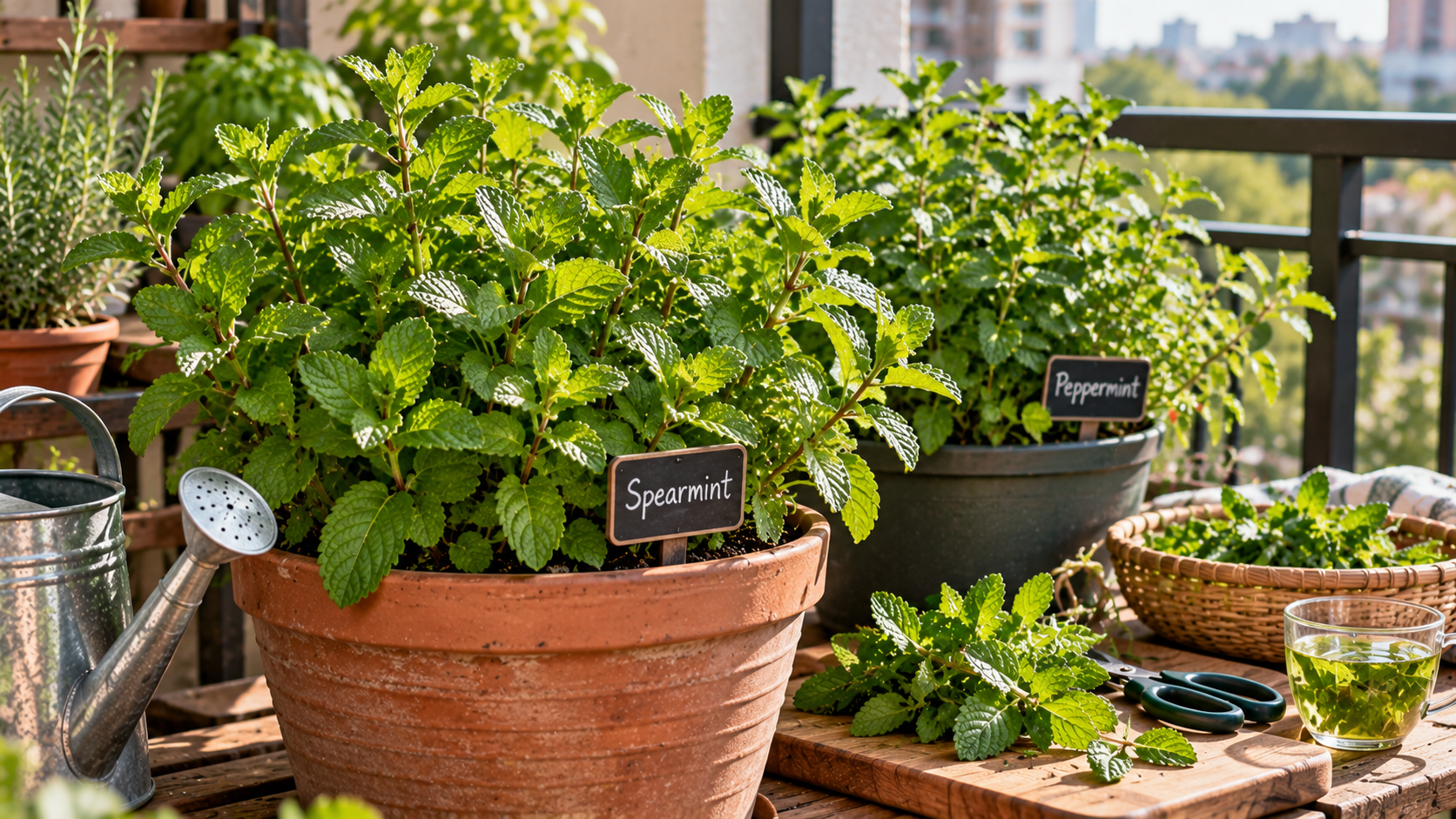
Flavor can vary with variety and growing conditions, so label plants rather than blending unidentified cuttings. Separating peppermint, spearmint, and other culinary selections into distinct pots also preserves your ability to choose the flavor you want for each recipe.
Frequently asked questions
Will a pot stop mint spreading completely? It limits underground spread into beds, but escaping stems can root elsewhere. Inspect the surroundings.
Can mint grow indoors? Yes, with enough usable light and suitable care, though a dim shelf may produce weaker growth.
Should I let mint flower? It depends on your goal. Flowers can support pollinators outdoors; pruning may favor leafy culinary harvests.
Can I propagate it by division? Many mints divide readily when healthy rooted sections are preserved.
Does mint need daily watering? Not universally. Check moisture according to pot size, weather, and growth.
Keep it vigorous, not uncontrolled
Mint works well in small spaces when its energy is channeled into a manageable container. Choose a genuine culinary variety, give it a useful volume of draining medium, harvest moderately, and check for escaping runners and crowded roots. The best mint pot is productive enough for cooking but disciplined enough to leave its neighboring plants room to grow.
References
University of Maryland Extension — Types containers growing vegetables
University of Maryland Extension — Growing vegetables containers and salad tables