White Mold on Houseplant Soil: Harmless Fungi or a Warning Sign?
A white patch on potting soil can send a houseplant owner searching for an emergency treatment. Sometimes it is a network of fungal growth feeding on organic material in the mix. Sometimes the pale material is mineral salt, perlite dust, or a different residue altogether. The visible color is not enough to determine whether the plant is in trouble.
Most important is the relationship between the growth, moisture, potting medium, and root health. Surface fungi can be a sign that an organic mix is staying damp, but their presence does not automatically mean the roots are rotting. Treat the condition you can establish rather than treating every white speck as a dangerous infection.
Identify what you are actually seeing
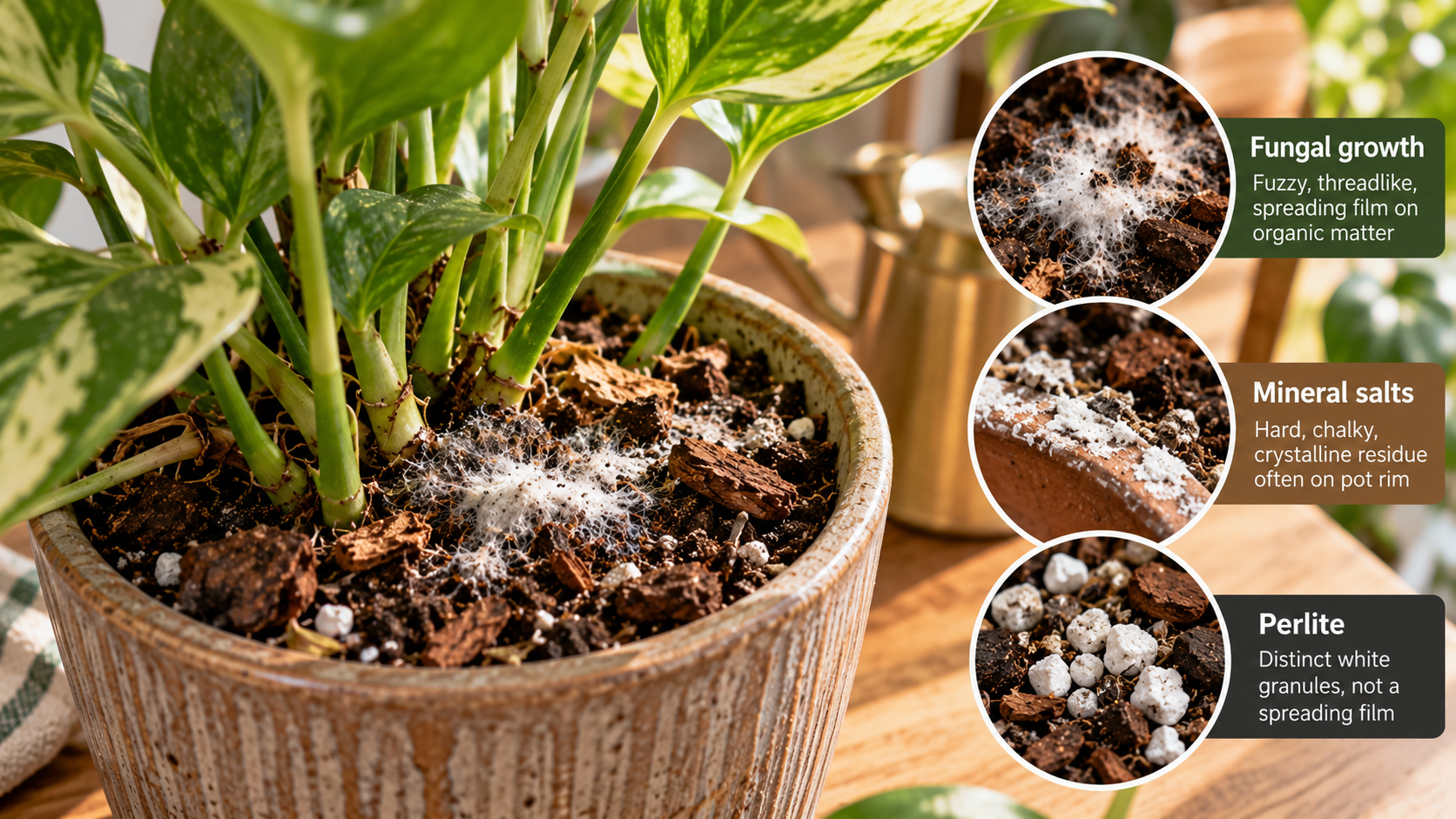
Fungal growth may appear as soft, fuzzy threads spreading over bark chips or the top layer of potting mix. It can increase where dead leaves, wood fragments, and other organic matter remain wet. A powdery or crusty white deposit that follows the edge of a pot may instead be dissolved mineral or fertilizer salts left behind as water evaporates. Hard grains of perlite should look like separate pieces rather than a spreading web of hyphae.
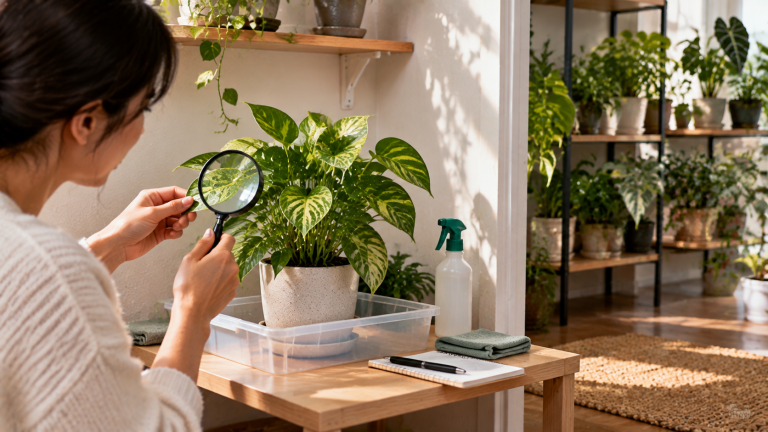
Inspect the patch under good light. Does it look fibrous, dusty, crystalline, or granular? Does it seem to enlarge after a period of damp weather or frequent watering? Has fertilizer use increased recently? These observations help sort possibilities without requiring immediate laboratory identification. Do not sniff the surface closely or deliberately disturb suspected mold spores if you have respiratory sensitivities.
A single fuzzy patch growing on a bark chip may be part of ordinary decomposition. A persistent musty smell, saturated medium, collapsing stems, and deteriorating roots are more concerning signs that the overall environment is unsuitable. Surface fungi and root disease can occur in the same container, but one does not automatically prove the other.
Mold or mineral buildup?
Clue More consistent with fungal growth More consistent with mineral salts
Texture Fuzzy, threadlike, spreading film Hard, chalky, crystalline or crusty
Typical location Organic fragments and damp surface Pot rim and evaporation zones
Change with watering May expand with persistent dampness May dissolve or reappear as water evaporates
Associated issues Persistent wet organic matter Hard water, fertilizer accumulation
What to investigate Drainage and moisture conditions Water and fertilizer practices
These distinctions are practical clues, not a substitute for identifying an unusual contaminant or serious plant disease. Some fungi form powdery structures, and mineral deposits vary by water chemistry. When uncertain, focus on plant health and the conditions in the pot before selecting a remedy.
Why surface fungi appear in the first place
Potting mixes often contain bark, coir, peat, compost, and other organic materials. Fungi help break down some of these materials. Their visibility may increase when a pot remains damp for extended periods, when old leaves are left to decay on the surface, or when airflow is restricted around a crowded group of plants. A cool dim room may also slow the plant’s water use, extending the time that the medium stays wet.
Fungal activity in the mix is not automatically a symptom of poor hygiene. Even commercially packaged mixes are not sterile environments once used. Trying to sterilize the entire root zone with household bleach, vinegar, or repeated peroxide applications can harm roots and disrupt more than the unwanted surface growth.
There is also a distinction between fungal growth on soil and actual fungal disease in the plant. Root pathogens can attack roots under favorable conditions, but diagnosing them requires evidence about tissue health, not just a patch on the surface. For symptoms such as mushy roots and persistent wilting in wet soil, see the separate RootLuma root-rot guide.
Check the whole root zone, not just the top centimeter
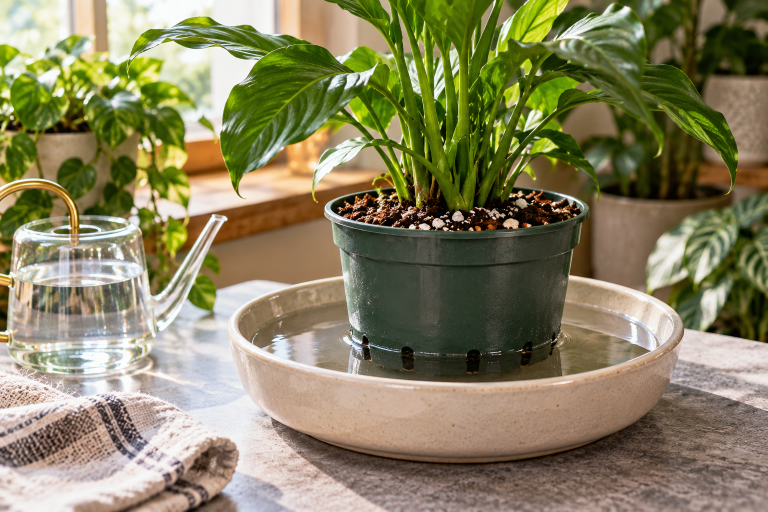
A surface patch often prompts people to scrape off a little soil and consider the problem solved. Removing affected debris may tidy the container, but if the underlying medium remains poorly aerated and chronically wet, fungal growth may return. Evaluate container drainage, the moisture below the surface, and any water held in an outer cachepot.
Lift the pot before and after watering to understand its moisture pattern. Insert a clean wooden skewer into the medium where doing so will not injure major roots, then examine how damp the deeper mix remains. Consider whether the pot is significantly larger than the root system. A small plant transplanted into a large decorative container may use only a fraction of the stored water, leaving the rest wet for days.
Lighting matters because a plant using little energy and producing little growth generally draws less water from its medium. Moving a shade-tolerant plant slightly closer to an appropriate light source may help overall growth, but do not force it into harsh direct sun simply to dry the soil. Excessive sunlight can damage leaves while the saturated lower layer remains untouched.
If you are arranging plants in a shared corner, the RootLuma guide to a healthy indoor plant corner discusses placement and access. Those decisions influence how easily you can check pots, empty saucers, and notice changing moisture behavior before an unwanted surface problem becomes routine.
What to do when the plant itself looks healthy
For a small localized patch on an otherwise vigorous houseplant, begin with simple housekeeping. Remove dead leaves and loose decaying debris. If a surface fragment is covered in growth, lift it out gently rather than vigorously mixing spores through the pot. Adjust watering based on the species and allow the upper layer to approach a more suitable moisture level between waterings where appropriate.
Improve access and moderate air circulation around crowded pots. The objective is not to blast the surface with a fan or force all plants into very dry air. Rather, avoid a stagnant pocket where water puddles persist and the plant cannot dry at its usual pace. Check saucers and cachepots after watering, and make sure drainage holes are actually unobstructed.
A little visible fungal growth can recur even under reasonable care. If the roots, leaves, and new growth are healthy, its reappearance may be more of a maintenance issue than a crisis. The practical question is whether moisture behavior has improved and whether the plant continues to grow normally.
When repotting becomes a reasonable choice
Repotting is more appropriate when the medium has collapsed into a dense, persistently saturated mass; drainage is impaired; or root health is declining. Gently inspect for root damage if symptoms justify it. Remove decayed material and choose a clean draining pot close to the viable root mass. Replace exhausted medium with a blend suited to the species.
Do not automatically discard all potting mix from every plant in the room. Nor should you repeatedly repot a healthy specimen because a harmless white patch returned once. Root disturbance is a cost, and each repot resets part of the plant’s establishment process. Use plant condition and the physical state of the mix to justify the intervention.
For gardeners who store unused media in a humid closet, check the bag as well. Keep opened potting supplies protected from rain and free from decaying debris. If a bag smells strongly foul or appears contaminated beyond ordinary organic decomposition, replacing it may be more sensible than distributing that material among many containers.
What not to pour into the pot
Online recipes often suggest bleach, undiluted vinegar, baking soda, or strong peroxide solutions. These are not dependable universal treatments for potting media. Concentration, plant sensitivity, microbial effects, and chemical injury are difficult to control with household mixtures. A cleaner-looking soil surface is not a worthwhile outcome if roots are burned in the process.
A thick layer of decorative pebbles can hide the patch but may also obscure watering and surface moisture observations. Treat that as an aesthetic choice with practical tradeoffs, not a proven cure. The same is true of cinnamon and other kitchen ingredients: do not assume a popular anecdote establishes a safe rate or consistent control effect.
If you suspect a disease rather than ordinary saprophytic growth, seek species-specific guidance from a local extension service. An accurate diagnosis may require root inspection or expert assessment. Applying a fungicide without knowing the target organism can waste money and expose the household to unnecessary chemicals.
A two-scenario decision exercise
Scenario one: A pothos has bright new leaves, firm stems, and a small fuzzy patch on an old bark chip. The pot drains well, but the owner leaves dead leaves on the medium. A reasonable plan is to remove debris, monitor moisture, and observe whether growth continues normally. Aggressive chemical treatment is not justified by the visible patch alone.
Scenario two: A peace lily has progressively yellowing leaves, a sour-smelling compacted medium, standing water in the outer pot, and soft roots. Here, the white surface material is only one clue in a broader root-zone problem. Empty water, evaluate damaged roots, and select a better-draining setup with appropriate moisture management. Simply scraping off the white patch misses the primary concern.
These cases look similar from above the soil but demand different responses because the rest of the evidence is different. Surface appearance starts the investigation; it should not end it.
When white material appears on several pots at once
If multiple pots show a similar white surface film, investigate shared conditions before treating them individually. Did the room become cooler? Was a humidifier added? Did you start using a different watering can, potting mix, or fertilizer? A pattern across otherwise unrelated plants can point to environmental moisture or mineral residue rather than an outbreak of the same disease in every root system.
Inspect one representative pot closely and compare it with a container that remains clear. Look at drainage, pot size relative to the roots, surface debris, and the length of time the medium remains damp. If the film is chalky on the rim of several pots, review mineral salts and feeding practices. If it is fuzzy and concentrated around decomposing bark after a rainy week, moisture and surface organic matter are more plausible drivers.
Treating every pot with a homemade chemical solution destroys that comparison and may introduce a new source of root stress. Start with adjustments that address the shared condition. Afterward, record whether the material returns and whether the plants continue to make healthy growth. A stable plant with an occasional surface patch is a different situation from one developing wilt and a failing root system.
Indoor air quality and cautious handling
People with asthma, mold sensitivity, or other respiratory concerns may want to avoid disturbing fungal material in enclosed rooms. Remove small affected debris gently, ventilate appropriately, and follow medical advice for personal exposure concerns. If growth is extensive on walls, ceilings, or building materials rather than merely a pot surface, it becomes a building moisture issue that needs different assessment. Do not use a plant-care article to self-diagnose indoor environmental contamination.
Why “sterilize the soil” is usually the wrong goal
Living potting media are not generally sterile after use. Organic decomposition is part of normal biology. Repeated attempts to eliminate all microbial life can injure roots and fail to address a waterlogged pot or poor drainage. Reserve pathogen-specific treatments for a credible diagnosis and locally approved guidance. Better pot structure, appropriate moisture, and timely debris removal usually offer a more sensible starting point.
Decide what to do after a white patch reappears
Only a dry pale crust is visible: Check mineral deposits and water chemistry before treating it as a living fungus.
Fuzzy growth returns while the plant remains vigorous: Reassess watering frequency, ventilation, standing water, and damp organic residues at the surface. Scraping alone does not change the conditions that supported regrowth.
The medium smells sour, stays saturated, or the plant declines: Inspect root health and drainage. The root-zone problem matters more than the color of the surface material.
Several pots develop similar growth together: Look for a common change in potting mix, room humidity, light, or watering routine before assuming pests spread between plants.
A fungicide is not the default response to ordinary surface fungi in potting mix. If mold is extensive, unusually colored, or accompanied by health concerns, limit disturbance and consider appropriate local guidance rather than guessing from appearance alone.
The more useful question
Instead of asking how to remove every trace of white material, ask why the pot supports it and whether the plant is healthy. Texture, moisture, odor, root condition, and new growth tell a more complete story. A little harmless decomposition may require only housekeeping; a failing wet root zone deserves timely correction. Keeping those situations separate leads to calmer decisions and healthier plants.
References
University of Maryland Extension — Algae and fungal growth soil indoor plants
University of Maryland Extension — Fungus gnats