Balcony Pollinator Garden: Flowers for Bees in Small Pots
A balcony may seem too small to support pollinators, but even a handful of flowering containers can provide forage when the right plants bloom at useful times. The goal is not to build a miniature wild meadow with every species available online. It is to offer accessible flowers, avoid harmful pesticide practices, and create a planting scheme that suits local climate, sunlight, and the actual insects in your area.
A meaningful pollinator garden is regional. Flowers attractive to bees in one country may be invasive, poorly adapted, or useless at a different season elsewhere. A sunny balcony on the fifth floor also faces different wind and heat conditions from a sheltered courtyard. Choose locally appropriate plants and learn which insects visit them before buying a fashionable seed mix. In the United States, Xerces Society regional native plant lists can help narrow the choices; outside the United States, consult a local conservation organization, botanical garden, or government invasive-species list rather than treating a U.S. list as universally applicable.
Start with local pollinators and flowering seasons
Bees are not one uniform group. Honey bees, bumble bees, and many solitary bees differ in body size, tongue length, flight season, and preferred flowers. Other visitors—including hoverflies, butterflies, and moths—can also contribute to pollination. A flower that looks beautiful to people may offer little accessible nectar or pollen to certain insects, especially highly modified double-flowered cultivars.
Use local native plant societies, botanical gardens, or university extension recommendations to identify species suitable for your region. Native plants can be especially valuable when they support local ecological relationships, but “native” must refer to your actual location. Importing a wildflower mix marketed for another continent can create ecological and legal problems.
Before purchasing a plant, record its scientific name, local native or non-invasive status, expected flowering months, mature width, and recommended root volume. Confirm that those details match your region and balcony. A plant listed as pollinator-friendly somewhere else may be inappropriate locally; the University of Maryland Extension also notes that container selections differ from large-garden plantings.
Plan for succession of blooms across your realistic growing season. A balcony full of flowers for two weeks may offer a brief resource; a few compatible species that flower at different times can provide a more consistent sequence. In very hot climates, some plants pause flowering during extreme weather, so choose according to local seasonal patterns rather than a generic temperate spring-to-fall calendar.
Audit your light, wind, and usable footprint
Observe how many hours of direct sun the balcony receives and where shade falls. Many nectar-rich flowering annuals need good sunlight, but some species tolerate partial shade. High-rise wind can snap tall flower stalks and dry small pots quickly. Choose compact cultivars, broad stable containers, and protected positions without making the space inaccessible to flying visitors.
Balcony load and safety matter. Wet potting mix can be surprisingly heavy, and hanging containers must be securely attached. Do not place unsecured pots on outer railing ledges or allow runoff to drip onto pedestrians or neighbors. Check building restrictions before adding shelves or exterior planters.
A pollinator planting should not create a hazard for household members. People with severe insect-sting allergies may need additional precautions or professional advice. If the balcony is a children’s play area, position forage plants thoughtfully and maintain clear walking paths. Encouraging pollinators is beneficial, but shared-space safety remains part of responsible design.
The RootLuma balcony gardening guide provides broader advice on light and container placement. A pollinator garden adds the need for accessible blooms, seasonal continuity, and a low-chemical approach to pest management.
Pick flowers for function as well as color
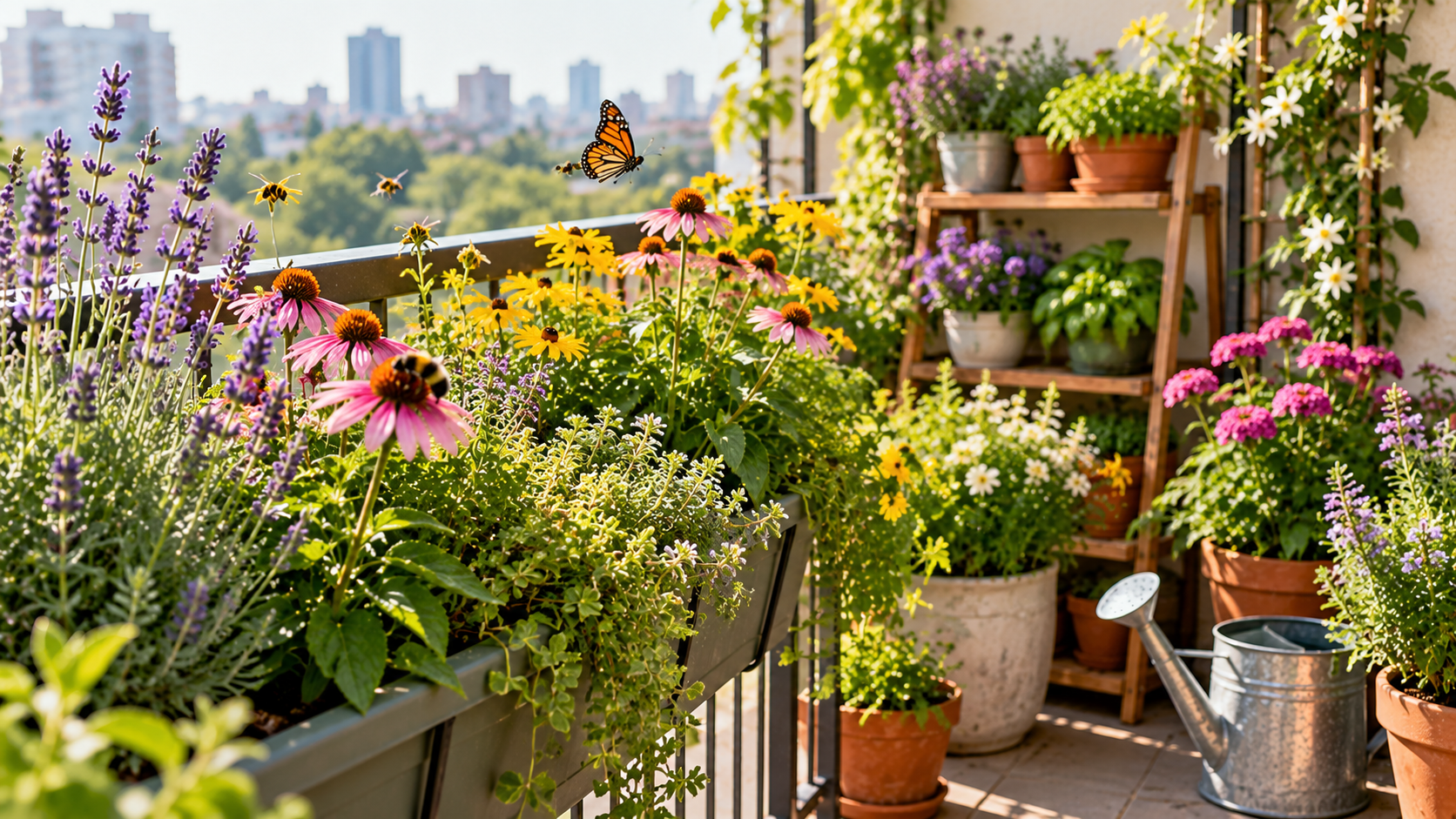
Look for locally appropriate species with accessible nectar and pollen, varied bloom shapes, and overlapping flowering windows. Single or open-centered flowers may offer easier access than densely doubled blooms, although usefulness varies. Choose plants by confirmed ecological value in your region rather than assuming every brightly colored ornamental feeds bees.
For a gardener in the United Kingdom, the Royal Horticultural Society includes flowering chives and thyme among small-space edible-container options and lavender among window-box plants for pollinators. These are UK-oriented horticultural examples, not claims that the plants are native, non-invasive, or equally useful everywhere. Check sunlight, mature size, seasonal bloom, and the exact species or cultivar against local advice before purchasing. In tropical climates or other regions, an entirely different set of native or appropriately adapted flowers may be a better choice.
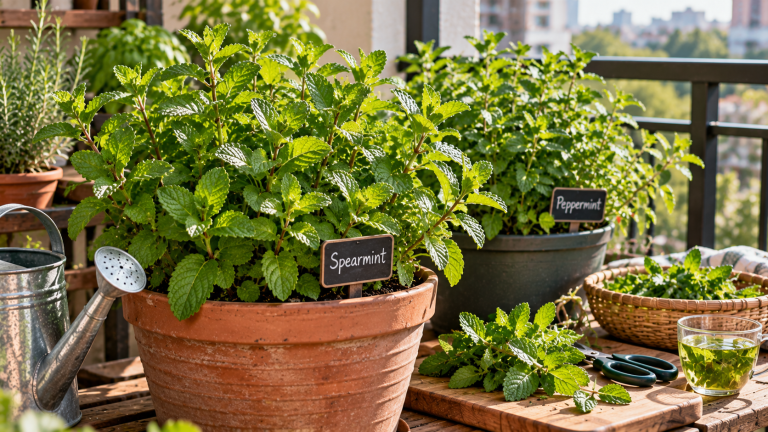
Flowering culinary herbs can contribute forage if allowed to bloom. Basil, thyme, or mint flowers may attract insects under suitable conditions, but different herbs prefer different container conditions and climates. A sprawling mint should still be contained in its own pot; pollinator value does not excuse allowing it to overrun every neighbor.
Design a small but useful planting arrangement
Instead of one tiny pot of each of ten different plants, group a few compatible flowers where visitors can find and use them. Combine plants with similar sunlight and watering needs. A tall species may be placed where it does not shade low-growing flowers. Keep enough space to prune, inspect for pests, and remove spent blooms without brushing against insects unexpectedly.
Choose containers with drainage holes and sufficient rooting volume. Flowering plants under strong sun often use water rapidly; very small baskets may dry before the owner returns home. Use a potting medium suited to the selected species rather than a single arbitrary recipe for all. Some drought-adapted natives dislike the moisture routines preferred by fast-growing bedding annuals.
A balanced design might have one container of spring or early-season bloomers, one for the main warm season, and one that continues later, if your local climate permits. Alternatively, choose a perennial that flowers repeatedly alongside seasonal annuals. The correct arrangement depends on available light and plant recommendations, not the desire to fill every gap in a diagram.
Avoid pesticides that undermine the purpose
A pollinator garden becomes contradictory if open flowers are repeatedly sprayed with products that harm visiting insects. Use an integrated approach: identify the pest, tolerate minor cosmetic damage where appropriate, remove heavily infested plant parts when sensible, and select controls that minimize risk to non-target organisms. If treatment is necessary, follow locally registered product labels and pollinator precautions exactly.
Do not assume that “organic” or homemade sprays are harmless to bees. Oils and soaps can affect insects by contact, and untested mixtures may harm plants or beneficial organisms. Even a substance permitted in some contexts may be inappropriate when pollinators are actively visiting blossoms.
Avoid purchasing flowering plants with unknown systemic pesticide histories when that concern matters to your project. Ask suppliers about their growing practices, but recognize that verbal assurances vary in reliability. A reputable local nursery or native-plant producer may provide clearer information about species suitability and plant care.
Water and maintain without destroying blooms
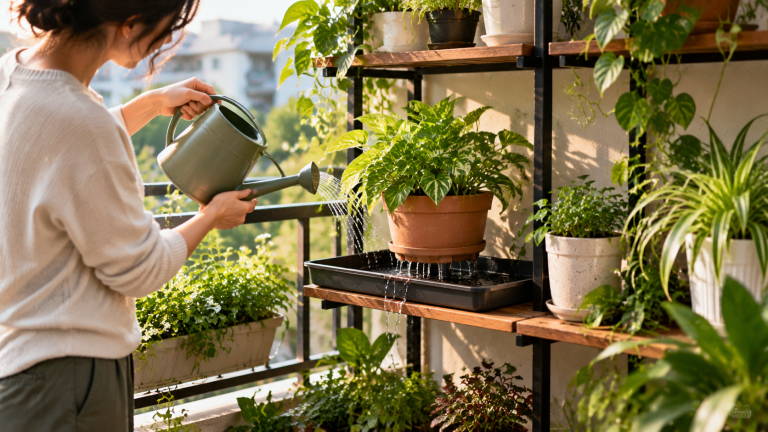
Water the medium rather than routinely soaking flower clusters. This reduces wasted water, avoids knocking pollen from delicate blossoms, and may reduce leaf-disease pressure on some plants. Maintain the moisture each species actually needs; overwatering a drought-adapted plant is not a kindness to pollinators.
Deadheading can extend bloom for some ornamental varieties, but not all plants respond the same way. Leaving some seed heads can support other wildlife or enable natural reseeding where appropriate. Choose whether you want a tidy repeat-bloom display or a more seasonal ecological planting, and learn which maintenance practices suit each species.
Remove diseased debris when necessary and inspect stems for pests. Do not strip every aging bloom immediately if it still provides useful resources or is part of the plant’s natural reproductive cycle. A little seasonal messiness can be compatible with a healthy balcony garden when it does not create sanitation or safety problems.
Add nesting and water resources cautiously
Not all bees nest in bee hotels, and poorly maintained nesting structures can harbor parasites or disease. A purchased “insect hotel” is not automatically beneficial. If you want to support cavity-nesting species, consult local conservation guidance about appropriate dimensions, materials, placement, and ongoing cleaning. In many apartments, providing good forage without a nesting hotel is a perfectly reasonable contribution.
Water dishes can attract wildlife but may also support mosquitoes if standing water is neglected. Ordinary flowerpots already create enough water-management challenges; do not add a shallow open basin unless you can keep it clean and manage it safely. Pollinator support should not create stagnant standing water in a community building.
The emphasis for a beginner should be good floral resources, non-target-friendly pest management, and regional plant selection. Elaborate habitat features are optional and should be evidence-based.
A season-by-season observation plan
Period What to check Why it matters
Before planting Local native or adapted species and bloom times Avoid ecological mismatches
Early establishment Root moisture, sun exposure, wind damage Establish vigorous plants
First flowering Which insects visit and at what times Learn which flowers are accessible and useful
Peak season Gaps in bloom and changing watering demands Maintain continuous resources where possible
Late season Remaining flowers, seeds, and plant condition Plan future succession and maintenance
Between seasons Container health and soil condition Prepare a safe next planting cycle
You do not need to count individual bee species without training. Record simple observations such as “small dark bee visited tubular flowers in the morning” or “hoverflies used the open yellow flowers.” A notebook can help you prioritize flowers that visitors actually use in your location.
Troubleshoot a balcony nobody visits
Flowers bloom but no bees appear. Review whether there are pollinator populations nearby, whether the flowers offer accessible resources, and whether the balcony is very exposed or enclosed. Visits may occur outside your usual observation hours.
Plants flower briefly then stop. Consider cultivar, heat, moisture, season, and deadheading practices. Some species naturally flower for a short period.
Pests damage young buds. Confirm the pest and the extent of injury. Avoid indiscriminate sprays during bloom; consult local extension resources for targeted options.
The container dries every afternoon. Increase root volume or move to a suitable less exposed position where possible. Do not leave standing water as a permanent shortcut.
One plant overwhelms the others. Reassess spacing and mature size. Vigorous herbs or sprawling ornamentals may need separate containers.
Plan the balcony as a series of bloom windows
A small pollinator planting can offer better continuity when each container has a defined seasonal role. For example, one locally suitable flower may provide early-season bloom, another may perform during warm summer conditions, and a third may continue into a cooler period. The actual species must come from regional recommendations, because the same plant can flower at different times—or fail entirely—in another climate.
A simple calendar records expected bloom, actual bloom, and observed visitors. If all pots flower at once and then go dormant, reconsider the mix next season. Do not respond by buying a large random packet labeled “wildflowers for bees” without checking species names. Some mixes contain plants inappropriate or invasive for your region, and some are chosen mainly for showy color rather than ecological usefulness.
One observation cannot measure every benefit
A balcony may receive few visible bee visits during your usual coffee break but more activity at another hour. Wind, temperature, and light influence insect flight. Observe at different suitable times, and note what actually visits: honey bees, small native bees, hoverflies, butterflies, or other insects. Unless trained, avoid assigning exact species names from a distant glimpse.
Do not promise that a small balcony will restore local pollinator populations by itself. Its more defensible role is to provide an additional patch of flowers within the surrounding landscape when those plants offer usable resources. Thoughtful local selection and reduced harmful pesticide exposure matter more than overstating the effect of one container.
Protect flowers from incompatible household routines
If the balcony is regularly sprayed for mosquitoes, washed with harsh chemicals, or exposed to runoff from neighboring buildings, consider whether the planned flowers will truly provide a safe resource. Avoid applying pesticides to open blooms unless a locally approved treatment is necessary and the label’s pollinator precautions can be followed. Move containers away from cleaning overspray and keep materials used on edible herbs separate from ornamental treatments.
A productive pollinator garden should also be pleasant and manageable for residents. Leave walking clearance, remove tripping hazards, and secure pots. If someone in the household has a serious sting allergy, take that concern into account when choosing location and access. Planting for wildlife is part of sharing a living space responsibly, not an instruction to ignore human safety.
A five-point local plant-selection check
Confirm region: Identify your locality and check a native-plant society, botanical garden, extension service, or appropriate conservation authority for species that occur there.
Check legal and ecological suitability: Exclude prohibited or invasive plants, including attractive species from generic imported seed mixes.
Check flower accessibility: Prefer flowers known to provide usable nectar or pollen to the pollinators actually present; some highly doubled flowers offer little accessible reward.
Check the pot and season: Match mature root volume, sun, wind tolerance, and bloom window to the container and your climate. Plan overlapping flowering periods rather than one short display.
Check nursery and household practices: Ask about pesticide use, avoid spraying open blooms, and prevent cleaning chemicals or contaminated runoff from reaching flowers.
For U.S. readers, Xerces Society regional lists offer a useful starting point; elsewhere, seek the equivalent local expertise. A bee hotel or sugar-water dish is not a substitute for appropriate flowers and safe growing practices.
Make room for a small ecological connection
You do not need a large yard to offer some useful flowering resources. Choose locally appropriate plants that bloom across the season, give them enough light and soil volume, and avoid unnecessary treatments that harm visitors. Watch which flowers insects actually use, then refine the planting next year. The most valuable balcony pollinator garden is not the one with the most pots; it is the one that functions safely in its place.
References
University of Maryland Extension — Attracting wildlife your garden
University of Maryland Extension — Pollinator Gardens
Xerces Society — Pollinator-Friendly Native Plant Lists (United States)
Royal Horticultural Society — Plants for encouraging pollinators in small spaces (UK)