How Often Should You Water Houseplants? A Practical Beginner’s Guide
Watering is one of the most important parts of houseplant care, but it is also one of the easiest habits to get wrong. Many beginners look for a fixed schedule, such as watering every three days or once a week. In reality, most indoor plants are healthier when watering is based on their actual needs rather than the calendar.
The simplest place to start is the soil. Before reaching for the watering can, touch the top few centimeters of the potting mix. If the soil still feels damp, the plant may not need more water yet. If it feels dry, it may be time to water. This simple check can help prevent one of the most common houseplant problems: overwatering.
Light also affects how quickly soil dries. Plants growing near bright windows usually use water faster than plants in lower-light areas. During warm, sunny periods, a pot may dry noticeably faster. In darker rooms or during shorter winter days, the same plant may need water less frequently.
Pot size matters as well. Small containers contain less soil and can dry quickly, while larger pots often hold moisture for longer. The material of the container can also make a difference. Terracotta is porous and allows moisture to evaporate through the sides, while glazed ceramic and plastic containers generally retain water for a longer period.
Different plants also have different preferences. Tropical foliage plants often appreciate soil that stays lightly moist without becoming waterlogged. Succulents and many drought-tolerant plants usually prefer their soil to dry more thoroughly between waterings. Understanding the natural habits of each plant makes watering decisions easier.
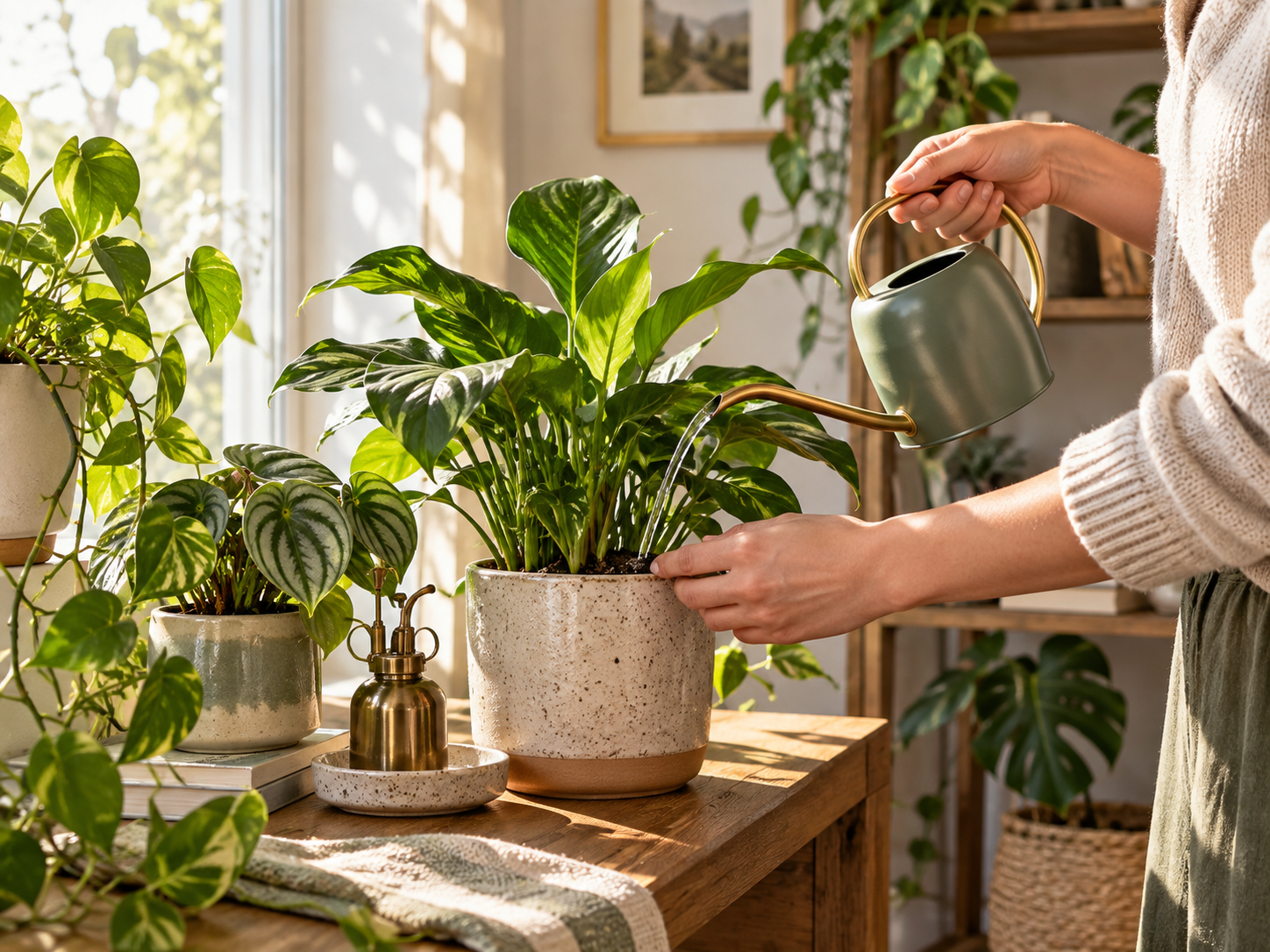
When it is time to water, apply enough water to moisten the soil evenly. If the pot has drainage holes, allow excess water to flow out from the bottom. Empty any water that remains in the saucer so the roots are not left sitting in standing water.
Avoid giving plants only small amounts of water every day. Frequent shallow watering can leave part of the root system dry while keeping the upper layer of soil constantly damp. A thorough watering followed by an appropriate drying period is usually more effective for many common houseplants.
Seasonal changes should also influence your routine. Plants may grow more actively during brighter and warmer months, which can increase their water needs. Growth often slows during cooler or darker periods, meaning the soil takes longer to dry.
There is no single watering schedule that works for every indoor plant. Instead, develop the habit of observing the soil, leaves, light conditions, and season. Over time, you will begin to recognize how quickly each plant uses water.
Good watering is less about following strict rules and more about responding to changing conditions. By checking before watering and allowing the soil to dry appropriately, you can create a healthier environment for your houseplants and reduce many common care problems.