How to Read Your Plant’s Leaves: Simple Signs of Healthy Growth
Houseplants often communicate their needs through their leaves. Changes in color, texture, shape, and position can provide useful clues about watering, light, humidity, and overall growing conditions. Learning to recognize these signals can make everyday plant care easier and help you respond before small problems become serious.
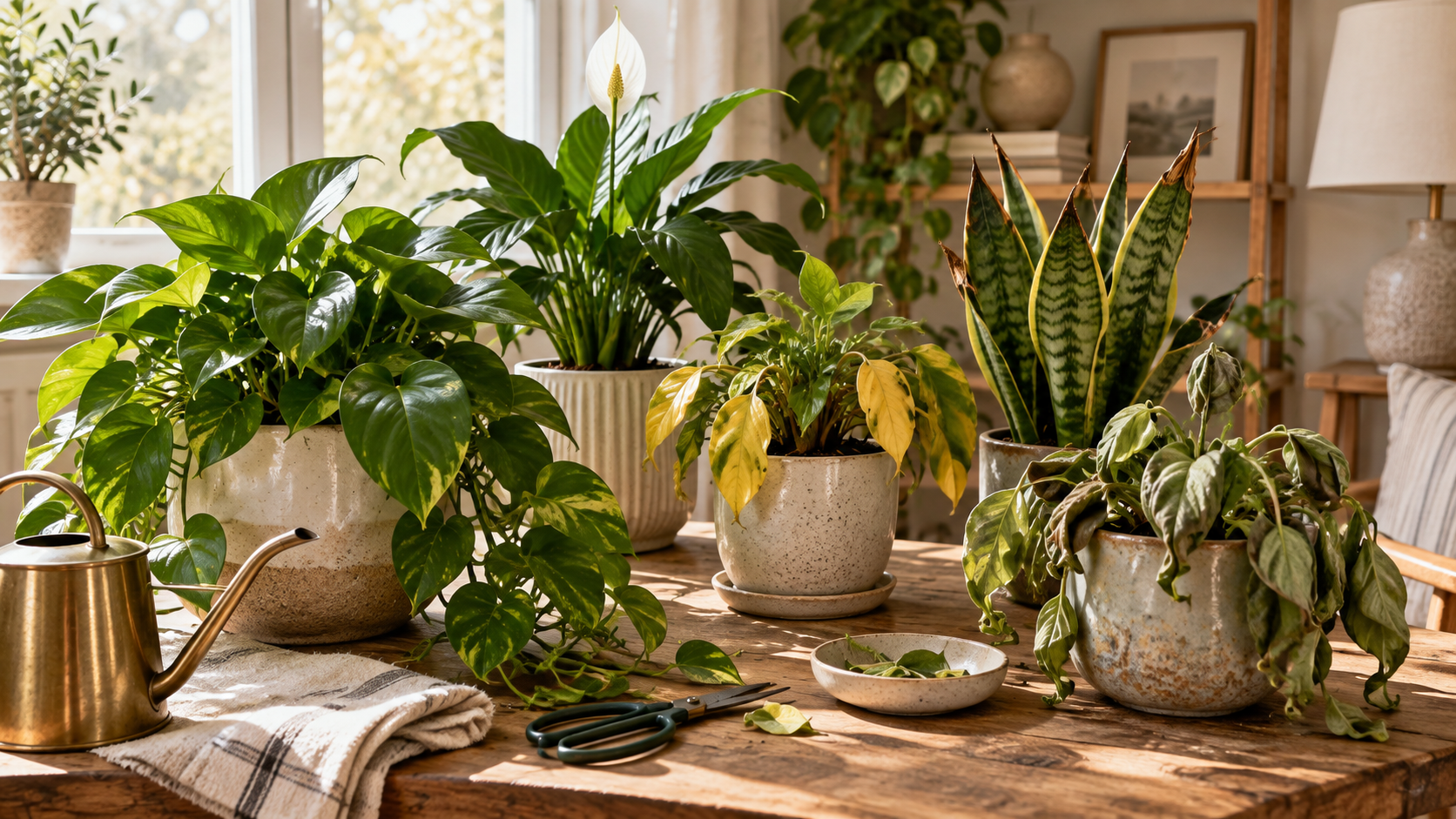
Yellow leaves are among the most common changes indoor gardeners notice. A single older leaf turning yellow is often normal as a plant redirects energy toward new growth. However, several leaves yellowing at the same time may suggest that the soil is staying wet for too long. Before watering again, check the top layer of soil and make sure the pot has adequate drainage.
Brown tips can appear for several reasons. Dry indoor air, inconsistent watering, excess fertilizer, or mineral buildup may all contribute. Instead of immediately adding more water, consider the plant’s environment. Plants positioned near air conditioners, heaters, or strong drafts may lose moisture more quickly than those in stable conditions.
Drooping leaves can be confusing because both dry and overly wet soil can cause similar symptoms. If the soil feels dry several centimeters below the surface, the plant may simply need water. If the soil remains wet for many days, the roots may not be receiving enough oxygen. Looking at the soil condition alongside the leaves usually provides a clearer answer.
Curling leaves may indicate heat stress, low humidity, pests, or moisture problems. Examine both sides of affected leaves and look around the stems for insects, webbing, sticky residue, or unusual discoloration. Early observation can make pest problems much easier to manage.
The color and size of new leaves can also reveal whether a plant receives enough light. Pale, stretched growth or unusually small leaves may develop when a plant is searching for brighter conditions. On the other hand, bleached patches and dry areas can appear when sensitive foliage receives too much direct sunlight.
Healthy new growth is usually one of the best indicators that a plant is adapting well. Fresh leaves may begin slightly lighter and gradually deepen in color as they mature. Regular new growth often suggests that light, water, temperature, and nutrients are reasonably balanced.
Not every imperfect leaf requires immediate action. Indoor plants naturally lose older foliage and occasionally develop minor damage. What matters most is noticing patterns rather than reacting to a single leaf.
By observing your plants regularly, checking the soil before watering, and paying attention to new growth, you can make more confident care decisions. Over time, reading the leaves becomes one of the simplest ways to understand what your houseplants need.